
Smart Shopping Beyond the Fine Print
The grocery aisle has a special talent for ambush. One minute you are choosing soup. The next, you are tilting a can under fluorescent lights, hunting for sodium numbers printed in a font apparently designed for ants with law degrees.
If you are trying to read nutrition labels when you have aging eyes, the problem is not laziness or “not paying attention.” It is small print, glare, crowded packaging, presbyopia, label fatigue, and the very real pressure of making health decisions before the frozen peas thaw in your cart.
Guessing can cost you. Sodium may matter for blood pressure. Added sugar may matter for diabetes care. Allergens may matter immediately. Medication instructions may also change what “healthy” means for your plate.
Good news: you do not need to decode every number. You need a repeatable label-reading routine that makes the print bigger, puts the right numbers first, and keeps your decision simple.
Start Here:
- • Make the label bigger.
- • Check the serving size.
- • Scan your personal watch list.
- • Then compare one nearby product before you buy.
The 3-Anchor Label Method
To read Nutrition Facts labels with aging eyes, use three anchors: serving size, calories, and the nutrients you personally need to watch, such as sodium, added sugar, saturated fat, fiber, protein, or allergens.
Do not start at the tiny bottom corner. Start with the numbers that change the decision. Then use light, magnification, and comparison to make the label behave like a helpful tool instead of a tiny courtroom transcript.
Table of Contents
Safety First: When Food Labels Are Not Enough
This guide is for general food-label reading and healthy shopping education. It is not medical advice, and it cannot replace instructions from your doctor, registered dietitian, pharmacist, eye care professional, or care team.
That matters because nutrition labels are powerful, but they are not personal. A label does not know if you have kidney disease, diabetes, heart failure, high blood pressure, celiac disease, severe food allergies, swallowing trouble, or a medication that comes with diet instructions.
If you have a prescribed diet, follow your care plan first. Use the label as a flashlight, not as the whole map.
- Use labels to compare similar foods.
- Use your care plan to decide your personal limits.
- Ask for help when allergies, medications, or chronic conditions are involved.
Apply in 60 seconds: Write your top three “watch numbers” on a note before your next grocery trip.
Start With the Big Three Before Your Eyes Get Tired
Nutrition labels can look like a small spreadsheet wearing a food wrapper. That is why the first rule is simple: do not read everything first.
Begin with the big three: serving size, calories, and your personal watch nutrients. This gives your eyes a route instead of a scavenger hunt.
Serving size is the trapdoor number
Serving size controls almost every number on the Nutrition Facts label. If the label says 250 mg of sodium per serving and the package has two servings, eating the whole package means 500 mg of sodium.
That sounds obvious on a calm Tuesday at the kitchen table. It feels less obvious in the store when the print is tiny, your glasses are fogged, and someone is politely trying to reach the oatmeal behind you.
Look for:
- Serving size: the amount used for the label numbers.
- Servings per container: how many servings are in the whole package.
- Your likely portion: what you will actually eat, not what the package politely imagines.
Calories matter less when the serving size is sneaky
Calories are useful, but they are not free-floating facts. A 160-calorie snack may become 320 calories if the bag contains two servings and your hand treats the bag as a single-serving friendship contract.
For older adults, the better question is often not “Is this low calorie?” but “Does this food give me enough useful nutrition for the amount I will actually eat?” That is where fiber, protein, sodium, added sugar, and saturated fat start to matter.
Percent Daily Value: the shortcut hiding in plain sight
The FDA explains that Percent Daily Value shows how much a nutrient in one serving contributes to a daily diet. In practical grocery terms, it is a fast “low or high?” signal.
A common label-reading shortcut is:
- 5% Daily Value or less is generally low.
- 20% Daily Value or more is generally high.
Use that shortcut with your personal goals. High fiber may be helpful. High sodium may not be. High added sugar may deserve a pause. A label is not judging you. It is quietly sliding the receipt across the table.
Money Block: The 10-Second Label Triage Card
| Check | Ask | Next Step |
|---|---|---|
| Serving size | Will I eat more than this? | Double the numbers if needed. |
| Watch nutrient | Is this high for me? | Compare one similar item. |
| Ingredients | Any allergen or surprise? | Put it back if unclear. |
Neutral action line: Use this card on one packaged food before making a cart decision.
Make the Label Bigger Before You Make the Decision
There is no prize for reading a label at its original size. The store will not ring a bell. The cashier will not announce, “Customer successfully decoded six-point sodium typography unaided.”
Make the print bigger first. Then decide.
Use phone zoom without feeling awkward in the aisle
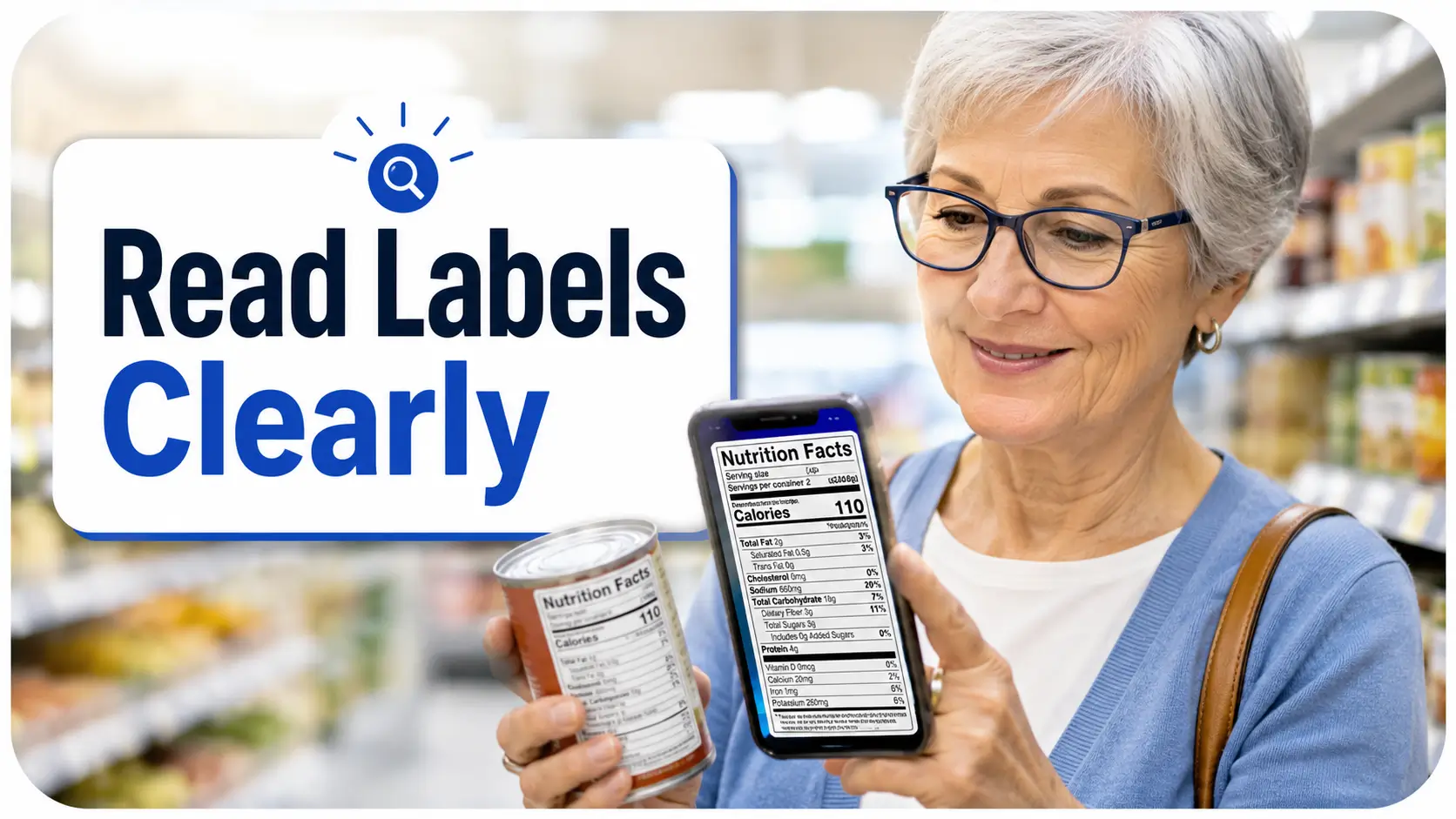
Your phone camera is one of the simplest label-reading tools you already own. Open the camera, point it at the Nutrition Facts panel, and zoom in. You can also take a photo and enlarge it with your fingers.
This works especially well for glossy packaging, curved cans, frozen meal boxes, and tiny allergen statements. If glare gets in the way, tilt the package slightly or move under a softer part of the store lighting.
Many people also use phone magnifier tools. If you regularly read small print, it may be worth setting up a shortcut. For iPhone users, a dedicated iPhone Back Tap Magnifier setup can make grocery labels easier to enlarge without digging through menus.
Try a wallet magnifier, clip-on reader, or grocery-list photo trick
A wallet magnifier is small enough to keep with your loyalty cards. Clip-on readers can help if you already wear glasses. A stand magnifier may help at home, though it can be awkward in a busy aisle.
If you have hand tremor, fatigue, or arthritis, holding a magnifier steady may be harder than expected. A guide comparing handheld vs stand magnifiers for tremor can help you think through stability, comfort, and real-world use.
The grocery-list photo trick is beautifully low-tech: take photos of the labels you buy often, then review them at home under better light. This builds a familiar “safe shelf” of foods you understand.
Here’s what no one tells you: lighting beats willpower
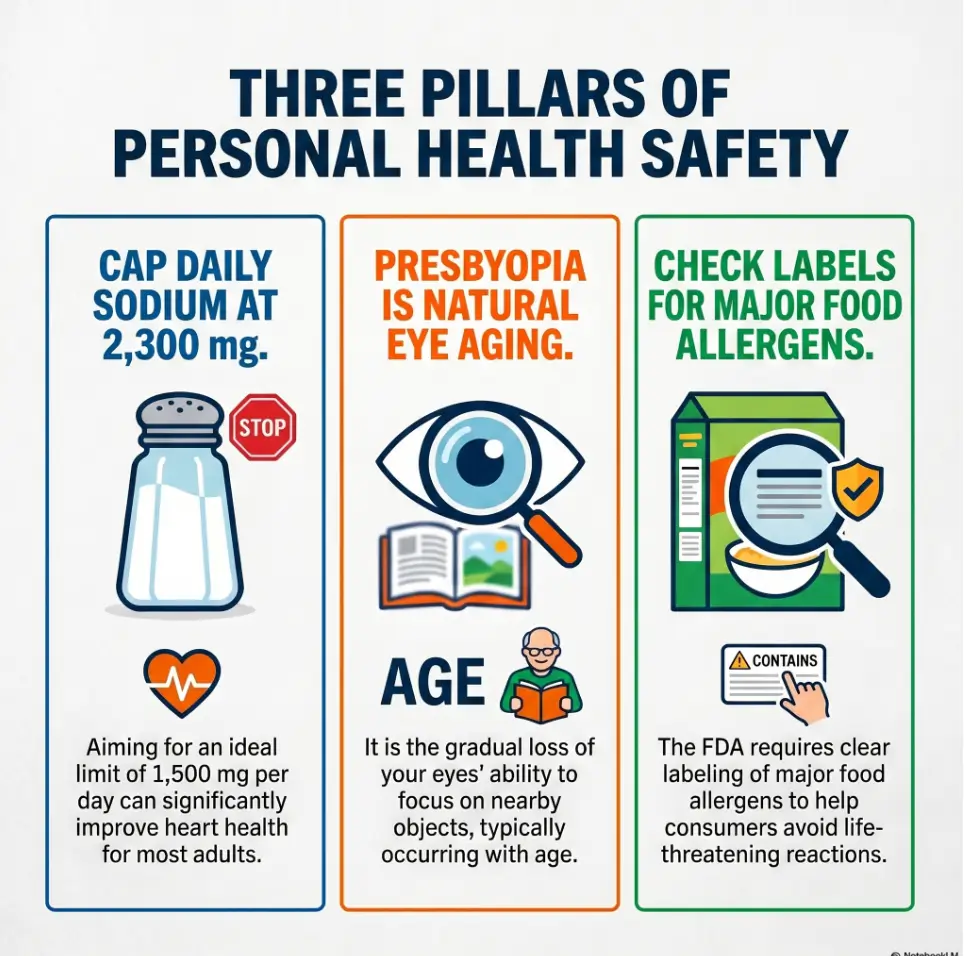
Presbyopia, a normal age-related change described by the National Eye Institute, makes close-up reading harder for many adults after midlife. Glare makes that harder still. A brighter, better-aimed light can turn a label from foggy Morse code into readable information.
If labels are easier at the kitchen table than in the store, your eyes may not be the only issue. The aisle may be serving you glossy plastic, overhead glare, poor contrast, and curved packaging in one unhelpful sandwich.
At home, try a reading lamp angled from the side rather than blasting straight down. If glare is a frequent enemy, the same principles used for reading glossy mail without glare can help with shiny food packages too.
The Aging-Eyes Label Flow
Use phone zoom, a magnifier, or better light before judging the food.
Ask whether your real portion is one serving, half, or the whole package.
Check sodium, added sugar, saturated fat, fiber, protein, or allergens.
A better choice is often one shelf slot away, quietly waiting.
Read the Top Line Like a Detective, Not a Diet Monk
The top of the Nutrition Facts label is where the plot twist often lives. Serving size and servings per container can change the whole meaning of the numbers below.
You are not trying to be perfect. You are trying to avoid being fooled by arithmetic wearing a snack label.
Container size vs serving size: where good intentions get pickpocketed
Some packages look like one portion but list two or more servings. Muffins, bottled drinks, ramen, frozen meals, chips, and trail mix can all play this game.
The question is not, “What does the label say?” The question is, “What will I eat?” If the answer is the whole container, the label needs to be mentally adjusted.
“About 2 servings” can quietly double everything
“About 2 servings” is a tiny phrase with big elbows. It can double sodium, added sugar, calories, saturated fat, and carbohydrates.
For example, a soup may list 690 mg sodium per serving. If the can has two servings and you eat the full can, you are looking at 1,380 mg sodium. That is no longer a little soup. That is a salty opera in a bowl.
The 10-second serving-size test before the cart rolls on
Before you compare two products, check whether the serving sizes match. Comparing cereal by serving size can be strange because one brand may use cups, another grams, and another a serving that looks like breakfast for a decorative bird.
When serving sizes differ, use the label as a rough guide, not a perfect lab instrument. For close calls, choose the food with the better pattern across your watch numbers.
Show me the nerdy details
Nutrition Facts label numbers are tied to the serving size listed on that package. Percent Daily Value is based on reference daily amounts, often using a 2,000-calorie diet as a general frame. Your actual needs may differ based on age, body size, activity, medical conditions, and prescribed diet limits. For fast shopping decisions, compare similar foods with similar serving sizes whenever possible. If the serving sizes differ, mentally scale the numbers or compare the amount you realistically eat.
Watch Sodium First If Blood Pressure Is in the Room
If you or someone you shop for has high blood pressure, heart disease, kidney concerns, or fluid restrictions, sodium deserves early attention. It is often hiding in foods that do not taste especially salty.
The American Heart Association recommends no more than 2,300 mg of sodium per day for most adults, with an ideal limit of 1,500 mg for many adults, especially those with high blood pressure. Your clinician may give you a different target, and that target wins.
Why soups, sauces, deli meats, and frozen meals deserve suspicion
Some of the biggest sodium surprises are not the obvious salty snacks. Soup, pasta sauce, salad dressing, deli turkey, canned vegetables, frozen dinners, boxed rice mixes, and restaurant-style packaged foods can carry a lot.
Taste is not a reliable sodium detector. A food can taste mild and still contain a high sodium number because sugar, fat, acid, and flavorings can distract the tongue.
Low sodium, reduced sodium, and no salt added are not twins
Front-label phrases can help, but they are not identical. “Reduced sodium” usually means less sodium than the original version, not necessarily low sodium. “No salt added” means salt was not added during processing, but the food may still contain natural sodium.
Always turn the package over. The back label is where the polite marketing voice has to hand the microphone to the numbers.
Don’t do this: judging saltiness by taste alone
One caregiver told me she bought a “light” soup for her father because it tasted less salty than his usual brand. At home, the label showed it was lower in calories, not sodium. The word “light” had done a little tap dance, and nobody had asked it for ID.
The fix was simple: she wrote “sodium first” on her grocery list. Not dramatic. Not fancy. Very effective.
Money Block: Sodium Decision Card
| Situation | Better Move | Trade-Off |
|---|---|---|
| Soup or frozen meal is high sodium | Compare a lower-sodium version | May need herbs or lemon for flavor |
| Deli meat is a staple | Check sodium per serving | Lower-sodium options may cost more |
| Canned vegetables are convenient | Look for no-salt-added or rinse when appropriate | Texture may change slightly |
Neutral action line: Compare sodium on two similar foods before choosing the one you buy most often.
Added Sugar Is the Tiny Line With a Big Personality
Added sugar is one of the best reasons to enlarge a label. It can hide in breakfast foods, drinks, yogurts, sauces, snack bars, and “wellness” foods wearing soft colors and a very convincing leaf.
The FDA’s Nutrition Facts label separates total sugars from added sugars. That distinction helps you tell the difference between sugars naturally present in foods like milk or fruit and sugars added during processing.
Total sugar vs added sugar: the difference that matters
Total sugar includes all sugar in the food. Added sugar tells you how much sugar was added by the manufacturer. For many shoppers, added sugar is the more useful number when comparing packaged foods.
For example, plain yogurt and sweetened yogurt may both show sugar. The plain version contains naturally occurring milk sugar. The sweetened version may contain added sugar too. The label lets you see the difference without needing a magnifying glass and a minor in dairy philosophy.
Breakfast foods can wear dessert’s coat
Cereal, instant oatmeal, granola, flavored yogurt, bottled coffee drinks, and breakfast bars can look sensible while carrying more added sugar than expected.
The front of the package may say “whole grain,” “protein,” or “made with real fruit.” Those claims may be true and still not tell you the whole story. The added sugar line is where the costume comes off.
Let’s be honest: “healthy-looking” packaging can be theatrical
Soft beige packaging does not lower sugar. A picture of a blueberry does not mean the food is mostly fruit. A mountain drawing does not confer cardiovascular virtue.
Turn the package around and check added sugar. The back label is less poetic, but often more loyal.
- Compare added sugar among similar products.
- Check breakfast foods and drinks especially closely.
- Use the ingredient list when the label feels suspiciously charming.
Apply in 60 seconds: Pick one breakfast item at home and compare its added sugar with a similar option online or at the store.
Fat Numbers Need Context, Not Panic
Fat on a label is not one single villain twirling a mustache. Some fats come with foods that also provide useful nutrients. Others deserve more caution, especially saturated fat and trans fat.
For most label-reading decisions, focus less on total fat and more on saturated fat, trans fat, portion size, and the overall food pattern.
Saturated fat is the number to slow down for
Saturated fat is common in butter, cheese, fatty meats, cream-based foods, many baked goods, and some packaged snacks. If heart health is a concern, your care team may recommend limiting it.
When comparing two similar foods, lower saturated fat can be a useful tie-breaker. That does not mean every food must be fat-free. It means saturated fat deserves a glance before the item becomes a household regular.
Trans fat: why zero may still need an ingredient check
Labels may show 0 grams trans fat, but it can still be useful to scan ingredients for partially hydrogenated oils in older products or certain packaged foods. Rules have changed over time, but ingredient checking remains a good habit.
Think of it as reading the fine print on a contract you are about to eat.
Nuts, olive oil, and avocado: when fat is not the villain
Foods like nuts, seeds, olive oil, and avocado contain fat, but they can also fit into heart-conscious eating patterns for many people. Portion still matters, especially for calorie needs, but the presence of fat alone should not trigger panic.
Context is the grown-up in the room.
Fiber and Protein Are the Quiet Helpers on the Panel
Not every label number is a warning light. Fiber and protein can help a food feel more useful and satisfying, especially when meals need to carry you from breakfast to lunch without the 10:42 snack goblin making demands.
Fiber helps a food feel more useful, not just more virtuous
Fiber appears in beans, lentils, whole grains, vegetables, fruits, nuts, and some fortified foods. On labels, higher fiber can help you compare breads, cereals, crackers, and snack bars.
For many shoppers, a higher-fiber choice is more filling and supports digestive regularity. But increase fiber gradually if you are not used to it, and ask your clinician if you have digestive conditions or fluid restrictions.
Protein can support fullness, but labels still need balance
Protein matters, especially for older adults who may struggle to eat enough at meals. But a “high protein” front label does not automatically make a food the best choice.
Check the whole pattern. A protein bar with high added sugar and high saturated fat may be more candy-adjacent than dinner-adjacent. No shame. Just label honesty.
The “keeps me full” clue older shoppers should notice
If a food leaves you hungry an hour later, check its fiber and protein. A cereal with very little fiber and protein may not hold you long. A yogurt with more protein and less added sugar may do better.
Shopping becomes easier when you connect the label to lived experience: “Did this actually help me feel steady?” That is useful data, even if it never appears in a spreadsheet.
Short Story: The Yogurt Shelf Truce
My neighbor once stood in front of the yogurt shelf for so long that the automatic lights in the dairy case flickered like stage cues. She had three cartons in her hands: one with fruit on the label, one with “protein” in large letters, and one plain tub that looked as if it had never attended a marketing meeting. Her eyes were tired, so she took a phone photo of each Nutrition Facts panel and enlarged them.
The fruit-flavored one had more added sugar than she expected. The protein one was better, but pricey. The plain tub had no added sugar and enough protein to be useful, so she bought it and added berries at home. The lesson was not “plain yogurt forever.” It was gentler than that: when the shelf starts shouting, make the label bigger and let the numbers lower their voices.
Money Block: Fullness Comparison Table
| Food Type | Look For | Watch Out For |
|---|---|---|
| Cereal | Fiber and modest added sugar | Tiny serving sizes |
| Yogurt | Protein and low added sugar | Dessert-style flavors |
| Snack bars | Fiber, protein, and simple ingredients | High added sugar plus low fiber |
Neutral action line: Choose one food you eat weekly and compare fiber, protein, and added sugar across two brands.
Ingredient Lists Reveal What the Numbers Whisper
The Nutrition Facts panel gives the numbers. The ingredient list tells you what the food is made of and sometimes explains why the numbers look the way they do.
If the label panel is the weather report, the ingredient list is the sky.
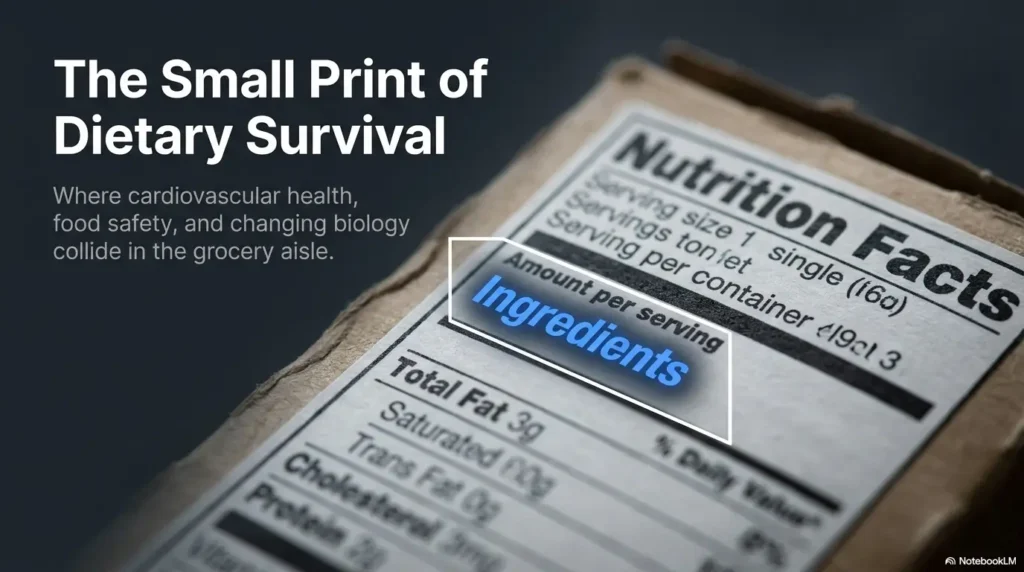
Ingredients are listed by weight, so the first few matter most
Ingredients appear in order by weight. The first few ingredients usually tell you the main character of the food.
If sugar, syrup, refined flour, or oil appears near the front, that matters. If whole grains, beans, nuts, or vegetables appear early, that also matters. You do not need to memorize every additive. Start with the first three to five ingredients.
Sugar’s many aliases can turn the aisle into a spelling bee
Added sugar can appear under names such as cane sugar, brown rice syrup, corn syrup, dextrose, maltose, honey, maple syrup, molasses, fruit juice concentrate, and more.
This is where label reading can become comedy with consequences. You are not expected to know every alias. The added sugar line helps. The ingredient list adds clues.
Don’t do this: trusting front-label claims before reading the back
Front labels are designed to attract you. Back labels are designed to inform you. Both can be true, but they serve different masters.
Claims like “natural,” “multigrain,” “immune support,” “light,” or “made with real fruit” may be worth a second look. They do not replace serving size, added sugar, sodium, saturated fat, fiber, protein, allergens, or ingredients.
If small print is a recurring problem at home, a system for reading labels aloud with low vision may help you use voice tools, phone features, or caregiver support without turning every package into a chore.
Who This Is For, and Who Needs Extra Help
This method is for practical shoppers: older adults, caregivers, people with low vision, people with label fatigue, and anyone who has ever held a jar at arm’s length and thought, “The peasants are rebelling.”
It is simple on purpose.
Good fit: aging eyes, busy shopping trips, and label fatigue
You may benefit from this routine if:
- You can read labels, but only with strain.
- You forget your reading glasses at the worst possible times.
- Glare makes glossy packaging difficult.
- You shop for an older parent or spouse.
- You want a faster way to compare similar foods.
A better grocery setup can also help. For example, a low vision grocery list system can reduce aisle stress by keeping preferred brands, watch numbers, and backup options in one place.
Extra care: diabetes, kidney disease, heart disease, allergies, and special diets
Some shoppers need more than a general routine. If you have diabetes, kidney disease, heart disease, high blood pressure, severe food allergies, celiac disease, swallowing trouble, or a prescribed diet, your watch list should come from your care team.
For one person, sodium may be the first number. For another, carbohydrate consistency may matter more. For someone else, potassium, phosphorus, allergens, or texture may be the real issue.
Not enough: when symptoms or medical restrictions need professional guidance
Labels cannot explain sudden swelling, dizziness, blood sugar swings, allergic reactions, choking, unexplained weight loss, or new vision changes. Those belong in a conversation with a qualified professional.
If you are managing several medications, a one-page list can help you ask better diet questions. A one-page medication list template is especially useful when a pharmacist needs to check whether food, supplements, or timing may affect your routine.
Money Block: Extra-Help Checklist
Answer yes or no:
- Do you have a prescribed sodium, carbohydrate, fluid, potassium, or phosphorus limit?
- Do you have a food allergy or celiac disease?
- Do you take medication with food restrictions or timing rules?
- Do labels feel unreadable even with readers or phone zoom?
- Do you often guess because shopping feels rushed?
If you answered yes to any item: bring your label questions to a doctor, pharmacist, dietitian, or eye care professional.
Neutral action line: Save one confusing label photo and ask about it at your next appropriate appointment.
Common Mistakes That Make Nutrition Labels Harder Than They Are
Most label mistakes are not character flaws. They are design traps, time pressure, and tiny print forming a committee.
Here are the common ones to dodge.
Mistake 1: reading the whole label instead of your priority numbers
Reading every number every time is exhausting. It also makes shopping slower, which makes you more likely to give up and buy the familiar item.
Choose your priority numbers first. For many older adults, that may be sodium, added sugar, saturated fat, fiber, protein, and allergens. Your own list may differ.
Mistake 2: comparing two foods with different serving sizes
Comparing two products without checking serving size is like comparing two books by the number of pages without noticing one is printed in giant type. It may tell you something, but not enough.
Always check serving size before deciding which product is “lower” or “higher.”
Mistake 3: ignoring tiny allergens or “contains” statements
For people with allergies, the ingredient list and “Contains” statement matter. The FDA requires major food allergens to be identified in specific ways on packaged foods, but you still need to read carefully.
If you cannot read allergen information clearly, do not guess. Use phone zoom, ask store staff, contact the manufacturer, or choose a different product.
Mistake 4: shopping without readers, light, or phone zoom
Tools are not cheating. Readers, magnifiers, phone zoom, and better lighting are practical adaptations.
If glare or low contrast is part of the problem, you may also benefit from broader home strategies such as better reading lamp position for central vision loss or glare reduction in kitchens and mail areas.
- Do not start with every number.
- Do not compare without serving size.
- Do not guess on allergens or prescribed diet limits.
Apply in 60 seconds: Put readers, a wallet magnifier, or a phone magnifier shortcut in your grocery routine today.
Build a Simple Label-Reading Routine You Can Actually Repeat
The goal is not to become a nutrition scholar in aisle seven. The goal is to make one better decision with less strain.
Use this four-step routine.
Step 1: enlarge the label
Before reading, make the label readable. Use phone zoom, a magnifier, brighter light, or a photo. If you use a phone often, consider organizing accessibility shortcuts in advance. A setup for iPhone scan settings for low vision can also help with small print beyond food packages.
Step 2: check serving size
Ask: “How much will I actually eat?” If your likely portion is twice the serving size, double the numbers that matter.
This one step prevents many label-reading errors.
Step 3: scan your personal watch list
Your watch list should be short. Three to five items is usually enough.
Examples:
- Blood pressure focus: sodium, saturated fat, fiber.
- Diabetes-adjacent focus: serving size, total carbohydrate, added sugar, fiber, protein.
- Heart-health focus: saturated fat, trans fat, sodium, fiber.
- Allergy focus: ingredients, “Contains” statement, advisory language.
- General fullness focus: protein, fiber, added sugar.
Step 4: compare one similar product before deciding
You do not need to compare six brands. Compare one similar product. One comparison is often enough to reveal a better option.
If the second product is clearly better on your watch numbers and still fits your budget, taste, and cooking habits, that is a practical win.
Mini Calculator: Your Real Serving Number
Use this simple calculator for one nutrient, such as sodium, added sugar, or saturated fat.
Estimated total: Enter the two numbers above.
Neutral action line: Use this only as a quick estimate; follow your clinician’s limits if you have a prescribed diet.
When to Seek Help Instead of Guessing in the Grocery Aisle
There is a point where “trying harder” is the wrong tool. If labels are affecting medical decisions, medication safety, allergy risk, or daily nutrition, ask for help. That is not overreacting. That is good navigation.
Ask a pharmacist if food labels conflict with medication instructions
Some medications come with food, supplement, grapefruit, alcohol, vitamin K, mineral, or timing considerations. If a label makes you wonder whether a food fits your medication routine, ask a pharmacist.
If medication labels are also hard to read, large print, tactile systems, and organized routines can reduce risk. Start with practical ideas in low vision medication safety and large print prescription labels.
Ask a dietitian if every label starts feeling like a math test
A registered dietitian can help translate your health goals into a short grocery watch list. That is especially useful for diabetes, kidney disease, heart disease, digestive conditions, unintentional weight loss, or multiple diet restrictions.
The right professional can turn “avoid everything” into “watch these three numbers and choose these reliable staples.” Much kinder. Much more edible.
Get vision checked if labels suddenly become harder to read
Gradual near-vision changes are common with age, but sudden vision changes deserve attention. If labels suddenly become blurry, distorted, dim, doubled, or hard to read in a new way, schedule an eye exam.
For broader warning signs, a guide to senior vision changes warning signs can help you decide what needs prompt attention.
FAQ
What is the easiest way to read nutrition labels with aging eyes?
The easiest way is to enlarge the label first, then check serving size and your personal watch numbers. Use phone camera zoom, a magnifier, better light, or a label-reading app. Do not begin by reading every line. Start with the numbers that affect your decision.
Can I use my phone camera to enlarge Nutrition Facts labels?
Yes. Open your phone camera, point it at the label, and zoom in. You can also take a photo and enlarge it. This is especially helpful for curved cans, glossy packages, allergen statements, and tiny ingredient lists.
Which nutrition label numbers should older adults check first?
Many older adults should start with serving size, calories, sodium, added sugar, saturated fat, fiber, and protein. People with specific medical conditions may need a different watch list from their doctor or dietitian.
How do I compare two food labels quickly?
First, compare serving sizes. If they are similar, scan your watch numbers side by side. If they differ, adjust mentally for the amount you are likely to eat. In most cases, compare only one similar product so the decision stays manageable.
What does Percent Daily Value mean on a food label?
Percent Daily Value shows how much a nutrient in one serving contributes to a daily diet. As a quick guide, 5% Daily Value or less is generally low, and 20% Daily Value or more is generally high. Whether high is good or bad depends on the nutrient and your needs.
Should I focus more on sugar, sodium, fat, or calories?
It depends on your health goals. For blood pressure, sodium may come first. For diabetes care, carbohydrate, added sugar, fiber, and serving size may matter. For heart health, saturated fat, trans fat, sodium, and fiber may be priorities. Ask your care team for personal limits.
Why is serving size so important on nutrition labels?
Serving size controls the numbers on the label. If you eat two servings, you usually need to double the calories, sodium, added sugar, saturated fat, and other nutrients. Serving size is the hinge on the whole label door.
What should I do if I cannot read allergen information clearly?
Do not guess. Use phone zoom, ask for help, contact the manufacturer, or choose another product. If you have a severe allergy, unclear labeling is a good reason to leave the item on the shelf.
Are front-label claims like “heart healthy” or “low sugar” enough?
No. Front-label claims can be useful, but they do not replace the Nutrition Facts panel and ingredient list. Always check serving size, your watch numbers, and ingredients before trusting the front of the package.
What tools help most for reading food labels with low vision?
Useful tools include phone magnification, a wallet magnifier, strong reading glasses, better lighting, label-reading apps, and a saved grocery list with trusted products. Some shoppers also use voice tools or ask a caregiver to photograph labels for home review.
Next Step: Make a One-Card Grocery Rule
When label reading feels too big, shrink the job. A one-card grocery rule keeps your watch list visible and simple.
Choose your top three watch numbers
Pick three numbers that match your real needs. Examples:
- Sodium, saturated fat, fiber.
- Added sugar, protein, fiber.
- Serving size, carbohydrates, added sugar.
- Ingredients, allergens, sodium.
If you are not sure which three to choose, ask your doctor, pharmacist, or dietitian. “Which label numbers should I check first?” is a clean, practical question.
Put them in your phone notes or wallet
Write the list in large print. Keep it in your wallet, phone notes, or grocery list. If you use a caregiver shopping system, share the same list so everyone is reading the label through the same lens.
For people who misplace notes or struggle with paper systems, a voice recorder for low vision seniors can help capture quick grocery reminders before they evaporate into the parking lot air.
Use the rule on one packaged food today
Do not overhaul the entire pantry. Choose one food you buy often. Soup. Cereal. Yogurt. Bread. Frozen meals. Salad dressing.
Enlarge the label. Check serving size. Scan your three watch numbers. Compare one similar product.
That is the whole move.
- Choose three watch numbers.
- Keep them visible in large print.
- Practice on one familiar food first.
Apply in 60 seconds: Add “serving size, sodium, added sugar” or your own three numbers to your phone notes now.
Conclusion: Let the Label Work for You
The grocery aisle will probably keep its tiny fonts, glossy bags, curved cans, and dramatic front-label promises. We cannot fix all of that before dinner.
But you can change the way you approach the label.
Make it bigger before you judge it. Start with serving size. Scan the numbers that matter for your body, your medications, your allergies, or the person you care for. Compare one similar product, not the whole shelf. That is enough to turn a stressful label into a practical decision tool.
Within the next 15 minutes, choose one packaged food in your kitchen and test the routine: enlarge, serving size, three watch numbers, one comparison. A small habit, done repeatedly, is how the fine print loses its power.
Last reviewed: 2026-05.