


Cracking the Code: A Low-Vision Guide to Reading Expiration Dates
Some expiration dates do not merely hide. They stage a tiny vanishing act on glossy lids, crinkled bags, and stamped can rims, then dare you to solve them under the worst possible kitchen lighting. For people trying to read expiration dates with low vision without a magnifier app, the problem is rarely effort. It is usually setup.
The frustration is painfully specific: pale ink on plastic, embossed codes that only exist at one angle, and busy packaging that turns a simple date into visual static. You lean closer, add more light, and somehow see less.
Keep guessing, and you lose time, confidence, and sometimes the safety margin that matters most with medicine, baby formula, or hard-to-read food labels.
This guide shows a calmer, no-app way to read expiration dates using a side flashlight, a contrast card, and a matte surface. Grounded in low-vision logic, we focus on:
- • Where the label usually hides: Identifying common placement patterns.
- • Why brighter light often fails: Managing glare and visual “noise.”
- • The tiny angle change: Using shadows to make embossed dates finally behave.
Table of Contents
1. Set the stage
Use a matte placemat, towel, or cutting board color that supports low-vision contrast. Busy counters create camouflage.
2. Side light
Aim a small flashlight from the side, not straight on. Shadows reveal stamped text.
3. Add contrast
Try a black card first, then white. The best background depends on the package.
4. Tilt slowly
Rotate the package a few degrees at a time. Tiny angle changes can uncover the date.

Start here first: the flashlight trick that makes faint dates show up
Why angled light often works better than brighter room light
Most expiration dates are hard to read for a boringly physical reason: the print sits on difficult material. Sometimes it is pale ink on glossy plastic. Sometimes it is an embossed code on a metal rim. Sometimes it is a stamped mark so shallow it barely looks committed to being text. A ceiling light pours illumination everywhere, which sounds generous, but often flattens the very shadows that make faint characters visible.
A small flashlight from the side does something smarter. It creates a little theater of contrast. Raised or pressed-in numbers throw tiny shadows. Faint ink separates from the surface by just enough to become legible. The National Eye Institute often recommends brighter lighting and contrast support for daily visual tasks, and this method borrows that logic while making it more targeted and kitchen-friendly.
How to aim the beam so stamped numbers cast readable shadows
Hold the light low and to the side, roughly at the level of the printed line, not above it like a helicopter parent. You are trying to skim the surface with light. On cans, aim along the rim. On plastic tubs, sweep the beam across the lid edge. On medicine cartons, move the light across the side panel instead of blasting the front. The difference is usually not dramatic in the cinematic sense. It is better. The numbers go from invisible to arguable, then from arguable to readable.
I learned this the way many practical lessons arrive: with a carton of cream cheese and a very uncooperative afternoon. Under the kitchen light, nothing. With a tiny flashlight angled from the side, the date appeared like it had been there the whole time and was mildly offended I had doubted it.
When a small flashlight beats overhead kitchen lighting
A flashlight tends to win when the problem is texture, not darkness. If the room is already reasonably lit but the date still disappears, you do not need more light. You need better-directed light. This is especially true for glossy dairy lids, stamped can bottoms, and shrink-wrapped packaging where reflections perform a kind of optical slapstick.
- Use side lighting, not direct frontal light
- Let shadows define embossed or stamped characters
- Move the beam slowly across the package surface
Apply in 60 seconds: Grab one difficult item and aim a flashlight from the side before turning on any extra room lights.
Decision card
Use side-light first when the date looks stamped, shallow, glossy, or embossed.
Use brighter room light first when the whole package is dim and the print is clearly inked but underlit.
Neutral next step: test both for 20 seconds and keep the one that makes the first two digits appear faster.

Contrast card wins quietly: why one plain rectangle can outperform squinting
Black card, white card, matte card: which one helps which package
The contrast card is the hero nobody invites to the poster. It is just a piece of card stock, index card, folder, coaster, or cut scrap from packaging, but it solves a very common problem: visual clutter. Dates are often printed on surfaces that are translucent, reflective, busy, or simply rude. A plain background lets the text stop arguing with the package design.
Black usually helps when the package is pale, translucent, or washed out. White often helps when the code is dark and the surrounding surface is busy or transparent. Matte beats glossy almost every time because glossy backgrounds add reflections, and reflections are freeloaders. They take up visual space without providing useful information. The same low-glare logic shows up when comparing matte versus glossy finishes for glare control at home.
How to place the card behind clear plastic, foil, and glossy labels
Slip the card behind the likely date area if the packaging is clear or partly translucent. Hold it beside the label if the text sits on a curved or reflective surface. With foil lids, use the card as a surrounding field rather than a backing. The goal is simple: reduce the number of competing shapes and tones behind the date.
Caregivers often discover this accidentally. One person reaches for the yogurt cup, another happens to hold a dark potholder behind it, and suddenly everyone becomes an accessibility engineer. Not elegant, but deeply effective.
The background problem most people never notice until they fix it
Many people blame their eyes when the real villain is the background. Pale package on pale countertop. Glossy plastic under glossy lamp reflection. Black stamped code against a chaotic label full of photos, slogans, and tiny nutrition text. You do not need better willpower. You need fewer visual competitors.
Show me the nerdy details
Contrast cards help by simplifying the visual field. When the background becomes more uniform, your remaining usable vision can spend more effort on the edges of the letters and less on sorting the packaging art. Matte surfaces also reduce specular reflection, which is the shiny glare that can wash out low-contrast print.
Before you strain harder: match the package to the right viewing move
Cans and metal lids: look for shallow stamped codes near the rim
Cans love to hide dates near the rim, the bottom, or the lid edge. The code may be shallow and colorless, which means it is a shadow problem more than a reading problem. Use side light, rotate the can, and look for the slight texture shift before you look for numbers. Sometimes finding the line matters more than reading it instantly.
Yogurt cups and dairy tubs: where dates like to hide in plain sight
Dairy packaging often puts the date on the foil lid, the plastic lid edge, or the side wall near the top. These are all prime glare zones. A black card behind a pale lid can help. A flashlight from the side can help more. Tilt the container rather than bringing it closer until the lid becomes a tiny sun.
Medicine boxes and blister packs: printed ink versus embossed lot text
Medicine packaging splits into two camps. Some cartons use dark printed expiration dates that respond well to contrast. Others include embossed lot and date text that respond better to angled light. The U.S. Food and Drug Administration explains that expiration dates on medicines matter because they reflect the period during which the drug is known to meet quality expectations under labeled storage conditions. That is a long way of saying this is not the label to guess at casually. If medication handling is already part of your routine, a broader low-vision medication management system can reduce repeat confusion.
Frozen food bags and pantry boxes: why crinkles and glare steal contrast
Frozen bags crease. Pantry boxes get scuffed. The date can sit on a fold, seam, or glossy patch where your eyes have to decode both shape and text at once. Flatten the surface with your fingers if it is safe to do so. Put the package on a matte background. Then use side light. Strain is a terrible first tool. Setup is better. If your freezer tends to turn routine checks into archaeology, a low-vision freezer organization method can make future date checks less chaotic.
Eligibility checklist
Can you still detect contrast changes or shallow shadows? Yes: this method is likely worth trying. No: jump sooner to a helper, larger print tool, or accessible labeling system.
Is the package surface intact enough to reveal a printed or stamped code? Yes: proceed. No: do not guess.
Is the item medicine, baby formula, or something safety-sensitive? Yes: verify carefully or ask for assistance if the code remains uncertain.
Neutral next step: sort tonight’s items into “readable with setup” and “needs backup help.”
Let’s be honest… the date is often not where you expect it
Top seal, side seam, bottom edge: the three places people skip first
There is a peculiar ritual to looking for an expiration date: people check the front, then the back, then become suspicious of the universe. Meanwhile the actual code is sitting on the top seal, hiding along a side seam, or stamped near the bottom edge like a tiny bureaucrat. A slow perimeter search often beats rereading the obvious label panel five times.
“Best by,” “use by,” and lot code are not always the same thing
This matters because visibility is only half the job. The USDA’s food safety guidance notes that food packages may use different types of date labeling, and not all of them mean the same thing. “Best by” often speaks to quality. Other markings may identify production batches. On food packages, the readable number is not automatically the relevant number. On medicine, the stakes are higher still, and confusion deserves a pause, not a shrug.
Why rotating the package slowly can reveal text your eyes missed head-on
Head-on viewing is overrated. When text sits flush against a shiny or textured surface, a straight view can erase the edges that your vision needs to latch onto. Rotate the package a few degrees at a time. Not like a safecracker in a movie, but close. Slow turns are more useful than big swings. The number you could not see at twelve o’clock may become obvious at one o’clock.
I once spent longer than I care to admit staring at a can bottom that looked blank. Then I turned it a little. The stamped line appeared instantly, which was helpful and also mildly insulting.
The angle test: one tiny movement can change everything
Tilt the package, not just your head
People naturally tilt their head first. It feels active. It feels like trying. But the better move is usually to tilt the object. When you tilt the package, you change the relationship between the surface, the light, and the text. When you tilt only your head, the surface often keeps doing the same unhelpful thing.
Side light versus front light: what makes pale ink pop
Front light tends to brighten everything equally. That sounds democratic, but it often leaves low-contrast print still low-contrast. Side light creates edge definition. Pale ink, embossed numbers, and shallow stamping become easier to separate from the surface because the light gives them shape.
When moving the object closer makes it worse, not better
Bringing the object closer can help, but not always. On glossy lids or curved plastic, getting closer can magnify glare and distortion. You end up closer to a problem, which is not the same as closer to an answer. If the view gets shinier or blurrier as you move in, back up slightly, change the angle, and use the contrast card instead.
- Tilt the package in small increments
- Prefer side light when the surface is glossy or stamped
- Back off if closeness increases glare
Apply in 60 seconds: Move one difficult package through three positions: flat, slightly tilted, and rotated 20 degrees under side light.
Don’t do this: bright glare can erase the very numbers you need
Why direct flash or harsh overhead bulbs wash out glossy labels
Glare is a thief dressed as help. It looks bright and useful, but it often lands right on the text and wipes out the contrast you needed. Harsh overhead bulbs and direct flash create broad reflections that flatten the label. That is why a modest flashlight used well often beats the full kitchen chandelier used dramatically.
The mistake of using white countertops with pale packaging
Pale tub on white marble under bright light can be a special kind of visual sabotage. The package edges disappear. The printed area has no supportive contrast. Everything melts into one clean, elegant blur. Pretty kitchen, terrible reading station. Put down a dark towel or matte placemat and suddenly the package regains its outline.
When “more light” becomes the wrong light
More light helps only when it improves contrast, not when it merely increases shine. If the package gets brighter but the date does not get clearer, change the direction, the background, or the surface beneath it. Reading is not a brightness contest. It is a signal-finding task. This is also why choosing the right warm light color for glare-sensitive eyes and reducing under-cabinet glare on glossy surfaces can matter more than simply adding brightness.
Mini calculator
Count your obstacles: glare, curved surface, faint print.
If you have 2 or 3, use all three supports together: matte surface + side flashlight + contrast card.
If you have 0 or 1, start with just side lighting.
Neutral next step: score one package before you start adjusting it.
Don’t do this either: decoding the wrong number wastes time fast
Expiration date versus manufacture date versus batch code
Sometimes the hardest part is not seeing the number. It is deciding whether the number matters. Packaging may include a lot code, a production code, a “best by” statement, or an expiration date. The label can read like a tiny bureaucratic poem with no punctuation. For foods, date wording varies across manufacturers. For medicines, the expiration date is the one to respect, and the FDA has repeatedly warned against casually using expired medicines.
Why medicine, baby formula, and pantry items use different print habits
Different industries package differently because they answer to different rules, spaces, and habits. Pantry boxes may print dates in plain ink. Medicine cartons may use stamped or abbreviated fields. Baby formula and safety-sensitive items deserve the slow lane, not the guessing lane. If the number is unclear, do not let impatience dress itself up as confidence.
The safest way to pause before guessing
Ask three questions. Is this definitely the date field? Is it fully readable? Is the item important enough that uncertainty should stop me? If any answer is no, stop and verify. That pause can save a surprising amount of trouble.
Short Story: A friend once read what looked like “03 24” on a supplement box and nearly tossed it. Under better light, it turned out to be part of a lot code on the flap, not the expiration date at all. The real date was printed on the side in lighter ink, tucked into a seam like it had rent to avoid. What changed the outcome was not sharper eyesight.
It was a slower process. Dark placemat. Side flashlight. One white card. A full turn of the box, panel by panel. The whole thing took under two minutes, which is less time than second-guessing yourself for the rest of the evening. That is the quiet gift of a repeatable method. It makes the decision smaller, calmer, and a little less personal.
Show me the nerdy details
Decoding errors happen because packaging often contains multiple numeric strings serving different functions. Separating visibility from interpretation is useful. Step one is extracting the characters clearly. Step two is confirming which label field they belong to. This reduces false confidence, especially on medicine and formula packaging.
Who this helps, who it does not
Best for readers with low vision who can still benefit from contrast and shadow
This method helps most when your vision still responds to edge definition, contrast shifts, and changes in lighting angle. If you can often read larger print with the right setup, there is a good chance these tricks will help with dates too. It is especially useful for people who dislike juggling apps while cooking or checking the fridge with one hand already full.
Useful for caregivers helping with groceries, pantry checks, or medicine sorting
Caregivers often need something fast, teachable, and repeatable. This method travels well. It works at the medicine cabinet, the pantry shelf, the grocery counter, even the garage freezer where labels go to become cryptic legends. One flashlight, two cards, one matte surface, and suddenly the task becomes less like treasure hunting and more like routine. For households sharing that work, guides on helping a spouse with vision loss can make the process feel more collaborative and less improvised.
Not enough when the print is too damaged, too tiny, or too low-contrast to verify safely
There are limits. If the text is smeared, scratched, torn, or absurdly small, this setup may still fail. That is not a character flaw. It is a packaging failure intersecting with reality. In those moments, the honest answer is not to push harder. It is to get help, use another accessible tool, or replace the item if safety matters.
Coverage tier map
Tier 1: Plain ink, matte box, good light. Usually readable with no extra tools.
Tier 2: Faint ink or busy background. Add black or white contrast card.
Tier 3: Glossy or embossed surface. Add side flashlight and tilting.
Tier 4: Curved, crinkled, reflective package. Use full setup and slow rotation.
Tier 5: Damaged, tiny, or safety-critical unreadable code. Stop and verify another way.
Neutral next step: label one household item by tier so future checks start faster.
Here’s what no one tells you… surfaces matter as much as eyesight
Matte placemat, dark towel, cutting board: quick home backgrounds that help
A good reading surface is a backstage crew member. It does not need applause. It needs to keep the scene calm. Matte placemats, dark towels, plain cutting boards, and felt trivets all work because they reduce reflection and simplify the background. The package stops disappearing into your counter, which means your eyes have fewer jobs to do at once.
Why patterned counters and busy packaging create visual camouflage
Speckled granite is beautiful and frequently terrible for label reading. Busy surfaces compete with the package edges. Busy packaging competes with the date field. Put the two together and you get visual camouflage worthy of a nature documentary. The code is technically present, but functionally hiding.
How to build a tiny “date-reading spot” in the kitchen without special gear
Choose one shelf, drawer, or counter corner. Store a small flashlight there, plus one black card and one white card. Add a matte placemat. That is your date-reading spot. It turns a recurring annoyance into a routine. People underestimate how much easier a task feels when it has a home. Friction shrinks. The weekly fridge check becomes less of a scavenger hunt and more of a small domestic ritual.
The National Eye Institute also points people toward contrast and environmental adjustments in everyday life, which is a helpful reminder that accessibility is often built from small changes rather than dramatic equipment purchases. If your kitchen lighting itself is part of the problem, glare-free under-cabinet lighting strategies can make this little reading station work even better.
A five-minute setup: build a no-app expiration-date kit at home
One small flashlight
Choose something light, easy to hold, and easy to aim one-handed. A narrow beam can be useful, but you do not need a searchlight fit for a lighthouse keeper. You need a controllable little beam that behaves itself.
One black card and one white card
Use matte index cards, cardstock, a cut cereal box covered with paper, or any plain material that does not shine. Keep both colors because packages are stubbornly diverse. The right card is the one that makes the date separate from its background fastest.
One matte surface to reduce glare
A dark towel or placemat is enough. If the towel has a pattern, retire it from this job. This is not the moment for cheerful florals.
One routine so you stop re-solving the same problem every week
The routine can be absurdly simple: place item down, check likely date zones, add side light, add card, tilt slowly, verify the label meaning. Repetition helps because it reduces the cognitive load of figuring out the setup from scratch every time.
- Store the flashlight with the cards
- Use matte materials only
- Follow the same order each time
Apply in 60 seconds: Put a flashlight, one black card, and one white card together in the same drawer now.
Quote-prep list
- Which package types frustrate you most: cans, medicine, dairy lids, frozen bags
- Whether glare or tiny text is the bigger problem
- Where checks usually happen: pantry, fridge, medicine cabinet, grocery unpacking
Neutral next step: write these three answers before buying any low-vision aid so you do not solve the wrong problem.
Common mistakes that make expiration dates harder to read
Holding the flashlight straight on instead of from the side
This is the classic error because it feels intuitively correct. More direct light should help, right? Unfortunately, straight-on light often kills texture and creates glare. It is the optical version of shouting into a microphone that was already on.
Using a glossy card that adds more reflection
A shiny white card can become a secondary glare machine. If the contrast aid sparkles, it is no longer an aid. Matte wins because it stays quiet.
Looking only for bold printed dates when the code is embossed
Some people search for dark ink even when the package is offering only a colorless stamped code. That mismatch wastes time. First ask: is this ink or texture? Then choose light or contrast accordingly.
Checking in dim, mixed, or yellow kitchen light
Mixed lighting makes surfaces harder to interpret. Yellow under-cabinet bulbs plus overhead glare plus window reflections can turn a simple label into a miniature weather system. Control one thing at a time. A stable corner beats a dramatic room.
Assuming every date label means the same thing
This one causes quiet confusion. The USDA explains that food date labels are not always uniform in meaning, which is exactly why reading the characters and understanding the label are separate steps. A visible code is not automatically the answer you need.
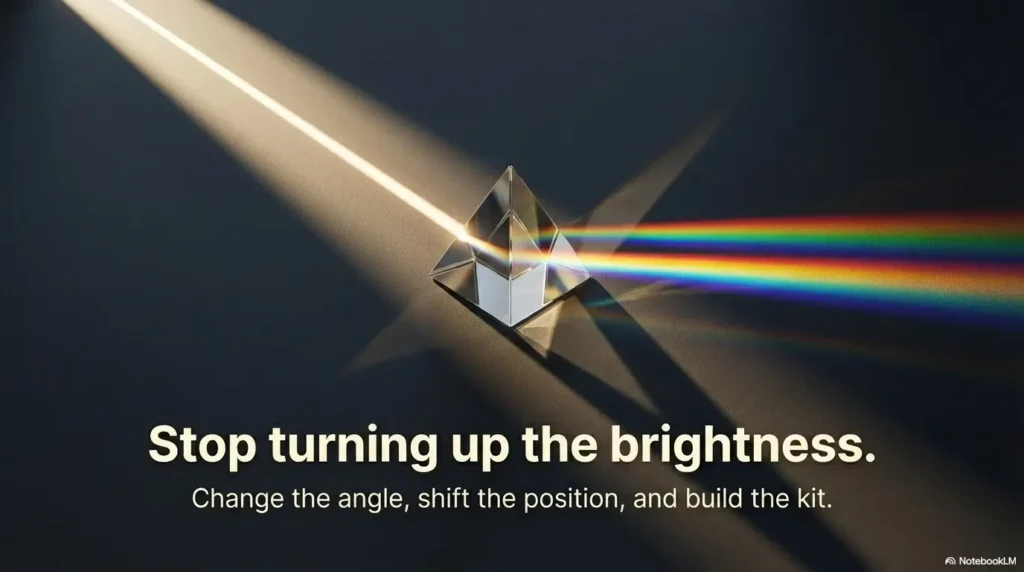
Next step: test one package tonight before the next frustrating pantry moment
Pick one difficult item from your fridge or medicine shelf
Do not start with the easiest box in the pantry. Pick the package that usually makes you sigh. That is the one worth testing because it tells you whether the setup actually reduces friction in real life.
Try side lighting first, then swap in a black or white contrast card
Keep the process small. Matte surface. Side flashlight. Then black card. Then white card. Slow tilt. Most people discover a preferred combination after one or two items, and that pattern matters more than any generic tip list ever will.
Keep the combination that makes the text appear fastest and repeat it tomorrow
The goal is not brilliance. It is reliability. When you know your best combination, the next grocery check takes less time and less emotional wear. The tiny frustration that used to catch in the ribs every week loosens. That is not dramatic, but it is real.
And here is the curiosity loop from the beginning, closed honestly: the label was not always impossible. Often, it was just waiting for the right angle, the right background, and a calmer process than the one most kitchens accidentally offer.
FAQ
Is a flashlight better than turning on every light in the kitchen?
Often, yes. A flashlight used from the side is usually better than simply adding more room light because it creates shadows and edge definition. More room light can increase glare without making the date clearer.
Should I use a black or white contrast card first?
Start with black if the package is pale, translucent, or glossy. Start with white if the printed code is dark and the surrounding design is busy. There is no moral victory for choosing correctly on the first try. Swap quickly and keep the one that works.
Why are expiration dates so hard to read on plastic containers?
Plastic often combines glare, curvature, and low-contrast printing. That means your eyes are fighting both reflection and weak letter edges. Side lighting and a matte background help because they reduce those competing signals.
What is the easiest way to read stamped dates on cans?
Look near the rim or bottom edge, place the can on a matte surface, and sweep a small flashlight from the side. Rotate the can slowly until the stamped line throws enough shadow to stand out.
How can I tell an expiration date from a lot number?
Check the wording around the field whenever possible. On food, labels may use different date terms for different purposes. On medicine, look specifically for the expiration marking and do not assume every number string is the right one.
Can this method help with medicine packaging too?
Yes, especially when the challenge is faint print, glare, or embossed text. But medicine deserves extra caution. If the code remains unclear, verify it rather than guessing. If that is a recurring household problem, tools like a low-vision medication tracker printable, large-print prescription labels, or thoughtful pill bottle tactile label placement can reduce friction before the next scramble.
What should I do if the code is still unreadable?
Stop before uncertainty turns into improvisation. Ask for help, use another accessible aid, contact the manufacturer if appropriate, or replace the item if safety is involved. Unreadable is a result, not a failure.
Are “best by” and “use by” the same thing?
No, not necessarily. Food date labels are not always standardized in meaning across products. Treat the wording as important, not decorative.
Why does the date appear only when I tilt the package?
Because angle changes how light hits the surface and how edges become visible. Glossy and embossed surfaces often reveal text only when the reflection moves away or the shadows deepen.
Is there a safest order for checking food and medicine dates at home?
Yes. First identify the likely date area. Then use side lighting. Then add a contrast card. Then verify the wording around the number. If it is medicine, baby formula, or another safety-sensitive item and the code is still uncertain, stop and verify another way.
Final thought: In the next 15 minutes, build the tiny kit, test one stubborn package, and note which combination worked fastest. That single trial will teach you more than another hour of frustration under the wrong light.
Last reviewed: 2026-03.