
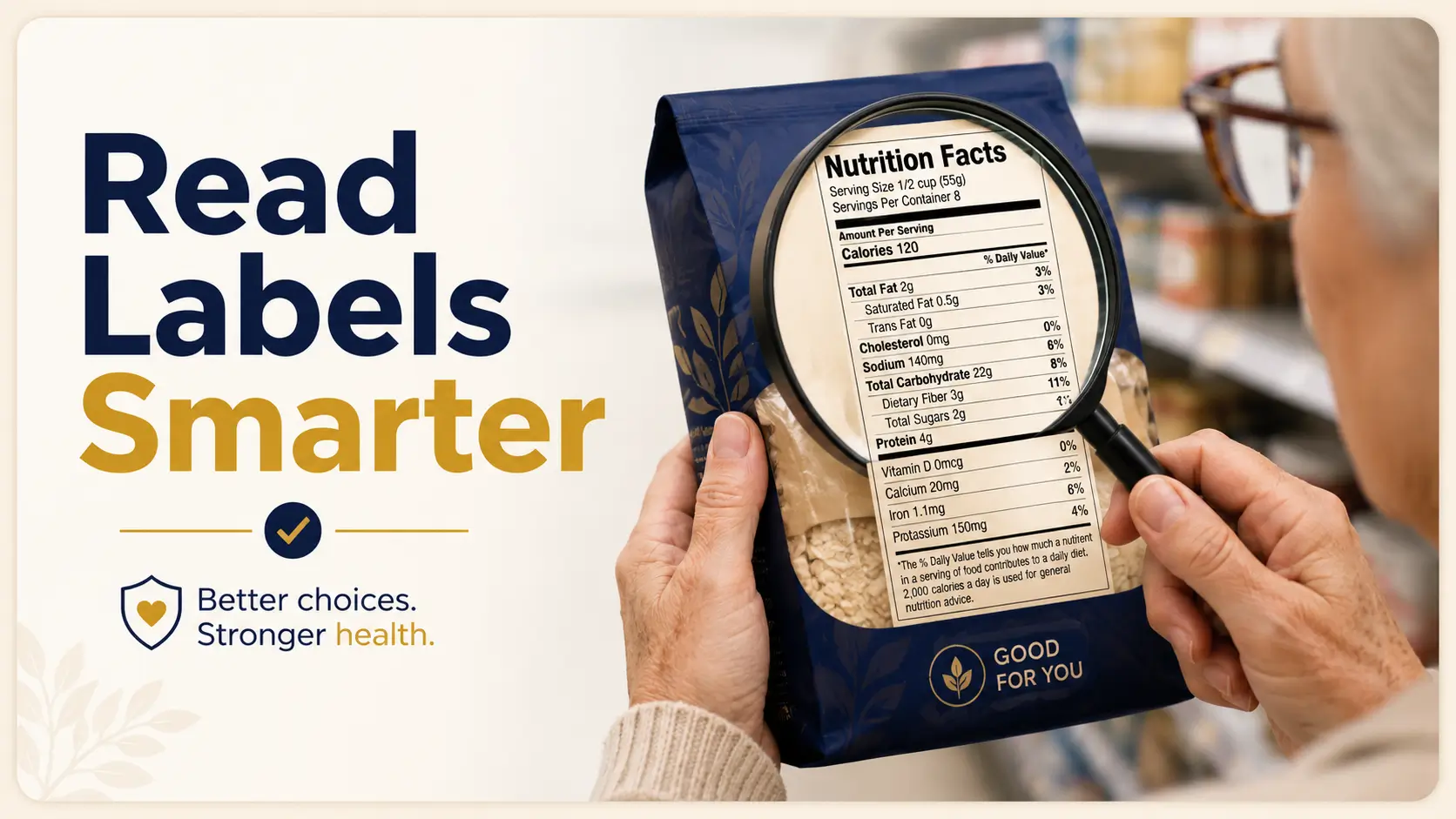
Smart grocery reading for aging eyes
Food Label Reading Tips for Older Adults
When the Fine Print Starts Fighting Back
A food label can look polite from a distance. Then you pick up the box, tilt it under fluorescent grocery lights, and suddenly the numbers shrink into gray confetti. For older adults with aging eyes, reading labels is not just a “healthy habit.” It can be the small hinge between a calmer pantry and a week of too much sodium, hidden sugar, or guesswork.
This guide is built for real aisles, real glare, real hurry, and real hands holding three cans while someone’s phone rings. We will not read the Nutrition Facts label like a textbook from top to bottom. We will read it like a practical safety map: serving size first, then the nutrients most likely to matter for older bodies, then the tiny ingredient list that often whispers the truth.
You will learn a simple 30-second routine, how to use the 5/20 Daily Value rule without turning lunch into math class, and how caregivers can build a safer “yes shelf” at home. The goal is not perfection. It is fewer foggy decisions, fewer label traps, and more confidence when the grocery aisle starts behaving like a tiny-print obstacle course.
Read faster
Know which numbers to check before your eyes get tired.
Shop safer
Spot sodium, added sugar, saturated fat, allergens, and serving-size traps.
Help kindly
Support a parent or partner without turning grocery shopping into a lecture.
Small print should not get the final vote. 🛒
Article snapshot
This guide is for older adults, caregivers, and adult children who want a clearer way to read food labels when vision, glare, small print, or health concerns make grocery choices feel harder. By the end, you will have a practical label-reading routine, a safer pantry-check method, and a list of moments when a clinician, pharmacist, or registered dietitian should be involved.
Table of Contents
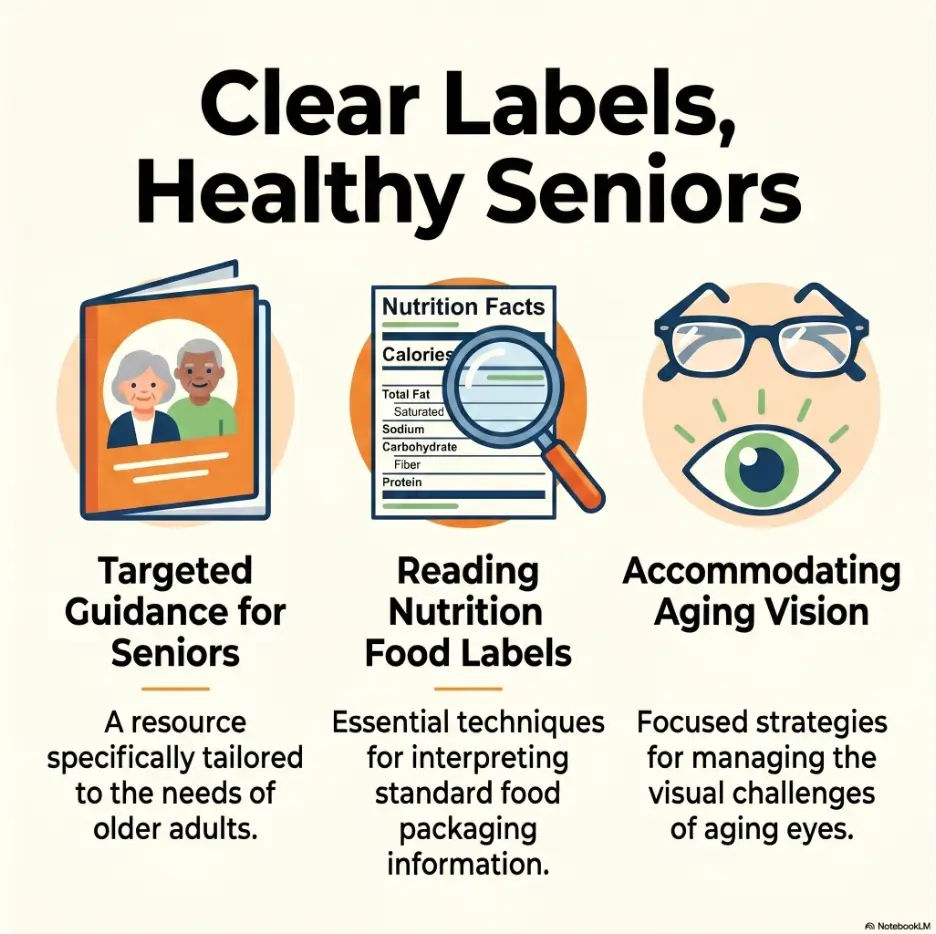
Safety First: Food Labels Help, But They Do Not Replace Medical Advice
Food labels are useful. They are not a personal meal plan, a kidney-care chart, a diabetes treatment plan, or a substitute for a clinician who knows the full story.
That distinction matters, especially for older adults. A label may say a food is “high in potassium,” which sounds helpful for many people. But for someone with certain kidney conditions or medication-related potassium limits, that same food may need professional review. A “low sodium” item may still be too salty for someone on a strict heart failure plan. A “sugar free” snack may contain sugar alcohols that upset digestion.
This article teaches a safer way to read labels for everyday grocery decisions. It does not tell any individual reader what they personally should eat.
Safety note
Older adults with diabetes, kidney disease, heart failure, high blood pressure, swallowing problems, food allergies, unintended weight loss, poor appetite, or medication-related diet limits should confirm food choices with a doctor, registered dietitian, pharmacist, or another qualified clinician. Labels can guide questions, but they should not overrule medical instructions.
Why Label Reading Has Higher Stakes Later in Life
A younger shopper may choose a cereal because it looks crunchy and costs less. An older shopper may be juggling blood pressure goals, reduced appetite, diabetes risk, dental changes, medication timing, food allergies, or lower vision at the same time. The grocery cart becomes a tiny negotiation table.
Small mistakes can stack up quietly. A frozen meal with two servings may look modest until the sodium doubles. A juice drink may look like fruit until added sugar appears. A “protein” snack may have less protein than a boiled egg and more saturated fat than expected.
The goal is not to make food feel frightening. It is to make the label less sneaky.
What Labels Can and Cannot Tell You
A Nutrition Facts label can tell you the serving size, calories, sodium, added sugars, saturated fat, fiber, protein, selected vitamins and minerals, and ingredient details. It can help compare two similar products.
It cannot tell you whether that food fits your exact diagnosis, medication list, appetite pattern, chewing ability, budget, culture, or daily routine. A label is a flashlight, not the whole kitchen.
Use labels to notice what needs attention. Use medical advice to decide what needs restriction, replacement, or careful planning.
The Kindest Rule for Caregivers
If you shop for an older parent, spouse, neighbor, or client, avoid turning label reading into a courtroom scene. Nobody wants to feel scolded in aisle seven while holding crackers.
Try this instead: “Let’s find the version that makes this easier on your body.” That one sentence keeps dignity in the cart.
You are not removing favorite foods just to win a nutrition argument. You are helping someone keep familiar meals while reducing hidden risks where possible.
Who This Guide Is For, And Who May Need More Help
This guide is for people who need a practical system, not a nutrition lecture with a lab coat and tiny shoes.
It is especially useful when older eyes make labels harder to read, grocery trips feel rushed, or a caregiver needs to shop for someone else’s health without guessing. It is also helpful for adult children who want to stock a pantry in a way that respects both safety and preference.
Older Adults Who Squint, Guess, Then Hope
If you have ever held a carton under three different lights and still could not tell whether it said “6g” or “8g,” you are not alone. Aging eyes often need better contrast, more light, more space, or magnification.
The trouble is that grocery stores are not designed like reading rooms. Packages are glossy, aisles are busy, and label print can feel like it was designed by a committee of ants.
This guide gives you a reading order that protects your energy. Instead of trying to decode every line, you will learn which parts deserve attention first.
Caregivers Shopping With Someone Else’s Health in Mind
Caregivers often carry the invisible grocery list: “low sodium if possible, enough protein, easy to chew, not too expensive, familiar taste, no allergens, and please do not start a family argument over soup.” That is a lot.
A repeatable label routine helps you shop with less stress. It also helps you explain choices without sounding bossy. Instead of saying, “This is bad,” you can say, “This one has half the sodium per serving, and it still looks easy for lunch.”
If vision is part of the challenge, pair this article with a practical home setup such as a better reading glasses station for seniors or a low-glare grocery reading method.
Adult Children Stocking a Parent’s Pantry
Adult children often shop in bursts. You visit, open the pantry, see eight half-used boxes, then wonder whether you should reorganize everything or quietly flee into the tea aisle.
Start smaller. Pick five foods your parent eats often: breakfast cereal, bread, soup, yogurt, frozen meals, crackers, or juice drinks. Read those labels once. Then make a “safe favorites” note on your phone so every trip does not begin from zero.
This is not about creating a perfect pantry. It is about reducing the daily friction that makes healthier choices harder.
Who May Need a Personal Plan Instead
Some readers should not rely on general label tips alone. If a clinician has given strict limits for sodium, potassium, phosphorus, carbohydrates, fluids, protein, texture, or meal timing, the safest next step is individualized guidance.
Labels can still help. They can help you bring better questions to an appointment: “This soup has 690 mg of sodium per serving. Is that too high for my daily limit?” Clear questions often lead to clearer answers.
Key takeaway
For older adults, the best label-reading system is not “read everything.” It is “read the highest-risk clues first, then decide whether the food is worth a closer look.”
Start With the Big Print: The Label Clues That Matter First
When the label feels crowded, do not begin with the ingredient list. Begin with the biggest numbers on the Nutrition Facts panel. They usually tell you whether the rest of the package deserves your attention.
The first three clues are serving size, calories, and servings per container. These are the hinges. If you miss them, every number below can mislead you.
Serving Size Is the Trapdoor
Serving size tells you what amount the label numbers are based on. It does not necessarily tell you what you will actually eat.
For example, a bowl of cereal may list nutrition for 1 cup. If your usual bowl holds 2 cups, the sodium, calories, added sugar, and carbohydrates are doubled. That is not a moral failure. It is just label arithmetic wearing a small hat.
For older adults, serving size matters because appetite can be inconsistent. Some days a person may eat very little. Other days snacks become the main meal. Reading the serving size first makes the rest of the label more honest.
Calories Are Louder Now, But Not the Whole Story
Calories are printed larger on many Nutrition Facts labels, which helps aging eyes. But calories alone are not enough.
A 250-calorie snack with protein and fiber may be more useful than a 180-calorie snack that leaves someone hungry again in half an hour. For an older adult with low appetite, calories may even be necessary. For someone trying to manage weight or blood sugar, calories may need more careful planning.
Read calories, but do not let them boss the whole conversation.
Servings Per Container: The Tiny Number That Doubles Everything
Servings per container can be easy to miss. It may be the difference between a reasonable snack and a two-serving package eaten in one sitting.
This matters with bottled drinks, muffins, instant noodles, frozen meals, snack bags, and desserts. A package may look single-serve because it is sold as one item, but the label may count it as two servings.
A helpful rule: if the package is something a person is likely to finish at once, check whether the label agrees. If it says two servings and the person eats the whole package, double the important numbers.
Serving-size mini-check
- Would you eat the listed serving size, or more?
- Does the package contain more than one serving?
- If you eat the whole package, which numbers need to be doubled?
- Is the serving size realistic for the older adult’s usual meal or snack?
The 5/20 Rule: A Fast Shortcut When Labels Feel Too Small
The % Daily Value, often written as %DV, is one of the fastest label shortcuts. It helps you judge whether a nutrient is low or high in one serving.
A simple way to use it: 5% Daily Value or less is generally low. 20% Daily Value or more is generally high. That little rule can save your eyes when the aisle is crowded and the print is staging a disappearing act.
5% Means “Low” Enough to Notice
If sodium is 5% DV or less, that food is relatively low in sodium per serving. If added sugar is 5% DV or less, it is relatively low in added sugar per serving.
For nutrients many people are trying to limit, such as sodium, added sugars, and saturated fat, lower may be useful. But “low” does not automatically mean “best for you.” It depends on the person’s full day, medical advice, appetite, and food needs.
20% Means “High” Enough to Pause
If sodium is 20% DV or higher, pause before placing the item in the cart. The same goes for added sugar and saturated fat. One serving may use a large share of the day’s suggested amount.
For nutrients you may want more of, such as fiber, vitamin D, calcium, iron, or potassium, a higher %DV can be helpful. Still, some conditions require careful limits, so do not treat high numbers as automatic green lights.
%DV Is a Compass, Not a Command
The 5/20 rule is a shortcut, not a judge with a tiny gavel. It helps you compare packaged foods quickly. It does not know your doctor’s instructions, medication list, kidney function, blood pressure goals, or appetite.
Use %DV when choosing between two similar foods. If one canned soup has 34% DV sodium and another has 18% DV sodium, the second may be the better everyday option. But if both are high for your personal limit, the best choice may be a different meal entirely.
Key takeaway
When your eyes are tired, scan the %DV column first. For sodium, added sugar, and saturated fat, 20% or more deserves a pause. For fiber and certain nutrients, higher may be helpful, unless a clinician gave a personal limit.
Sodium, Added Sugar, and Saturated Fat: The Three Numbers to Check Early
If you can only check three nutrient lines before your eyes get tired, check sodium, added sugars, and saturated fat. These are common trouble spots in packaged foods, especially for people managing heart health, blood pressure, diabetes risk, or general nutrition concerns.
This does not mean every older adult must avoid these nutrients completely. Food is not a purity contest. It means these numbers deserve early attention because they often hide in foods that do not look dramatic.
Sodium Sneaks In Quietly
Sodium does not always taste salty. Bread, salad dressing, canned soup, frozen meals, sauces, deli meats, cheese, pickles, instant noodles, and packaged breakfast foods can all carry more sodium than expected.
For older adults with high blood pressure, heart failure, kidney concerns, or medication-related limits, sodium can be especially important. But the right daily amount can vary, so a personal plan matters.
At the store, compare similar items. If two frozen meals look equally appealing and one has 520 mg sodium while the other has 980 mg, that difference is worth noticing. The lower-sodium option may leave more room for the rest of the day.
“Lower Sodium” Does Not Always Mean Low Sodium
Front-of-package claims can be useful, but they can also be slippery. “Reduced sodium” or “lower sodium” usually means less sodium than the regular version. It does not guarantee that the product is low enough for your needs.
Imagine a regular soup has 1,000 mg sodium per serving. A reduced-sodium version may still have 700 mg. Better? Possibly. Low? Not necessarily.
The front of the package is advertising. The Nutrition Facts label is where the numbers sit down and stop smiling for the camera.
Added Sugar Is Not the Same as Total Sugar
Total sugars include sugars naturally present in foods, such as milk sugar in plain yogurt or fruit sugar in whole fruit ingredients. Added sugars are sugars added during processing, such as cane sugar, corn syrup, honey, or other sweeteners.
This distinction matters because many breakfast foods wear a health halo. Flavored yogurt, granola, instant oatmeal, cereal, protein bars, smoothies, and bottled teas can look wholesome while carrying a large amount of added sugar.
For someone watching blood sugar or trying to steady energy, added sugar deserves a second look. It can turn an “easy breakfast” into dessert in a cardigan.
Saturated Fat Needs Context
Saturated fat appears in many foods, including butter, cheese, processed meats, baked goods, frozen desserts, creamy sauces, and some packaged snacks. For heart health, many people are advised to limit it, but individual guidance can vary.
Do not judge a food by one number alone. A meal replacement drink may have some saturated fat but also provide protein and calories for someone with poor appetite. A cookie may have similar saturated fat but little nutritional value. Context matters.
Protein, Fiber, Vitamin D, and Potassium: The Quiet Nutrients Worth Finding
Many label-reading guides focus only on what to avoid. That can make food feel like a hallway full of locked doors. Older adults also need to look for nutrients that help meals do more work.
Protein, fiber, vitamin D, and potassium are worth noticing. They are not the only nutrients that matter, but they often help separate a useful food from a food that merely fills space.
Protein Makes Snacks More Useful
Protein can help make meals and snacks more satisfying. It may be especially important for older adults with smaller appetites, reduced muscle mass concerns, or long gaps between meals.
On a label, look at grams of protein per serving. A snack with 2 grams of protein may not hold someone very long. A yogurt, cottage cheese, tuna pouch, bean soup, or higher-protein drink may provide more support, depending on personal needs.
Protein is not automatically better in giant amounts. People with certain kidney conditions may need tailored advice. But for many everyday shoppers, noticing protein can help build more useful breakfasts and snacks.
Fiber Can Turn “Fine” Into Helpful
Fiber is found in foods such as whole grains, beans, lentils, vegetables, fruit, nuts, seeds, and some fortified packaged foods. On labels, it appears as dietary fiber.
Fiber may support digestive regularity and help a food feel more filling. If you are comparing two breads, cereals, crackers, or snack bars, the one with more fiber may be the better everyday choice, as long as it fits taste, tolerance, and medical needs.
Increase fiber gradually and pair it with enough fluids unless a clinician has restricted fluids. Sudden fiber jumps can make the digestive system complain like a chair dragged across tile.
Vitamin D and Potassium Belong on the Radar
Vitamin D and potassium are listed on many Nutrition Facts labels. They can be useful clues, especially when choosing dairy products, fortified plant milks, cereals, juices, or meal replacement products.
But potassium is a perfect example of why labels and medical advice must work together. Some older adults may benefit from potassium-rich foods. Others may need to limit potassium because of kidney disease or medication issues.
If you have been given potassium limits, do not use a “high potassium” label as a health claim. Use it as a stop sign for a professional question.
Nutrient Density, in Plain English
A nutrient-dense food gives more helpful nutrition for the calories, sodium, sugar, or saturated fat it carries. This is not about expensive specialty foods. It can be as ordinary as oatmeal, eggs, plain yogurt, beans, canned fish, frozen vegetables, fortified milk, or whole-grain bread.
When comparing two foods, ask: “What does this food give back?” If it gives protein, fiber, vitamins, minerals, and easy preparation, it may earn a place. If it gives mostly sodium and sugar with little else, it may be more of an occasional item.
Key takeaway
Label reading is not only about avoiding “bad” numbers. Look for foods that give something useful back: protein for staying power, fiber for fullness, and key nutrients that fit the person’s medical needs.
Ingredient Lists: Where the Label Whispers the Fine Print
The Nutrition Facts panel gives numbers. The ingredient list gives the food’s backstory.
For older adults with allergies, sensitivities, swallowing issues, diabetes concerns, sodium limits, or strong food preferences, the ingredient list can prevent surprises. It is also where front-of-package claims meet the receipts.
First Ingredients Carry the Most Weight
Ingredients are usually listed in order by weight. The first few ingredients make up much of the food.
If sugar, refined flour, oil, or salt appears near the beginning, that tells you something. If whole grains, beans, vegetables, fruit, milk, or other familiar nutrient-rich ingredients appear early, that also tells you something.
This does not mean every long ingredient list is dangerous or every short ingredient list is healthy. It means the first ingredients deserve the first look.
Watch for Sugar’s Many Aliases
Added sugar can appear under several names. Cane sugar, brown sugar, corn syrup, honey, molasses, agave, dextrose, fructose, malt syrup, and fruit juice concentrate may all sweeten a product.
You do not need to memorize every possible name. The added sugars line on the Nutrition Facts label helps. But the ingredient list can show whether sweetness is central to the product or just a small part of the recipe.
A practical trick: if the food tastes like a treat and the added sugar line agrees, treat it like a treat. No courtroom drama required.
Allergens and Sensitivities: Read Twice, Especially on New Brands
If someone has a food allergy, sensitivity, or serious intolerance, ingredient lists deserve careful reading every time, especially with new brands or “new recipe” packaging.
Common allergens may be listed in a “contains” statement, but do not rely only on package familiarity. Recipes change. Manufacturing details change. Labels are the current conversation.
If eyesight makes allergen reading difficult, use a phone magnifier, store app, manufacturer website, or ask a pharmacist, dietitian, caregiver, or store employee for help. Allergy safety is not the place for heroic squinting.
Aging Eyes at the Grocery Store: Make the Label Bigger Before You Decide
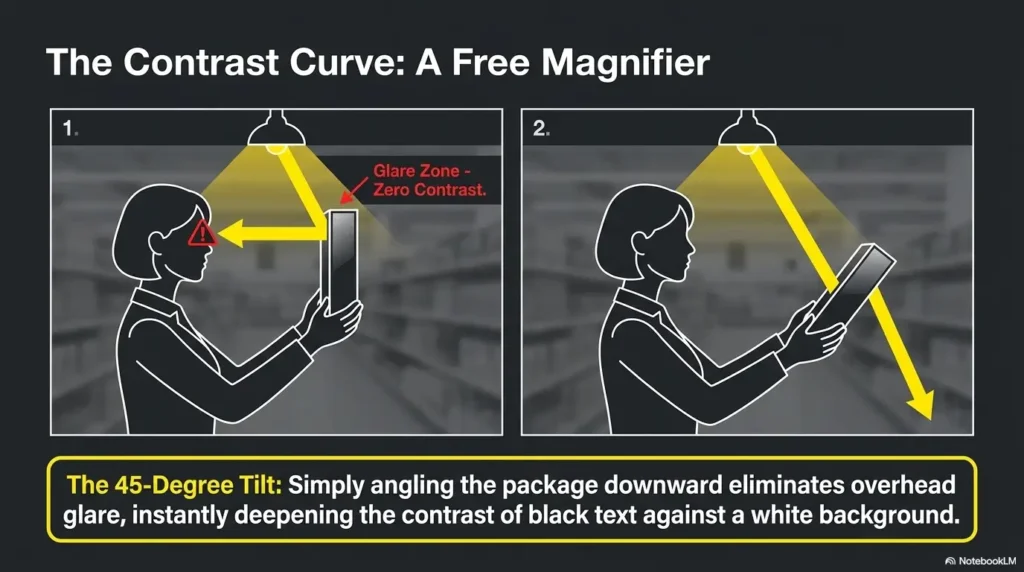
The best nutrition knowledge in the world cannot help much if the label is unreadable. For aging eyes, the first intervention may not be a different food. It may be a better reading setup.
Think of label reading as a visibility task before it is a nutrition task. Bigger print, better light, less glare, and a calmer pace can change the whole grocery experience.
Use Phone Magnifier or Camera Zoom
Most smartphones can act as a quick magnifier. Open the camera, zoom in on the label, and hold the phone steady. Some phones have built-in magnifier tools with contrast settings, brightness controls, and freeze-frame options.
This can be easier than holding a package close to the face, especially if glare or tremor makes reading hard. It also lets a caregiver enlarge the label without taking over the decision.
If the phone screen itself is hard to read, adjust font size and display settings at home. A better phone setup can help with labels, texts, appointment messages, and grocery lists. For a related setup, see this guide to the best phone font size for seniors.
Take a Shelf Photo and Read It Away From the Aisle Rush
If the aisle is crowded, take a clear photo of the label and step aside. This lowers pressure. It also helps when standing too long causes fatigue or when bright store lighting creates glare.
For caregivers, this is a gentle technique. Instead of hovering over the cart and squinting together, you can say, “I’ll take a quick photo so we can compare it without blocking the aisle.” Practical and socially graceful: a rare grocery-store duet.
Bring the Right Reading Tool
Reading glasses, a pocket magnifier, a stand magnifier, or a phone magnifier can all help. The best tool is the one a person will actually carry and use.
For someone with shaky hands, a handheld magnifier may be frustrating. A phone freeze-frame or stand magnifier may work better. For someone who forgets glasses, keep an extra pair in the grocery tote, purse, car, or jacket pocket.
Low vision routines work best when they are boringly available. The hero is not the fanciest tool. The hero is the tool that is there when the soup label turns into mist.
Build a “Safe Favorites” List After One Careful Read
Do not make every grocery trip a fresh exam. Once you carefully check a food and decide it works, save it in a phone note or printed list.
Include the brand, product name, flavor, size, and what made it a good choice. For example: “Tomato soup, 410 mg sodium per serving, easy lunch, buy 3.” That note can spare you from rereading ten labels when you are tired.
If you already use a low-vision grocery routine, connect label reading to it. A low-vision grocery list system can make repeated shopping far easier.
Infographic: The Aging-Eyes Label Flow
1
Make it bigger
Use phone zoom, magnifier, better light, or a shelf photo.
2
Check the serving
Ask whether the listed serving matches real life.
3
Scan risk lines
Look at sodium, added sugar, saturated fat, allergens, and limits.
4
Save the winner
Keep a safe-favorites list so next trip is faster.
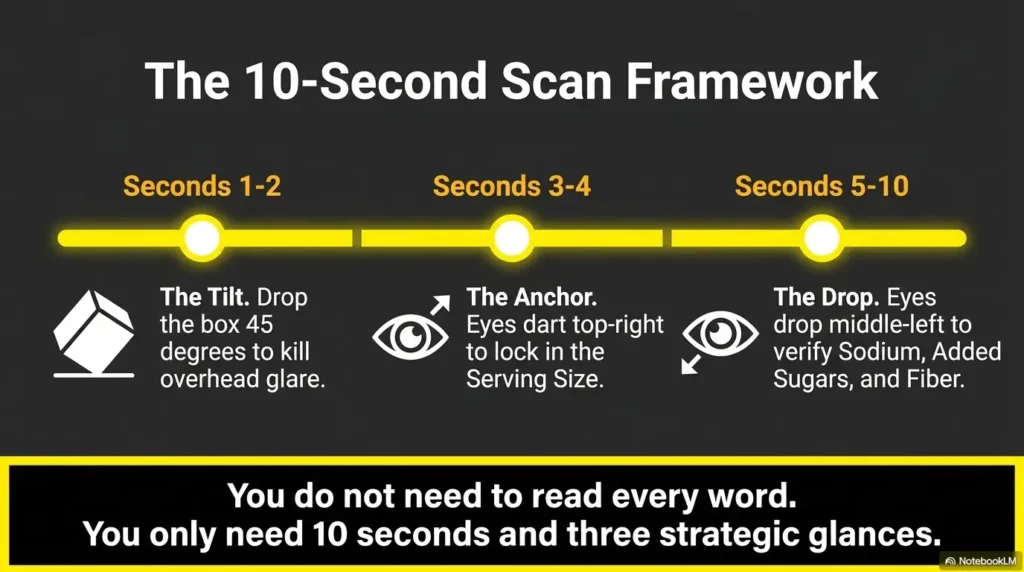
The 30-Second Grocery Aisle Routine
A label-reading routine should be short enough to use when you are tired. The best system is not the one that impresses a dietitian on paper. It is the one you can actually remember while the freezer door is fogging up.
Here is a practical 30-second routine for older adults and caregivers.
Step 1: Serving Size
Start at the top. Ask one question: “Is this the amount I will really eat or drink?”
If the answer is no, adjust the numbers mentally. If the package has two servings and you usually finish it, double the sodium, added sugar, saturated fat, calories, and carbohydrates if those matter for your health goals.
Step 2: Sodium, Added Sugar, Saturated Fat
Next, scan the three common risk lines: sodium, added sugars, and saturated fat. Use the 5/20 rule as a quick signal.
If one of those numbers is high, the food is not automatically forbidden. But it should earn its place. Is it a favorite? A once-in-a-while item? A necessary convenience food? A daily staple? Daily staples deserve stricter scrutiny than birthday pie.
Step 3: Fiber, Protein, Vitamin D, Potassium
Now look for what the food gives back. Check fiber and protein. Notice vitamin D and potassium if those are relevant to the person’s health plan.
A food with modest sodium but no protein, no fiber, and a lot of added sugar may not be very useful. A food with some sodium but meaningful protein and fiber may be worth discussing or fitting into the day, depending on medical needs.
Step 4: Ingredients and Allergens
Finally, scan the ingredient list and allergen statement. This step matters most for new products, allergies, sensitivities, and foods with bold front claims.
If you cannot read the ingredient list clearly, do not guess. Use magnification, take a photo, ask for help, or choose a familiar product you have already checked.
30-second label routine
- Serving size: Is this the amount the person will really eat?
- Risk nutrients: Check sodium, added sugars, and saturated fat.
- Helpful nutrients: Look for fiber, protein, vitamin D, and potassium when relevant.
- Ingredients: Read first ingredients, sugar clues, and allergens.
- Decision: Buy, compare, save as a favorite, or ask a professional.
Key takeaway
A good label routine starts with serving size because every other number depends on it. Then scan sodium, added sugar, saturated fat, helpful nutrients, and allergens in that order.
Show me the nerdy details
% Daily Value is based on general daily reference values, not a person’s custom medical target. That is why it works best as a comparison shortcut. For example, if two similar soups have very different sodium percentages, the lower one may be easier to fit into an ordinary day. But if a doctor prescribed a strict sodium limit, the actual milligrams matter more than the shortcut. The same logic applies to potassium, carbohydrates, protein, and fiber. The label gives standardized information; your care team helps translate that information into a personal plan.
Build a Safer Pantry Shelf Without Rewriting Dinner
The easiest label-reading win is not a heroic grocery overhaul. It is one shelf, five foods, and a calmer repeat system.
Older adults often do best when changes are familiar. Swapping every pantry staple at once can feel like someone moved the furniture in the dark. Instead, keep meals recognizable and improve the riskiest items first.
Choose Five Everyday Foods
Pick foods that appear again and again. Good candidates include bread, cereal, soup, crackers, yogurt, frozen meals, salad dressing, canned beans, pasta sauce, snack bars, and drinks.
Read each label once with good light and magnification. Write down the best option. If an item is surprisingly high in sodium, added sugar, or saturated fat, look for one alternative that still tastes familiar.
If your older parent loves tomato soup, do not start with “No more soup.” Start with “Let’s find the tomato soup that makes lunch easier on your blood pressure plan.” That is a bridge, not a bulldozer.
Create a “Yes Shelf”
A “yes shelf” is a small area of the pantry or fridge where already-checked foods live. These are not perfect foods. They are foods that are easier to choose without rereading labels every time.
This works especially well for older adults with low vision, memory changes, fatigue, or caregiver support. The shelf reduces decision load. It also lowers the chance of grabbing a high-sodium or high-sugar item by habit.
Use large-print labels, tactile markers, or high-contrast shelf tags if vision is a challenge. For kitchen setup ideas, this related guide on kitchen appliance safety for seniors may help you reduce friction around everyday food prep.
Keep a Phone Note for Safe Favorites
Create a simple note called “Grocery favorites.” Include brand, product, flavor, size, and why it works.
Example: “Whole-grain bread, 3g fiber, lower sodium than old brand, green label, buy at regular store.” Another example: “Plain Greek yogurt, high protein, add fruit at home, avoid vanilla version with added sugar.”
A phone note helps caregivers stay consistent. It also helps adult children shop without calling from the aisle every eight minutes like a lost submarine.
Short Story: Maria’s Soup Shelf
Maria’s father loved canned soup. It was lunch, comfort, and routine in one warm bowl. After his doctor mentioned sodium, Maria panicked and bought six unfamiliar “healthy” soups. He disliked all of them.
The next week, she tried again. This time she brought his favorite brand home, sat by the kitchen window, and compared labels with two similar options. One had much less sodium and still looked like the soup he recognized.
They marked the winning cans with a bright sticker and put them on one shelf. No lecture. No dramatic pantry purge. Just a small, visible choice.
The lesson was simple: a safer pantry works better when it respects memory, taste, and dignity. Change becomes easier when it arrives wearing familiar clothes.
When to Seek Help or Stop Changing Food Choices
Food labels are helpful, but some situations need a professional hand on the map. This is especially true when medical conditions, medications, appetite changes, or swallowing problems are involved.
If a change feels risky, confusing, or emotionally charged, slow down. The grocery aisle is not the place to solve a complex medical puzzle with cold peas in one hand.
If a Doctor Gave Specific Limits
Seek guidance if a doctor, nurse, dietitian, or pharmacist gave limits for sodium, carbohydrates, potassium, phosphorus, fluids, protein, vitamin K, or meal timing.
Bring labels or photos to the appointment. Ask direct questions: “Can this frozen meal fit my plan?” “How many milligrams of sodium should I aim for per meal?” “Should I avoid high-potassium foods?”
Specific questions often help professionals give useful, practical answers.
If There Is Kidney Disease, Diabetes, Heart Failure, or Allergy Risk
These conditions can make label reading more complex. Sodium, carbohydrates, potassium, phosphorus, fluids, protein, and allergens may all matter in different ways.
For diabetes, total carbohydrates, added sugars, fiber, serving size, and meal timing may all be relevant. For kidney disease, potassium, phosphorus, sodium, protein, and fluids may need individual guidance. For heart failure, sodium and fluids may matter. For food allergies, ingredient details are safety-critical.
Do not guess your way through these conditions. Ask for a written plan when possible.
If Appetite, Weight, Chewing, or Swallowing Has Changed
Unintended weight loss, poor appetite, chewing pain, swallowing trouble, coughing during meals, or avoiding certain textures should be taken seriously.
In these cases, the “lowest calorie” or “lowest fat” option may not be the best choice. The older adult may need easier textures, more calories, more protein, or a swallowing evaluation.
If swallowing is a concern, stop experimenting with textures and seek medical guidance. Food safety is not only about nutrients. It is also about whether eating is comfortable and safe.
Key takeaway
Stop and ask for help if food choices involve kidney disease, diabetes, heart failure, allergies, swallowing problems, unintended weight loss, or strict medication-related diet rules.
Question list to bring to a clinician or dietitian
- What sodium range should I aim for per meal or per day?
- Should I track total carbohydrates, added sugars, or both?
- Do I need to limit potassium, phosphorus, fluids, or protein?
- Are any foods a concern with my medications?
- What should I do if appetite is low or weight is dropping?
- Should I see a registered dietitian for a personal meal plan?
FAQ
What is the easiest way for older adults to read food labels?
The easiest way is to enlarge the label first, then follow a short order: serving size, sodium, added sugars, saturated fat, fiber, protein, key nutrients, and allergens. Use a phone camera, magnifier, shelf photo, or better lighting so you are not guessing at tiny print.
Which part of a nutrition label should seniors check first?
Serving size should come first. Every other number on the label is based on that amount. If the real portion is twice the serving size, the calories, sodium, added sugars, saturated fat, and other nutrients may need to be doubled.
How can aging eyes read tiny ingredient lists more easily?
Use phone zoom, a magnifier, a bright non-glare reading spot, or a clear photo of the label. Step away from the crowded aisle if needed. For allergy or medical diet concerns, do not guess from blurry print. Ask for help or choose an already-checked item.
What does % Daily Value mean on food labels?
% Daily Value shows how much one serving contributes to a general daily reference amount. As a quick rule, 5% or less is generally low and 20% or more is generally high. It is useful for comparison, but it is not a custom medical target.
Is low sodium always better for older adults?
Not always. Many older adults benefit from watching sodium, especially with blood pressure or heart concerns, but some people need individualized advice. Follow any clinician-given sodium target. If no target was given and health conditions are present, ask for one.
How do you compare two food labels quickly?
First make sure the serving sizes are similar. Then compare sodium, added sugars, saturated fat, fiber, and protein. For older adults with medical limits, compare the specific nutrient that matters most to their plan.
Why does serving size matter so much on packaged food?
Serving size controls the label math. A package may look like one portion but contain two or more servings. If someone eats more than the listed serving, the important numbers rise too.
What label claims should older adults be careful with?
Be careful with claims such as “natural,” “light,” “reduced sodium,” “multigrain,” “heart healthy,” or “no sugar added.” These claims may be useful, but they do not replace checking the Nutrition Facts label, serving size, ingredients, and allergens.
Key takeaway
The safest quick method is not to trust the front of the package. Enlarge the label, check serving size, then compare the numbers that matter for the person’s health and daily routine.
Make One Pantry Shelf Easier in 15 Minutes
The most useful next step is small enough to do today. Pick one pantry shelf, one fridge bin, or one breakfast corner. Do not reorganize the whole kitchen. That way lies exhaustion and mysterious extra cans of beans.
Choose five everyday foods. Read each label with good light and magnification. Check serving size first, then sodium, added sugar, saturated fat, fiber, protein, and allergens. Put the best-fitting options together in one easy-to-see spot.
Then write a short note: “These are the easy yes foods.” Add brand names and flavors if that helps. If you care for someone else, ask what they actually enjoy before replacing favorites. A safer pantry only works when the food still feels like food, not homework.
Within 15 minutes, you can turn one shelf from a blur of boxes into a calmer set of choices. That is the promise of good label reading: not perfection, not fear, not a nutrition lecture in a grocery cart. Just clearer decisions, one package at a time.
Your 15-minute pantry action
- Pick five foods eaten every week.
- Use phone zoom, a magnifier, or stronger light.
- Check serving size before any other number.
- Circle or note the best everyday options.
- Place those items together on a visible “yes shelf.”
Last reviewed: 2026-06