
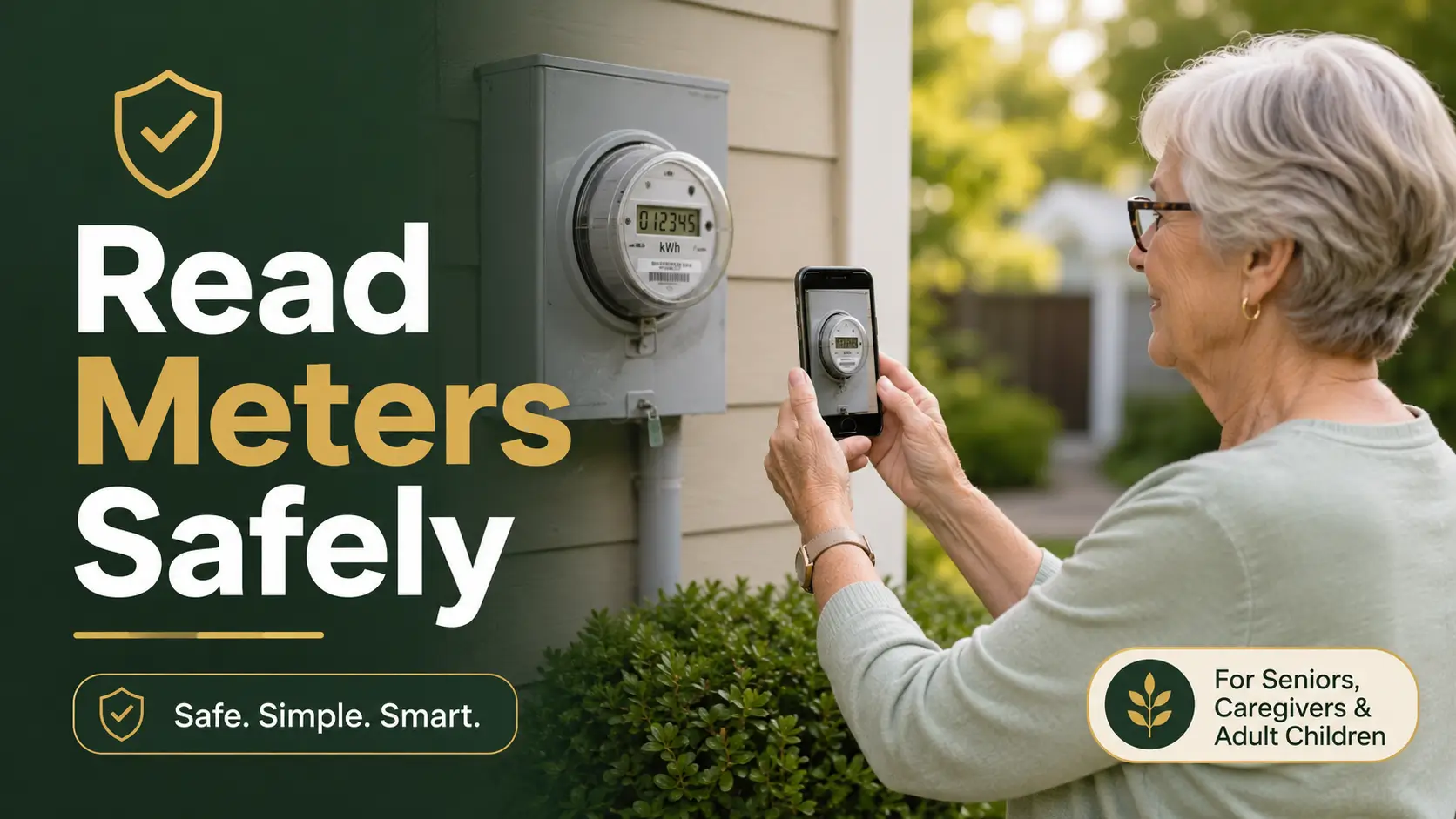
Senior home safety guide
How to Help Seniors Read Utility Meters Safely
without turning a bill check into a fall risk
A utility meter reading sounds simple until you picture the real scene: a dim side yard, a damp concrete path, a small digital display, a gas pipe tucked behind shrubs, or a water meter cover that sits low enough to make knees complain. For many older adults, the hardest part is not understanding the number. It is reaching the number safely.
This guide is for adult children, caregivers, home health aides, and seniors who want a calm, repeatable way to check electric, gas, or water meters without rushing, guessing, bending, or pretending that “I’ll just be quick” is a safety plan. The goal is not perfection. The goal is a reading that does not cost someone their balance, confidence, or peace of mind.
We will use a practical photo-first method, simple stop rules, and a 10-minute safety routine you can set up once and reuse. Think of it as turning a small household chore into a tidy little operating system: light, footing, photo, number, done.
Lower the fall risk
Check the route, lighting, surfaces, and weather before anyone walks outside.
Use photos, not squinting
A wide shot plus a close-up can prevent wrong readings and repeat trips.
Know when to stop
Gas smell, exposed wires, flooding, locked covers, or unsafe access means call the utility.
Good meter reading starts before the meter: safe feet, steady hands, clear light, and no heroics. 🔦
Snapshot
This article helps seniors, adult children, and caregivers create a safer way to read utility meters at home. You will learn how to check the path, use a phone camera instead of bending or reaching, compare simple safety tools, recognize electric, gas, and water meter hazards, and know when to stop and call the utility company instead of forcing the reading.
Table of Contents
Before You Act: A Simple Safety Boundary
This article gives general home safety guidance. It cannot inspect a meter, diagnose a gas leak, verify wiring, judge structural hazards, or replace instructions from your utility company, local code office, medical provider, landlord, or qualified tradesperson.
That matters because utility meters live in awkward places: side yards, basements, garages, crawl-adjacent corners, alley walls, wet sidewalks, and outdoor boxes that seem to have been designed by someone with the knees of a mountain goat. A routine meter check can involve fall risk, electrical risk, gas safety, water damage, insects, pets, locked panels, or poor lighting.
Use a conservative rule: if the area looks unsafe, smells strange, sounds unusual, feels unstable, or requires touching equipment you do not understand, stop. Take a photo from a safe distance if possible, then contact the utility company or a qualified professional.
Key takeaway
The safest meter reading is the one that does not require rushing, bending, climbing, moving heavy objects, touching utility equipment, or walking into a hazard. The number is never more important than the person reading it.
For general fall prevention guidance, the Centers for Disease Control and Prevention has practical resources for older adults and families. For gas or carbon monoxide concerns, official safety guidance should be treated as the louder bell in the room.
Start With Safety, Not the Number
Most meter-reading advice starts with dials, digits, and decimals. That is useful, but for seniors, it skips the part that usually causes trouble: getting to the meter in the first place.
A safe reading begins with the route. Is the path dry? Is it flat? Is the lighting good? Are there hoses, roots, tools, pets, slick leaves, garden edging, or loose mats waiting to grab a toe like tiny household goblins?
Check the path before anyone checks the meter
Before a senior walks to the meter, scan the route in daylight. The best path is boring: clear, dry, level, familiar, and well lit. Boring is beautiful here.
Look for four ordinary hazards that cause extraordinary trouble: uneven ground, poor contrast, clutter, and slippery surfaces. A garden hose crossing a walkway can be more dangerous than the meter itself.
30-second route check
- Is the path dry and free of leaves, ice, mud, or moss?
- Can the senior see each step, edge, and change in surface?
- Are hoses, cords, tools, boxes, planters, or pet items out of the way?
- Is there enough light to walk back safely, not just reach the meter?
- Can the reading be done without bending, kneeling, climbing, or reaching?
Why one clear photo often beats standing and squinting
Standing still while squinting is harder than it sounds. Balance can wobble when someone leans forward, tilts their head, holds a flashlight, or tries to read a low display. Add bifocals, progressive lenses, glare, tremor, arthritis, or cold weather, and the “simple” task grows teeth.
A phone photo changes the job. The senior can take the picture from a comfortable distance, move back to a safer place, then zoom in while seated. If an adult child is helping remotely, the photo can be texted or emailed for a second look.
The “stop rule” every senior should know before walking outside
The stop rule is simple: if the meter cannot be read safely in one calm attempt, stop and ask for help. No kneeling “just this once.” No climbing onto a chair. No moving a heavy planter. No opening a panel. No guessing near a gas smell or exposed wire.
This rule protects confidence as much as bones. Many older adults keep doing household tasks because they want independence, not because they enjoy wrestling with utility boxes. A good system should preserve that dignity without turning safety into a lecture.
Who This Is For, and Who Should Not Try This
This guide is for routine readings when the meter is accessible, intact, and in a stable area. It is not a guide to repairing, opening, bypassing, testing, resetting, or troubleshooting utility equipment.
That distinction matters. Reading is observation. Repair is intervention. Seniors and caregivers should stay firmly on the observation side unless they are qualified and authorized to do otherwise.
For adult children helping nearby or far away
If you live nearby, you can set up the safe route, label the best photo angle, and check the meter during daylight visits. If you live far away, your job is to reduce improvisation: create a one-page script, store utility phone numbers, and ask for photos instead of live balancing acts.
Remote help should not become remote pressure. If your parent says, “I cannot get a good photo,” the answer is not “try again from lower.” The answer is “stop, and we will find another way.”
For seniors who manage their own household bills
Many older homeowners and renters are perfectly capable of checking their own utility information. The safer approach is not about taking over. It is about making the task less physically annoying and less risky.
A phone camera, a bright but non-glaring light, and a written routine can make meter reading feel like checking the mail: familiar, brief, and not worth fussing over.
For caregivers who need a repeatable routine
Caregivers need a process that works even on busy days. The safest routine is not heroic. It is consistent: check the route, take the photo, write the reading, compare the bill, and report anything strange.
If multiple people help in the home, keep the routine visible. A small note near the bill folder or utility contact list can prevent a well-meaning helper from doing something risky because they did not know the house rules.
Not for damaged, leaking, sparking, or tampered meters
Do not ask a senior to approach a meter that appears damaged, loose, burned, flooded, broken, altered, blocked by construction, or surrounded by exposed wires. Do not approach a gas meter area if there is a rotten-egg odor, hissing sound, damaged pipe, or suspicion of a leak.
In those situations, the job changes from “read the meter” to “stay safe and call the proper help.”
Key takeaway
If a reading requires touching utility equipment, opening covers, moving heavy items, entering a risky area, or ignoring a smell or sound, it is no longer a routine reading. Stop and contact the utility company.
The Safer Meter-Reading Setup
The best setup is simple enough to repeat and cheap enough that you do not need a small equipment parade. Most homes can improve meter-reading safety with three things: better light, a camera method, and a clear path.
For some households, low-cost tools are enough. For others, a motion light, grab-bar-style support near a doorway, professional yard cleanup, or utility service visit may be worth considering. The best choice depends on the senior’s balance, vision, the meter location, and how often the reading is needed.
Use phone zoom, not tiptoes
If the display is high, low, behind glass, or awkwardly angled, use the phone camera instead of changing body position. Take the photo from a stable stance. Then enlarge the picture while standing still or sitting down.
Tiptoes, stools, porch chairs, and “one foot on the step” arrangements should be treated as tiny traps wearing innocent hats. Meter readings are not worth a fall.
Add light without adding glare
A flashlight helps only if it improves contrast. Shining a light straight at a glass meter face can create glare, especially for seniors with cataracts, low vision, dry eye, or glare sensitivity.
Try angling the light from the side. If the meter is outdoors, a motion-sensor light may help, but it should illuminate the path as well as the meter. A bright meter with a dark walkway is a half-solved problem wearing a shiny hat.
Keep one hand free, because balance matters more than speed
Ask the senior not to carry a clipboard, flashlight, phone, keys, and mail all at once. One hand should stay free for balance, a railing, a wall, or a walking aid.
If two hands are needed to hold a phone steady, the person should be standing on a level surface with no need to brace. Otherwise, use a helper, a different angle, or a utility company reading option.
| Setup option | Best for | Pros | Watch-outs |
|---|---|---|---|
| Good: phone camera plus written checklist | Accessible meters in safe areas | Low cost, easy to repeat, useful for remote help | Requires enough light and a steady stance |
| Better: phone camera, flashlight, motion light, cleared path | Outdoor meters or dim side yards | Reduces squinting and stumbling, improves repeatability | Lighting should not create glare or shadows |
| Best: utility reading option or professional access fix | Hard-to-reach meters, mobility concerns, recurring hazards | May reduce or remove the need for risky readings | May involve scheduling, service rules, or cost depending on the situation |
Utility setup checklist
- Phone camera can focus on the display from a safe standing position.
- Lighting shows both the walking path and the meter face.
- Senior can keep one hand free while approaching the area.
- Reading can be captured without bending, kneeling, reaching, or opening equipment.
- Utility contact number is saved before a problem occurs.
Do Not Send Seniors Out Alone in These Conditions
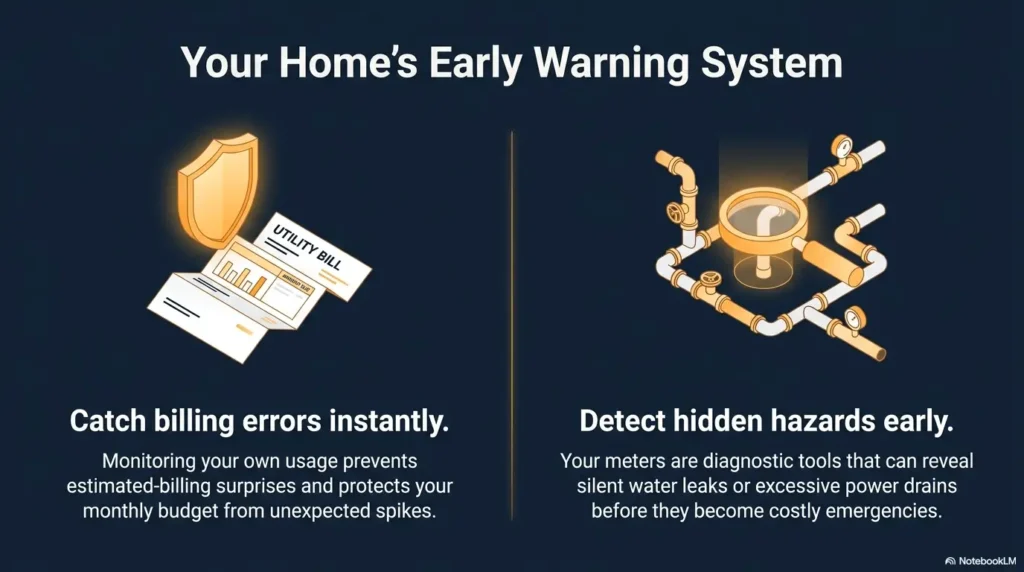
Some days are simply bad meter-reading days. A monthly bill question can wait. A fall, gas concern, or electrical hazard cannot be unwound with a polite apology to the universe.
When in doubt, delay the reading, use the prior reading for comparison, ask the utility company about options, or have a safer helper check during daylight.
Bad weather turns a simple reading into a fall risk
Rain, snow, ice, wind, wet leaves, mud, and extreme heat all change the job. A short outdoor walk can become slippery, disorienting, or exhausting.
Even if the senior feels steady, poor weather increases the chance of rushing. Rushing is where many household accidents quietly begin.
Poor lighting hides steps, hoses, roots, and uneven ground
Low light is not just a vision problem. It changes depth perception, contrast, and confidence. A senior may see the meter but miss the low step beside it.
Outdoor lighting should cover the entire route. If the meter is in a basement, garage, or utility room, add light before walking into the area, not after someone is already halfway through it.
Let’s be honest: “I’ll just be quick” is where accidents begin
Quick is not the same as safe. Seniors may rush because they do not want to bother anyone, because the weather is unpleasant, or because they feel embarrassed that a once-easy chore now takes planning.
A kinder script helps: “The goal is not speed. The goal is one safe photo.” That sentence can remove the little cloud of pressure that makes people take unnecessary chances.
Skip the reading today if…
- The walkway is wet, icy, muddy, cluttered, or poorly lit.
- The senior feels dizzy, tired, rushed, unsteady, or short of breath.
- The meter is blocked by heavy objects, snow, locked access, pets, or insects.
- There is a gas smell, hissing sound, exposed wiring, flooding, or visible damage.
- The reading would require a ladder, stool, kneeling, or moving a utility cover.
Electric, Gas, and Water Meters Are Not the Same Job
Meter reading safety improves when you stop treating all meters as the same task. Electric, gas, and water meters have different risks, locations, and stop signs.
The reading method can stay simple: observe, photograph, record. The safety boundary changes by utility type.
Electric meters: read the display, avoid the equipment
For electric meters, the senior should read or photograph the display only. Do not open panels, touch wires, adjust covers, or try to clean inside any electrical equipment.
If the display is blank, cracked, burned, loose, sparking, buzzing, or surrounded by exposed wiring, do not approach or touch it. Call the utility company or another appropriate professional.
The National Fire Protection Association offers public electrical safety information that can help families understand why damaged electrical equipment should be treated with caution.
Gas meters: know when smell or sound means stop immediately
Gas meters deserve special caution. A rotten-egg odor, hissing sound, damaged pipe, loose connection, or suspicion of a leak is not a “take a closer look” moment. It is a stop-and-follow-emergency-guidance moment.
Do not use a phone near a suspected gas leak area if local emergency guidance says to leave first. Do not turn switches on or off. Do not try to tighten pipes. Leave the area and contact the proper emergency or utility number from a safe place.
Water meters: watch for slippery covers, insects, and low access points
Water meters may be indoors, outdoors, in basements, under covers, in pits, or near damp surfaces. The common risk is often not the water reading itself. It is bending, lifting a cover, stepping onto a slick area, or reaching into a space with insects or debris.
If the water meter requires lifting a heavy cover, crouching near a curb, reaching into a pit, or standing near pooled water, ask the utility company about safer reading options. A paid service call or access improvement can be cheaper than the aftermath of a fall.
| Meter type | Primary senior safety concern | Safer approach | Stop immediately if… |
|---|---|---|---|
| Electric | Electrical equipment, exposed wiring, awkward wall access | Photograph the display only from a safe stance | There are sparks, exposed wires, burning smells, broken covers, or buzzing equipment |
| Gas | Possible leaks, pipe damage, emergency risk | Read only if the area is normal, dry, clear, and odor-free | There is a rotten-egg smell, hissing, damaged pipe, or suspected leak |
| Water | Slippery surfaces, low covers, bending, insects, flooded access | Use a photo if visible without lifting or kneeling | The cover is heavy, the area is flooded, access is low, or the senior must kneel or reach |
The Safe Meter Reading Flow
1
Route
Check footing, clutter, weather, and visibility.
2
Light
Light the path first, then the meter face.
3
Photo
Take a wide shot and a close-up without bending.
4
Record
Write the reading, date, utility, and notes.
5
Stop
Call the utility if anything looks unsafe.
If the senior also has low vision, pair this routine with our guide to reading utility meters with low vision so the photo method, lighting, and zoom steps feel easier to repeat.
For a broader room-by-room safety review, use this home safety checklist for seniors before asking an older adult to walk to outdoor meters, basements, garages, or side-yard access points.
If poor vision or depth perception makes outdoor chores feel less certain, this guide to aging vision and fall prevention at home can help you make the walking route safer before the next meter reading.
Common Mistakes That Make Meter Reading Riskier
Most meter-reading problems come from ordinary shortcuts. Nobody wakes up planning to make the side yard dramatic. The risk builds from small decisions: one extra reach, one blurry number, one box moved without looking behind it.
Here are the mistakes worth removing from the routine.
Mistake 1: Asking seniors to bend, kneel, or reach without support
Bending and kneeling are not just comfort issues. They can affect balance, dizziness, knee pain, hip pain, and the ability to stand back up. Reaching can shift weight forward and increase fall risk.
Use the phone camera instead. If the meter cannot be photographed without bending, the access setup needs to change.
Mistake 2: Trusting memory instead of taking a photo
Meter readings are easy to misremember, especially when someone is outside, cold, distracted, or trying to get back inside. A photo gives you a timestamped record and reduces the chance of mixing digits.
For caregivers, photos also create a useful trail. If a bill jumps, you can compare current and past readings without asking the senior to repeat the trip.
Mistake 3: Moving boxes, tools, or meter covers without checking hazards
Garages and side yards collect objects the way pockets collect receipts. Boxes, ladders, paint cans, bags of soil, and tools can block meters or hide hazards.
Do not ask a senior to move heavy or awkward items to reach a meter. If the path needs clearing, do it during a planned daylight cleanup, not during a bill panic.
Mistake 4: Ignoring a bill spike because “the meter must be wrong”
A high bill does not automatically mean the meter is wrong. It may reflect seasonal use, a rate change, an estimated reading, a leak, a running toilet, heating or cooling changes, appliance issues, or a billing adjustment.
The safer move is to compare readings, review recent usage, check for visible leaks or appliance changes, and contact the utility company with clear notes. Do not send a senior into an unsafe meter area just to settle a number.
| Risky shortcut | Why it causes trouble | Safer alternative |
|---|---|---|
| “Just lean closer.” | Shifts balance and increases fall risk | Take a photo and zoom in |
| “Use a stool.” | Creates climbing risk for a low-value task | Ask for help or contact the utility |
| “Move the cover.” | May expose insects, water, weight, or utility equipment | Do not lift heavy or unfamiliar covers |
| “Guess the last digit.” | Can lead to wrong usage assumptions | Take another photo only if the area is safe |
| “Check it tonight.” | Low light hides hazards | Wait for daylight or improve lighting |
Key takeaway
A blurry number is not an emergency. A fall hazard, gas smell, electrical problem, or flooded access point is. Solve the safety problem before chasing the reading.
The Photo Method That Prevents Guesswork
The photo method is the safest basic meter-reading system for many seniors because it separates movement from interpretation. First, capture the image. Then read the number somewhere safer.
This is especially helpful for low vision, glare sensitivity, hand tremor, progressive lenses, arthritis, or meters mounted in awkward places.
Take one wide shot and one close-up
The wide shot shows the meter location and surrounding context. The close-up shows the reading. Together, they reduce confusion.
For digital meters, wait a moment in case the display cycles through screens. For dial meters, take a clear photo straight on if possible, but do not lean into a risky position to do it.
Include the meter number when possible
If the meter number or serial number is visible without extra reaching, capture it in one of the photos. This can help when calling the utility company, especially if there are multiple meters on the property.
Do not remove covers, wipe equipment aggressively, or open anything to find a number. If it is not safely visible, skip it.
Here’s what no one tells you: blurry photos still reveal patterns
A blurry photo may not give the perfect reading, but it can still show whether the meter is digital or dial-based, whether glare is the issue, whether the display is blocked, and whether the photo angle needs improvement.
Instead of asking the senior to try three more times while standing outside, use the imperfect photo to improve the setup later. Maybe the light angle needs changing. Maybe a shrub needs trimming. Maybe the utility company needs to be called about access.
Simple meter photo script
- Stand where both feet feel stable.
- Take one photo of the whole meter area.
- Take one closer photo of the display without bending or reaching.
- Step back to a safe place.
- Zoom in on the photo and write down the reading.
- Save the photo with the date if the bill is being questioned.
Show me the nerdy details
The photo method works because it reduces task stacking. A senior does not have to walk, balance, aim light, interpret digits, remember numbers, and return safely all at once.
Breaking the job into two phases lowers cognitive load: capture first, interpret later. It also creates a record that can be reviewed by a caregiver, compared against the bill, or shared with the utility company if there is a question.
Remote Help for Adult Children
Helping from another city is possible, but it requires humility. A video call can make you feel present, but it can also tempt a parent to walk, aim, turn, and talk at the same time. That is a lot of choreography for a utility bill.
The better remote system is written, photo-based, and calm. Give your parent a script they can follow without needing you to narrate every step live.
Use video calls only when the senior can stand safely
Video calls are useful for reviewing a safe area, but they are not ideal when a senior must walk outside, step around obstacles, hold a phone, and listen to instructions. If a call is used, keep it brief and avoid asking the person to reposition repeatedly.
A safer pattern is this: the senior takes photos first, returns inside, then calls from a chair to review the images together.
Create a one-page meter script they can follow
A script removes the need to remember instructions under pressure. Keep it large-print, plain, and specific to the home.
For example: “Use the back door. Turn on the patio light. Stand on the concrete square. Take one photo of the whole gas meter. Take one close-up. Do not touch the pipes. If you smell gas, leave and call the utility from outside the area.”
Save utility company contact details before there is a problem
Do not wait until a bill looks strange or a meter is blocked to hunt through paperwork. Save the electric, gas, and water utility phone numbers in the senior’s phone, on the refrigerator, and in the bill folder.
Also note the account holder name, service address, and any online account access details that the senior is comfortable sharing with a trusted helper. Keep sensitive information secure, but do not hide the emergency number in a maze of passwords and sticky notes.
Short Story: The Photo That Saved the Second Trip
Marilyn’s son used to call on bill day and ask for the water meter reading. She would step outside, crouch near the cover, read the numbers aloud, then forget whether the third digit was a five or a six by the time she got back inside.
One rainy afternoon, she nearly slipped on wet leaves beside the path. Nothing dramatic happened, but the scare stayed in the room longer than either of them admitted.
The next weekend, they changed the routine. Her son cleared the walkway, marked the safest standing spot with outdoor tape, and wrote a large-print script. Marilyn now takes one wide photo and one close-up before lunch, then reads the number from her kitchen table.
The bill still gets checked. The difference is that nobody has to negotiate with wet leaves anymore.
Key takeaway
Remote caregiving works best when it reduces live pressure. Ask for photos, not acrobatics. Review the reading after the senior is safely back inside.
When the Meter Area Needs a Mini Safety Makeover
If the same meter area causes trouble every month, do not keep redesigning the routine in your head. Improve the area once. A small safety makeover can make utility readings, maintenance visits, emergency access, and everyday outdoor movement safer.
This is also where comparison and cost decisions come in. Some fixes cost little: clearing clutter, trimming shrubs, moving a hose, adding contrast tape. Others may require a handyman, electrician, landscaper, landlord request, or utility company visit.
Clear the walking path without blocking utility access
Remove trip hazards from the route to the meter, but do not stack items in front of the meter itself. Utility workers may need safe access, and blocking equipment can create headaches later.
For renters or senior living residents, ask the landlord, property manager, or facility coordinator before making permanent changes. Document access issues with photos rather than relying on a long description over the phone.
Add motion lighting near outdoor meters
Motion lighting can help if the meter is outside or near a dim entry path. The light should cover the walking route, steps, and meter area. It should not blast directly into the eyes or reflect sharply off glass.
Before buying anything, compare brightness, motion range, installation requirements, battery or wiring needs, weather rating, and whether the senior can maintain it. A bargain light that requires frequent ladder battery changes is not a bargain. It is a future errand in disguise.
Mark steps, edges, and uneven ground before the next reading
High-contrast tape, outdoor markers, or edge paint can help make changes in surface easier to see. This is especially useful for seniors with low vision, cataracts, reduced contrast sensitivity, or progressive lenses.
If the ground is badly uneven, temporary marking is not enough. Consider whether a repair, ramp, handrail, or professional assessment is needed. The right paid help may be worth it when the same hazard affects daily movement, not just meter readings.
| Need | Low-cost option | Mid-range option | Professional help may be worth it when… |
|---|---|---|---|
| Better visibility | Flashlight, angle adjustment, contrast tape | Battery motion light | Wiring, exterior installation, or recurring darkness is an issue |
| Clearer route | Move hoses, sweep leaves, remove clutter | Outdoor storage bin or path markers | Walkway repair, drainage, or landscaping is needed |
| Less bending | Phone camera zoom | Magnifier app or phone accessibility settings | The meter remains unreadable without unsafe posture |
| Utility access | Trim light shrubs if allowed | Schedule property cleanup | The meter is locked, buried, flooded, damaged, or blocked by equipment |
Questions to ask before paying for a safety fix
- Will this make the walking route safer, or only make the meter easier to see?
- Can the senior use it without a ladder, tools, or frequent maintenance?
- Does the change preserve utility company access?
- Is this a temporary visibility issue or a larger walkway repair issue?
- Would the same fix also improve mail, trash, garden, garage, or nighttime safety?
When to Stop and Call the Utility Company
Calling the utility company is not overreacting. It is often the correct next step when the meter is unsafe, inaccessible, confusing, damaged, or connected to an unusually high bill.
Many utility companies have procedures for estimated readings, meter access issues, meter tests, service concerns, gas odor reports, and special circumstances. The exact options vary, so the safest wording is: ask what they can do, document what you notice, and do not force access yourself.
Stop if there is a gas smell, hissing sound, or damaged pipe
Gas concerns should be handled according to emergency and utility guidance. Leave the area if a leak is suspected, avoid actions that could create ignition risk, and call from a safe location.
For general utility bill and service issues, USA.gov provides a useful starting point for understanding utility bill concerns and consumer options.
Stop if wires, panels, or boxes look broken or exposed
Exposed wires, broken boxes, damaged panels, burn marks, buzzing, sparking, or loose equipment should not be handled by a senior, caregiver, or curious relative with a screwdriver and confidence. That combination has written too many bad endings.
Take photos from a safe distance if doing so does not increase risk, then contact the utility company or a qualified professional.
Stop if the meter is locked, buried, flooded, or unsafe to reach
A locked, buried, flooded, or covered meter is not a puzzle for a senior to solve. It is an access issue. The utility company, landlord, property manager, or qualified service provider should help determine the correct next step.
If the bill is much higher than usual, call with clear information: account number, service address, billing period, current photo if safely available, prior readings if you have them, and any recent changes in household use.
What to have ready before calling the utility
- Account holder name and service address.
- Utility type: electric, gas, or water.
- Bill amount, billing period, and why it seems unusual.
- Current meter photo, only if it was safe to take.
- Notes about blocked access, damage, odor, flooding, or safety concerns.
- Any recent changes: guests, heating, cooling, irrigation, appliances, leaks, or repairs.
Key takeaway
A utility company call is cheaper than a preventable injury. When access is unsafe or equipment looks wrong, the safest reading is no reading.
FAQ
Can a senior safely read their own utility meter?
Yes, many seniors can safely read their own utility meter if the route is clear, the lighting is good, the meter is easy to see, and the task does not require bending, kneeling, climbing, reaching, or touching equipment. If the area is unsafe, the senior should not attempt it alone.
What is the safest way to read a meter without bending down?
Use a phone camera from a stable standing position. Take one wide photo and one close-up, then zoom in on the image from a safe place. If the display cannot be photographed without bending or reaching, ask the utility company or a helper about safer access options.
Should seniors take a picture of the meter reading?
Usually, yes. A photo can prevent misread digits, reduce repeat trips, help adult children review the reading remotely, and create a record if a bill is questioned. The photo should only be taken if the senior can stand safely and avoid touching utility equipment.
What should I do if my parent’s meter is hard to access?
Do not ask your parent to force the reading. First, identify why it is hard to access: clutter, lighting, shrubs, locked cover, low position, unsafe ground, or equipment concerns. Clear simple trip hazards if safe and allowed. For blocked, locked, damaged, flooded, or low-access meters, contact the utility company, landlord, property manager, or a qualified professional.
Is it safe to read a gas meter if there is a strange smell?
No. If there is a rotten-egg odor, hissing sound, damaged pipe, or suspicion of a gas leak, stop. Leave the area and follow emergency or utility guidance from a safe location. Do not try to inspect, tighten, test, or photograph the meter if doing so keeps you near a suspected leak.
How often should a utility meter be checked?
For most households, checking around the billing cycle or when a bill seems unusually high is enough. Some caregivers like a monthly photo record. Avoid frequent checks if the meter area is awkward or risky. Safety should decide the schedule, not curiosity.
Can the utility company read the meter instead?
Often, yes, depending on the utility, meter type, location, and service rules. Some meters are read remotely, some are read by utility staff, and some may use estimated readings when access is limited. Contact the utility company and ask what options are available for seniors, mobility concerns, blocked access, or unsafe meter locations.
What should I do if the bill is much higher than usual?
Compare the bill to prior usage, check whether the reading was estimated, look for obvious household changes, and take a safe meter photo if possible. For water bills, consider possible leaks or running toilets. For electric or gas bills, consider seasonal heating or cooling changes. If the number still looks wrong, call the utility company with your notes.
Next Step: Build a 10-Minute Meter Safety Routine
The best next step is not buying a gadget or memorizing meter dials. It is walking the route once in daylight and deciding whether the reading can be done without risk.
Set a timer for 10 minutes. Start at the door the senior would use. Walk to the meter slowly. Notice the ground, lighting, clutter, steps, railings, pets, shrubs, and the exact spot where a phone photo could be taken safely. Then write the routine in plain language.
Walk the route once in daylight
Daylight reveals what evening hides. If you find a hazard, fix the route before the next bill question arrives. A cleared path is a small kindness with excellent manners.
Save the safest photo angle
Take a sample photo from the safest standing spot. If it works, save it as a reference. If it does not work, do not keep asking the senior to experiment. Improve the lighting, clear the view, or contact the utility company about access.
Put the utility phone number where everyone can find it
Write the electric, gas, and water utility contact information on one page. Keep it near the bill folder, in the senior’s phone, and with any caregiver notes. The moment something smells strange, looks broken, floods, sparks, locks, or blocks access, nobody should have to search through drawers like a detective in a cardigan.
15-minute action plan
- Find the meter location in daylight.
- Check the walking path for trip hazards and poor lighting.
- Choose the safest standing spot for a photo.
- Take a sample wide shot and close-up.
- Write a large-print script for the senior or caregiver.
- Save utility contact details in two easy places.
- Decide the stop rule: no reading if access is unsafe.
A utility meter reading should feel like a calm household habit, not a small expedition. Build the route, use the photo, keep the number secondary, and let safety be the quiet conductor of the whole routine.
Last reviewed: 2026-07