
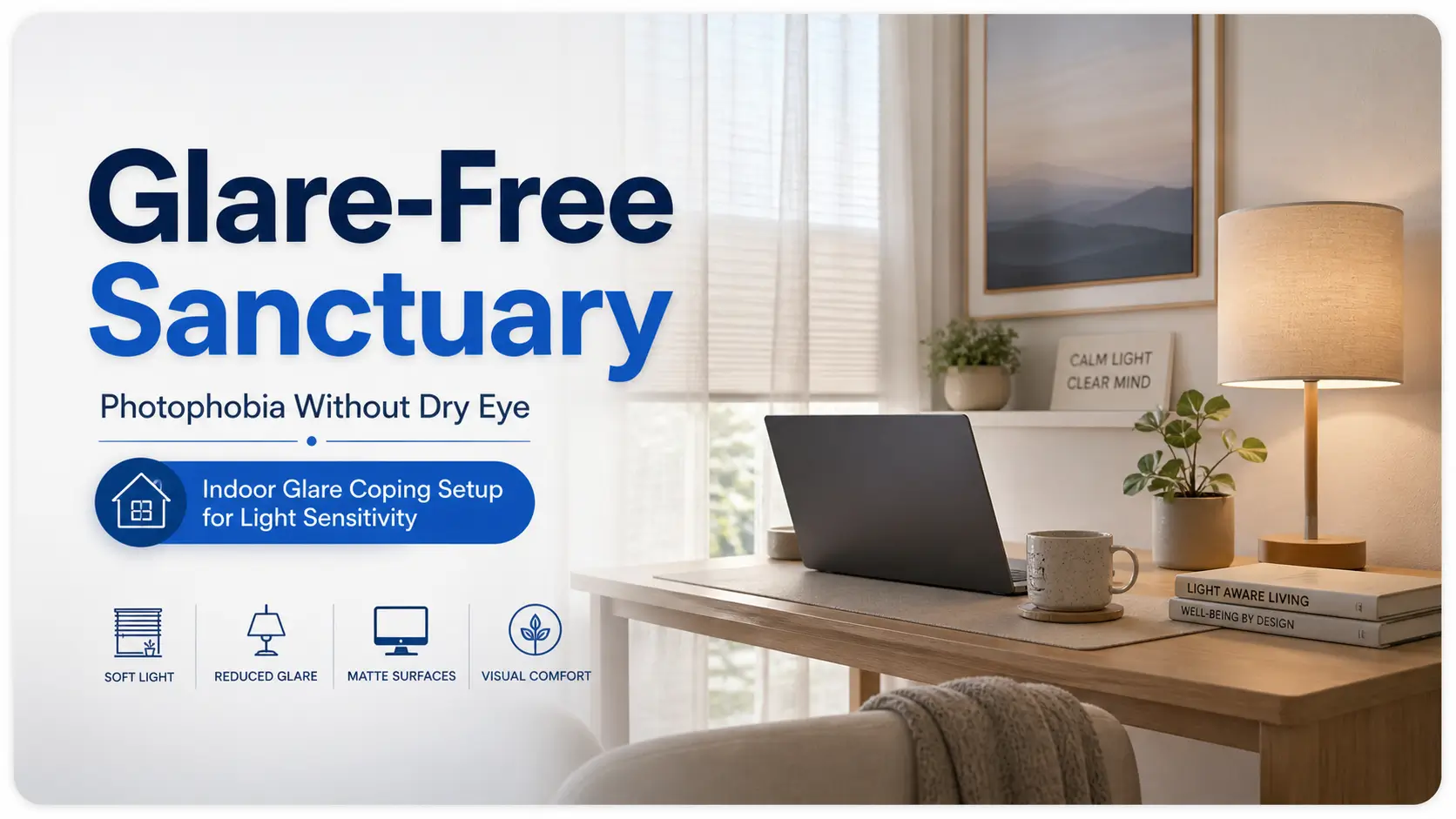

Living with Photophobia: Creating a Glare-Free Sanctuary
Indoor light should not feel like a tiny interrogation lamp following you from room to room. When you experience photophobia without dry eye, the discomfort stems from a strange mismatch: your eyes feel fine physically, yet ordinary lamps, screens, and glossy surfaces feel aggressively bright.
This guide provides a practical method for building a livable indoor environment. By following the light path and identifying glare sources, you can find relief through smarter lamp placement, window angles, and screen adjustments.
- Start with one room
- Find the brightest offender
- Fix the angle first
- Track what feels better
Important: If symptoms are new, painful, or worsening, treat them as a medical signal rather than a decorating challenge. Always seek professional evaluation for persistent light sensitivity.
Table of Contents
Safety / Disclaimer
This article is comfort and environment guidance. It is not a diagnosis, treatment plan, or substitute for an eye exam.
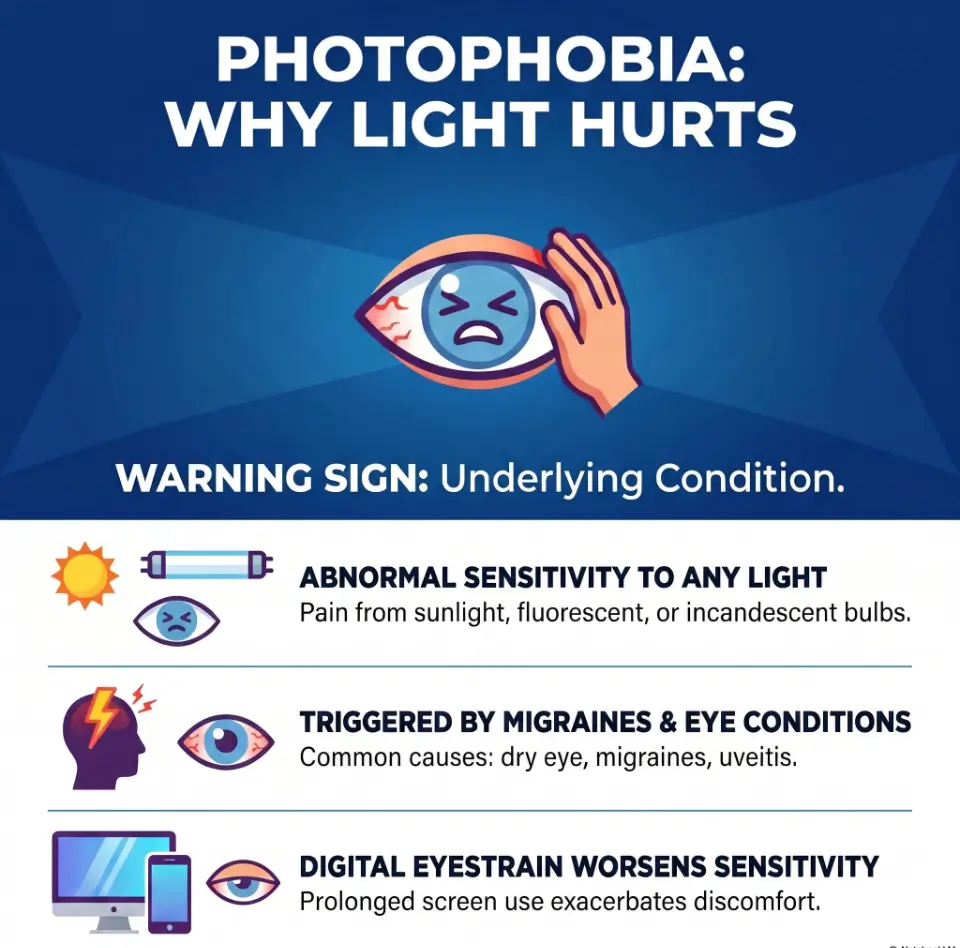
Photophobia can happen with migraine, eye inflammation, corneal problems, medication effects, concussion, infection, and other eye or neurologic conditions. Dry eye is common, but it is not the only possible reason light hurts. The safest move is two-handed: make your rooms kinder while taking new, severe, painful, or changing symptoms seriously. If you are also noticing broader age-related changes, it may help to review senior vision changes warning signs so comfort fixes do not accidentally cover up something important.
- New light sensitivity deserves caution.
- Redness, pain, blurred vision, halos, nausea, or injury changes the risk level.
- Comfort fixes work best beside proper evaluation, not instead of it.
Apply in 60 seconds: Write down when the light sensitivity started, what triggers it, and whether it is improving, stable, or worsening.
Start Here: Photophobia Without Dry Eye Is a Clue, Not a Mood
Why “my eyes aren’t dry” does not end the search
Dry eye can make light feel sharp, but the absence of dryness does not clear the board. Photophobia is a symptom pattern, not a personality flaw. You can have light sensitivity without the classic dry-eye script of burning, sandiness, or watery irritation.
I once helped a friend rearrange a desk after she kept blaming her “dramatic eyes.” Her eyes were not dramatic. Her monitor sat in front of a bright window, her lamp aimed straight at her face, and her glass tabletop was doing unpaid villain work. The room had more angles than a courtroom.
The indoor glare problem: pain from light, not just brightness
Brightness is only one player. Glare, flicker, reflection, and contrast can create a visual environment that feels louder than it looks. A room may seem dim to everyone else and still feel punishing to you because one exposed bulb, glossy counter, or screen reflection keeps poking the same nerve.
The setup goal: fewer light attacks, not a cave life
The goal is not to live under blackout curtains forever. A fully dark room can make transitions harsher and screens more aggressive. A livable setup uses controlled light: softer direction, less reflection, gentler contrast, and fewer surprise brightness jumps.
Here’s what no one tells you: the room may be shouting at your eyes
Photophobia often turns ordinary design choices into tiny troublemakers. The white desk. The bare bulb. The bathroom mirror at 7 a.m. The polished floor. The laptop that glows like a vending machine at midnight.
Good glare control is not about making everything darker. It is about making light predictable.
Who This Is For, and Who This Is Not For
For people who feel worse under LEDs, screens, windows, or overhead lights
This guide is for readers who notice indoor light triggers before they notice eye dryness. Maybe the grocery store lighting feels brutal. Maybe your office ceiling lights make you squint by 10 a.m. Maybe the bathroom mirror feels like it has a personal vendetta.
It is especially useful if your symptoms are tied to places and patterns: the couch by the window, the laptop after dinner, the kitchen counter at noon, the hallway light at night, or the office conference room with the fluorescent mood of a tax audit.
For migraine-prone readers who need a calmer visual environment
The American Migraine Foundation explains that photophobia is common in migraine and may occur before, during, after, or even between migraine attacks. That matters because some readers assume, “No headache today, so light should not bother me.” Bodies are rarely that tidy. They prefer jazz arrangements.
Not for sudden severe eye pain, red eye, injury, or vision changes
If light sensitivity arrives suddenly with eye pain, redness, blurred vision, halos, nausea, severe headache, injury, chemical exposure, or infection symptoms, do not decorate around it. That is not a lamp-placement problem. That is a “please get checked” problem.
Not a substitute for an eye exam when symptoms are new or escalating
Even a perfect indoor setup cannot tell you why photophobia is happening. It can only reduce the environmental burden while you seek answers. Think of it as lowering the volume in the room so you can hear what your body is reporting.
Eligibility Checklist: Is a Glare Reset a Reasonable First Step?
- Yes if symptoms are familiar, mild to moderate, and clearly worse around certain lights.
- Yes if you are also planning an eye care visit for new or changing symptoms.
- No if you have severe eye pain, injury, sudden vision change, or a very red eye.
- No if light sensitivity suddenly disrupts driving, reading, work, or daily function.
Neutral next step: If you check any “No” item, prioritize medical guidance before shopping for lighting fixes.
First Check: Is It Brightness, Glare, Flicker, Contrast, or Reflection?
Brightness hurts when the whole room feels too loud
Brightness is the total amount of light reaching your eyes. A bright kitchen, sunny office, or over-lit bathroom can feel like visual caffeine poured directly into your skull. If the whole room makes you squint, brightness may be the main issue.
Glare hurts when light bounces off screens, counters, mirrors, or floors
Glare is sneakier. It can come from a single bright patch, a reflection on a laptop, a shiny counter, or a mirror catching a vanity bulb. The room may not be bright overall, but one visual hotspot keeps grabbing your nervous system by the collar. If glossy paper or mail is part of the daily battle, the same glare logic applies to learning how to read glossy mail without glare.
Contrast hurts when dark rooms meet bright screens
A dark room plus a blazing screen is a classic photophobia trap. Your eyes adapt to the dark, then the screen becomes the brightest object in the room. It feels efficient for a few minutes, then your head files a formal complaint.
Flicker suspicion: when certain bulbs feel weirdly aggressive
Some people feel worse under certain LED or fluorescent lighting. You may not consciously see flicker, but you might notice fatigue, headache, eye discomfort, or a strange “I need to leave this aisle immediately” feeling. Flicker is not always visible; sometimes it arrives as unease with fluorescent shoes.
The 5-minute “light audit” before buying anything
Before you buy lamps, lenses, apps, filters, or a suspiciously expensive bulb with a poetic product name, audit one room.
- Stand where symptoms usually start.
- Look for exposed bulbs in your direct line of sight.
- Check whether a window reflects on your screen.
- Notice glossy surfaces near your task area.
- Compare the room brightness with your screen brightness.
Indoor Light Trigger Map
The whole room feels too intense.
One hotspot keeps stabbing your attention.
A bulb feels harsh even when not bright.
Dark room, bright screen, unhappy eyes.
Shiny surfaces multiply the problem.
Window Glare: The Quiet Villain Sitting Beside the Couch
Why direct sun can ruin an otherwise comfortable room
Direct sunlight is not always the enemy. Uncontrolled sunlight is. A room can be pleasant at 9 a.m. and visually feral at 2 p.m. because the sun angle changes. That is why your favorite chair may betray you after lunch.
When I first noticed this in my own workspace, I blamed the screen. Then I moved the chair 2 feet to the side, and the problem dropped like a bad habit. The screen was innocent. The window had been throwing light across it like confetti from a tiny tyrant.
Use blinds like a dimmer, not a wall
Blackout curtains can help in bedrooms, but they are not the only tool. Adjustable blinds, cellular shades, roller shades, and sheer curtains let you reduce direct glare while keeping enough ambient light to avoid cave contrast. For rooms where sun control is the main culprit, window film for glare may also be worth comparing before you turn the whole room into a blackout chamber.
Sheer curtains, adjustable shades, and side-angle seating
Side-angle seating is often the cheapest fix. Instead of facing a bright window or putting your back to one, position your main task area so the window sits to the side. Then soften the incoming light with a sheer layer or adjustable shade.
Don’t do this: placing your screen against a bright window
A screen in front of a bright window creates a contrast fight. Your eyes bounce between the bright background and the screen content. A screen with a window behind you creates reflection glare. Either way, your eyes become unpaid referees.
The “north wall” trick for calmer daytime work
If you can choose, place your desk so your screen faces a calmer wall rather than a window. In many homes, a wall with indirect daylight feels steadier than a window-facing setup. You do not need architectural perfection. You need fewer brightness ambushes.
- Move screens away from direct window alignment.
- Use blinds or sheers to soften light instead of blocking all daylight.
- Test the same room at morning, afternoon, and evening light angles.
Apply in 60 seconds: Sit where you usually work and look for the brightest rectangle in your field of view.
Lamp Placement: Stop Aiming Light at Your Face
Put light on the task, not into the eyes
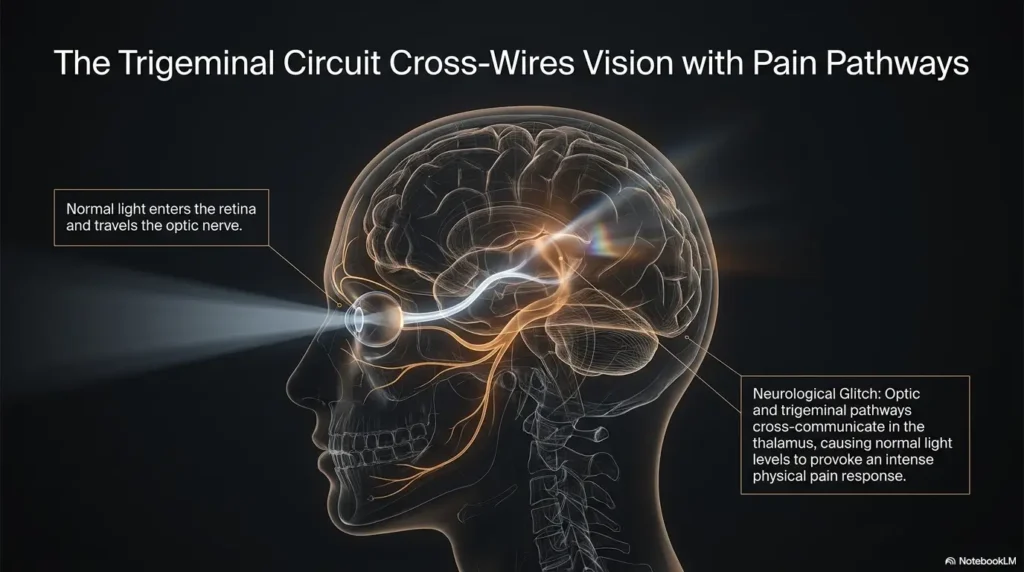
The simplest lamp rule is also the most ignored: light the activity, not your face. Reading, chopping vegetables, folding laundry, sewing, writing, and paying bills need light aimed downward or across the task surface, not outward toward your eyes.
APH ConnectCenter’s VisionAware guidance recommends shielding bulbs, keeping shades below eye level, and using task lighting with general room lighting to avoid harsh shadows. That advice is written for low vision, but the glare-control logic is useful for anyone whose eyes dislike light chaos. For a deeper room-by-room lighting angle, see this guide on reading lamp position for central vision loss.
Choose shaded, diffused, recessed, or bounced light
Look for lamps that hide the bulb from direct view. A fabric shade, frosted diffuser, recessed bulb, or wall-bounced lamp can reduce that sharp “point source” feeling. Bare bulbs may look charming in a cafe. At home, they can act like tiny suns with interior-design degrees.
Why one bright overhead light can feel worse than three gentle lamps
One overhead light creates strong shadows and a single dominant glare source. Three gentler lights can spread illumination more evenly. This is not about luxury. It is about reducing contrast jumps when you glance from book to wall to floor to screen.
Let’s be honest: bare bulbs are tiny indoor suns with bad manners
If you can see the bulb, the bulb can see you. And it is not being subtle. A visible LED filament, exposed vanity bulb, or pendant light in your eye line can create discomfort even when the wattage seems modest.
The reading-chair setup: lamp behind shoulder, shade below eye line
For a reading chair, place the lamp slightly behind and beside your shoulder, on the opposite side of your dominant hand if possible. Keep the shade low enough that the bulb is not visible from your normal seated position. Aim light onto the page, not into the room like a lighthouse looking for drama.
Show me the nerdy details
Glare control often improves when you reduce high-luminance points in the visual field. In plain language: a small bright bulb can feel worse than a softly lit wall because the contrast is sharper. Diffusion spreads light over a larger area, reducing the harsh point-source effect. Task lighting also helps because it raises brightness where you need detail while keeping the rest of the room stable.
Screen Glare: Your Laptop May Be the Brightest Object in the Room
Match screen brightness to the room, not your ambition
Your screen should not be a glowing monument to productivity. If the room is dim, lower the screen. If the room is bright, soften the window glare before simply pushing the screen brighter. The best setting changes across the day, which is annoying, but so are taxes and fitted sheets.
Reduce reflections before reducing font size
Many people make text smaller to “fit more,” then lean forward, squint, and increase brightness. That is a tiny ergonomic tragedy. First, remove reflections. Then increase font size. Then adjust brightness. Comfort is a sequence, not a heroic stare-down.
Use matte screen protectors carefully, especially for workstations
Matte screen protectors can reduce reflections, but they may slightly change sharpness or color. For laptops, they are often worth testing. For design, photo, or color-sensitive work, check whether the protector interferes with accuracy before committing to it across every device.
The night-mode trap: warm color helps some people, but glare can remain
Night mode may reduce cool-toned intensity, and some readers find it more comfortable. But a warm screen can still be too bright. Color temperature is not the same as glare control. A candle-colored spotlight is still a spotlight. If you use an iPhone often, the difference between Reduce White Point vs Night Shift is especially useful because one changes intensity while the other changes tone.
Don’t do this: working in a dark room with a blazing monitor
Put a soft lamp behind or beside your screen so the room is not pitch black. This does not need to be bright. It simply keeps the screen from becoming the only object in the visual universe. If the lowest setting still feels too sharp, you may also want to learn how to make an iPhone screen dimmer than minimum for late-night or low-light use.
Mini Calculator: Your Screen Glare Risk in 30 Seconds
Give yourself 1 point for each “yes.”
- Is your screen facing a window or reflecting one?
- Is your room much darker than your screen?
- Can you see a lamp, bulb, or bright patch reflected on the display?
Score: 0 means low obvious glare risk. 1 means adjust one trigger. 2 to 3 means fix reflections and room lighting before buying new devices.
Neutral next step: Change one variable, then work for 20 minutes and compare symptoms.
Surface Fixes: Glossy Rooms Make Photophobia Work Overtime
Swap shine for matte where your eyes land most often
Glossy surfaces multiply light. They do not ask permission. They simply catch a bulb, window, or screen and send it back toward your eyes with theatrical confidence. If photophobia is worse indoors, shiny surfaces deserve suspicion. For walls and trim, the practical difference between matte vs glossy paint can matter more than the color name on the sample card.
Kitchen counters, glass tables, mirrors, and polished floors
Kitchens are glare factories. Countertops, stainless appliances, glass cabinet doors, bright under-cabinet lights, and polished floors can all create small reflections. Bathrooms add mirrors and white tile, which can turn morning grooming into a tiny stage production with hostile lighting. If the floor itself seems to bounce light upward, this guide to white tile floor glare can help you separate surface glare from general room brightness.
Small textile fixes: rug, placemat, runner, curtain, fabric shade
You do not need to remodel. Often, soft materials solve the loudest visual problems. A runner on a glossy table, a matte placemat near a laptop, a washable rug in a bright kitchen path, or a fabric lampshade can reduce reflections with less commitment than a renovation.
The “reflection map”: photograph the room and spot the glare bombs
Take a photo from your normal sitting or standing position. Bright reflections often show up clearly on camera. Look for white patches, hard highlights, screen glare, shiny counters, and mirror angles. Your phone becomes a tiny detective, which is honestly one of its better personality traits.
- Matte beats glossy near screens and task areas.
- Textiles can soften reflections without permanent changes.
- Photos reveal glare that your tired eyes may not isolate.
Apply in 60 seconds: Take one room photo from eye level and circle the brightest reflected spots.
Room-by-Room Setup: Build Gentle Light Zones, Not One Perfect House
Living room: soft general light plus one task lamp
In the living room, avoid relying on a single ceiling light. Use soft general light plus one shaded task lamp for reading or handwork. If the TV reflects a window or lamp, change the angle before changing the screen settings. For households where the television is the biggest evening trigger, TV glare reduction can be its own small comfort project.
Bedroom: low-glare night path without ceiling-light ambush
A bedroom needs two personalities: evening calm and safe movement. Use a low-level lamp or night path light so you do not blast your eyes awake during bathroom trips. The goal is not romantic gloom. It is “I can find the door without summoning the stadium lights.” If nighttime lighting keeps feeling either too dim or too sharp, compare red vs amber night light options before adding brighter fixtures.
Bathroom: mirror glare, vanity lights, and the morning blast problem
Bathrooms often create the harshest transition of the day. If possible, avoid turning on bright overhead lighting first thing. Use a lower side light, dimmable vanity, or frosted bulb cover. Check whether vanity bulbs are visible in the mirror. If they are, your mirror may be doubling the attack. For a more targeted setup, see how bathroom mirror glare often comes from reflection angle rather than simple brightness.
Kitchen: task lighting without countertop sparkle
Under-cabinet lighting can help, but it should aim at the counter and stay below eye level. If it reflects sharply off stone or polished surfaces, add a matte cutting board, runner, or lower-output task light in the work zone. This is especially true when dealing with under-cabinet lighting glare on glossy surfaces, where the fixture may look innocent until the counter turns into a mirror.
Home office: screen angle, window control, and lamp placement
For the office, start with desk position. Then control windows. Then adjust screen brightness. Then add a lamp that lights the desk without reflecting on the display. This order saves money because it fixes geometry before gadgets.
Choose Gentle Zones When…
- You move between tasks often.
- Glare changes by time of day.
- You need reading, screen, and walking comfort.
Trade-off: Takes more setup, but feels more livable.
Choose One Strong Light When…
- You need brief cleaning or inspection light.
- You can turn it off quickly.
- No one is sitting under it for long.
Trade-off: Fast, but often harsher for photophobia.
Neutral action line: Use strong light for short tasks, not as the default atmosphere.
Common Mistakes: Good Intentions That Make Indoor Glare Worse
Mistake 1: buying brighter bulbs before controlling glare
More light is not always better light. If the bulb is exposed or reflected, higher brightness can make the same problem louder. Fix direction and diffusion first. Then decide whether the room actually needs more illumination.
Mistake 2: wearing dark sunglasses indoors all day without medical guidance
Dark sunglasses can feel relieving in the moment, but wearing them indoors all day may make some people more dependent on darkness. For persistent photophobia, especially migraine-related sensitivity, ask an eye care professional about appropriate lens options rather than improvising your whole visual life from a gas-station sunglasses rack.
Mistake 3: turning rooms too dark, then shocking your eyes with screens
A dark room can feel safe until you open a laptop, check your phone, or step into the bathroom. Then the contrast spike hits. Gentle background light is often more comfortable than dramatic darkness.
Mistake 4: ignoring reflections because “the bulb isn’t bright”
The bulb may not be bright. The reflection might be. A small light bouncing off a glossy table can feel sharper than a larger diffused lamp. Photophobia cares about how light reaches your eyes, not how innocent the fixture looks on the receipt.
Mistake 5: assuming no dry eye means no eye problem
This is the big one. No dryness does not mean no cause. If photophobia is new, worsening, painful, or disruptive, get evaluated. The American Academy of Ophthalmology has discussed photophobia in connection with several possible causes, including migraine, dry eye, uveitis, iritis, and corneal disease.
Short Story: The Lamp That Wasn’t the Problem
A reader once described her dining room as “too bright,” but the photos told a different story. The overhead bulb was moderate. The real culprit was a glossy white table reflecting the fixture directly upward, right where she sat with her laptop after dinner. She had already bought three bulb types, two screen apps, and one pair of indoor sunglasses she disliked.
The fix was almost embarrassingly plain: rotate the table, add a matte runner, move the laptop 18 inches, and turn on a shaded side lamp so the screen was not alone in the dark. The room did not become dim. It became less argumentative. That distinction matters. Photophobia coping is often less about one heroic purchase and more about removing the 3 or 4 tiny light traps that keep repeating themselves.
Product Choices: What to Try Before the Expensive Gadgets
Adjustable lamps before specialty lighting systems
Start with control. An adjustable lamp lets you change height, angle, and direction. That flexibility matters more than a glamorous product description. Look for stable bases, shaded bulbs, dimming options, and a neck or arm that lets you aim light away from your eyes.
Diffusers and shades before bulb experiments
Before replacing every bulb, ask whether the bulb is visible. A diffuser, shade, or different fixture may solve more than a new color temperature. The wrong exposed bulb at a “comfortable” warmth can still feel like a polite laser. If you are choosing warmer bulbs, 2700K vs 3000K for glare-sensitive eyes is a useful comparison because “warm” is not one single feeling.
Matte surfaces before more screen apps
Screen apps help only on the screen. They do not fix the window behind you, the white desk, or the shiny floor. If your screen reflects the room, the room is part of the interface.
Adjustable blinds before blackout-only thinking
Blackout curtains are useful for sleep and severe sun exposure, but adjustable blinds or layered window coverings are often better for daytime life. They let you reduce direct glare without making every room feel like a submarine with throw pillows.
Tinted lenses: ask an eye professional before making them your whole strategy
Tinted lenses may help some people, especially those with migraine-related photophobia, but lens choice is individual. Ask an optometrist or ophthalmologist before turning tint into your only strategy. Environment, medical evaluation, screen habits, and lighting geometry still matter.
Quote-Prep List: What to Gather Before Comparing Products
- Photos of the room at the time symptoms usually spike.
- Bulb type, fixture style, and whether the bulb is visible.
- Window direction and whether the screen faces or reflects it.
- Top 2 tasks affected: reading, screens, cooking, bathroom, driving prep, or meetings.
- Any medical red flags or recent symptom changes to discuss with a clinician.
Neutral action line: Bring the room facts before comparing lamps, blinds, lenses, or screen filters.
Workday Setup: Make Indoor Light Predictable Before It Becomes Painful
Desk position: avoid windows behind you and in front of you
Your desk should not make your eyes negotiate with a window all day. Avoid placing the screen directly in front of a bright window. Avoid placing a window directly behind you where it reflects on the display. A side window with adjustable covering is usually calmer.
Meeting survival: dim screen, larger text, softer background light
Video meetings can combine screen brightness, face lighting, white slides, and visual fatigue. Increase text size before you lean forward. Use a softer background light. Reduce white backgrounds where possible. A meeting should not require the visual endurance of a polar expedition.
Break timing: rest before the light sensitivity spike
Do not wait until your eyes are already angry. Try a short break before symptoms peak: look away from the screen, change focus distance, lower visual clutter, and blink normally. A break taken 10 minutes earlier can be more useful than a dramatic rescue break after the pain arrives wearing boots. For older adults or anyone working long screen blocks, digital eye strain in seniors offers a broader view of screen comfort, lighting, and pacing.
The “two-lamp rule” for stable visual comfort
Use one soft ambient light and one task light. The ambient light prevents screen-to-room contrast. The task light supports paper, keyboard, or desk work. Neither should aim directly into your eyes.
A small script for asking HR or facilities about glare
You do not need to announce your full medical history to request a glare fix. Keep it practical.
Workplace script:
“I’m having trouble with glare at my workstation, especially from the window and overhead light. Could we look at a screen position change, shade adjustment, anti-glare option, or task lamp so I can work more comfortably?”
- Control windows before increasing screen brightness.
- Use larger text instead of squinting.
- Ask for practical glare changes without overexplaining.
Apply in 60 seconds: Move one lamp, lower one reflection, or enlarge one default font setting before your next work block.
When to Seek Help: The Red Flags That Should Not Be Decorated Away
New or worsening light sensitivity
Cleveland Clinic explains that photophobia is usually a symptom with an underlying cause, and that increasing sensitivity to light is a reason to make an appointment with an eye care professional. That is the grown-up, unglamorous sentence that saves people from blaming the wrong lamp for too long.
Eye pain, redness, blurred vision, halos, nausea, or severe headache
These symptoms deserve prompt attention, especially when they appear suddenly or together. Do not try to solve a red, painful, light-sensitive eye with curtains. Curtains are lovely. They are not clinicians.
Light sensitivity after eye injury, surgery, chemical exposure, or infection symptoms
Context matters. Photophobia after injury, surgery, chemical exposure, contact lens problems, or infection symptoms should be handled cautiously. Call an eye care professional or appropriate medical service for guidance.
Photophobia that disrupts work, driving, reading, or basic indoor life
If light sensitivity changes what you can do, it is worth taking seriously. That includes avoiding stores, struggling with computer work, skipping reading, limiting driving, or needing unusually dark rooms just to function.
If self-care does not relieve eye strain symptoms
Mayo Clinic advises seeing an eye specialist if self-care does not relieve eyestrain symptoms, which can include increased sensitivity to light. Self-care is useful, but it has a job description. It should not be asked to perform surgery, diagnosis, and detective work while also folding towels.

FAQ
Can you have photophobia without dry eye?
Yes. Dry eye can cause light sensitivity, but photophobia can also occur with migraine, eye inflammation, corneal problems, medication effects, concussion, infection, and other conditions. If your eyes do not feel dry, the next step is not self-blame. It is pattern-tracking and, when symptoms are new or disruptive, professional evaluation.
Why do indoor lights bother me more than sunlight sometimes?
Indoor lights can create sharp glare, flicker, reflection, and contrast. A bare bulb, glossy counter, bright screen in a dark room, or mirror reflection may feel worse than outdoor light because the light source is closer, more direct, or more visually concentrated.
Are LED bulbs bad for photophobia?
Not always. Some people dislike certain LED bulbs because of brightness, glare, color temperature, or flicker. The fixture matters too. A shielded, diffused LED may feel better than an exposed bulb. Before rejecting all LEDs, test shade, direction, dimming, and placement.
Should I wear sunglasses indoors for light sensitivity?
Do not make dark indoor sunglasses your whole strategy without medical guidance. They may feel good briefly, but constant indoor darkness can make normal light transitions harder for some people. Ask an eye care professional about lens options, especially if migraine or persistent photophobia is involved.
Can migraine cause photophobia even when I do not have a headache?
Yes. Migraine-related light sensitivity may appear before, during, after, or between migraine attacks. Some people have strong light sensitivity even when head pain is not the main symptom. That is one reason indoor glare control can matter outside the obvious migraine window.
What kind of lamp is best for photophobia at home?
Look for an adjustable lamp with a shade or diffuser that keeps the bulb out of your direct line of sight. The lamp should aim light onto the task, not into your eyes. Dimming can help, but angle and shielding usually matter first.
Why does screen glare trigger eye pain so quickly?
Screens can become the brightest object in the room, especially at night. Reflections, small text, high contrast, and window glare all increase visual workload. Reduce reflections, match screen brightness to the room, enlarge text, and add soft background light.
When should light sensitivity be checked by an eye doctor?
Get checked if photophobia is new, worsening, painful, linked with redness or blurred vision, follows injury or surgery, or disrupts work, driving, reading, or basic indoor routines. A room reset can help comfort, but it cannot rule out medical causes.
Next Step: Do a One-Room Glare Reset Today
Pick the room where symptoms interrupt life most
Do not start with the whole house. That is how a simple comfort project turns into a weekend with receipts, dust, and a suspicious number of lamps. Pick the room where photophobia steals the most from your day: office, kitchen, bathroom, bedroom, or living room.
Remove one direct light source from your eye line
Sit or stand where the problem happens. Can you see a bulb, bright window, reflected lamp, or mirror glare? Remove, shade, angle, dim, or reposition one direct source.
Add one shaded task lamp aimed at the activity
Add light where the work happens. Aim it at the book, keyboard, counter, sink, or hobby surface. Keep the bulb hidden from your normal eye line.
Reduce one reflection: screen, mirror, counter, table, or floor
Use a matte runner, cloth, rug, screen angle change, blind adjustment, or mirror-side lighting change. Reflections are often cheap to reduce and expensive to ignore.
Track what changed after 48 hours, then decide what to adjust next
Give the change 2 days if symptoms are stable and mild enough for home comfort testing. Track what improved: less squinting, fewer breaks, longer reading, easier cooking, calmer evenings, or fewer headache-adjacent warning signs.
- Start where symptoms interrupt daily life.
- Change light direction before buying expensive tools.
- Track comfort and red flags separately.
Apply in 60 seconds: Choose one room and remove the brightest visible glare source from your normal eye line.
The opening problem was not simply “light.” It was uncontrolled light: direct, reflected, flickering, too bright, too sudden, or too lonely against a dark room. That is the loop to close. Photophobia without dry eye does not mean your discomfort is imaginary. It means the answer may require both a gentler environment and a wiser look at the underlying cause.
In the next 15 minutes, do a one-room glare reset: move your screen away from the window, hide one visible bulb, add one shaded task lamp, and soften one shiny surface. Then write down what changed. If symptoms are new, painful, worsening, or disruptive, use that same note as your starting point with an eye care professional.
Last reviewed: 2026-05.