Why Seniors Can See the TV but Struggle to Read Small Print

senior near vision problems

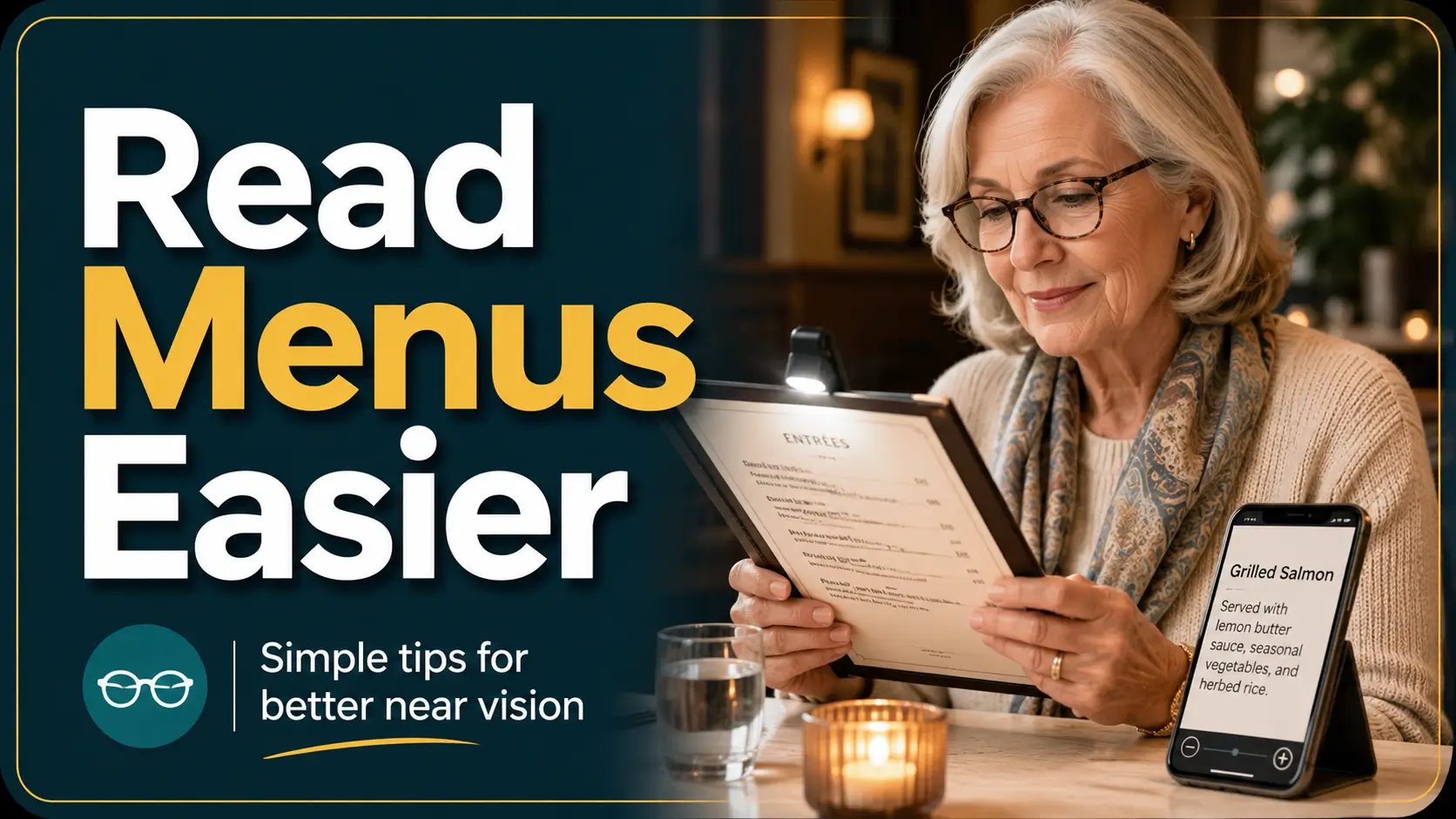
Clear on the Screen, Blur in Your Hands? Understanding Senior Near-Vision Challenges The TV looks clear enough from the sofa. The weather map has color, the faces look familiar, and the game score is readable if the screen is large. Then a pill bottle, restaurant menu, church bulletin, utility bill, or phone setting appears in … Read more

Anisometropia After Cataract Surgery: Reading Imbalance Coping Without Fighting Your Eyes

anisometropia after cataract surgery

Navigating the Visual Mismatch: Reading with Anisometropia You open a book after cataract surgery expecting the page to behave, then one eye seems ready for daylight while the other is still negotiating with yesterday’s prescription. Anisometropia after cataract surgery can make reading feel uneven, swimmy, tiring, or oddly “off,” especially between first-eye and second-eye surgery … Read more

Visual Snow Syndrome in Older Adults: Coping Strategies Without Guessing Away Serious Symptoms

visual snow syndrome in older adults

Navigating Visual Snow & Static in Later Life: A Guide to Clarity and Care A new visual disturbance in later life can turn an ordinary room into a flickering weather map: dots, glare, afterimages, and “static” that no one else can see. For many families, the challenge isn’t just the symptom—it’s the uncertainty. Is it … Read more

Photophobia Without Dry Eye: Indoor Glare Coping Setup That Actually Feels Livable

photophobia without dry eye

Living with Photophobia: Creating a Glare-Free Sanctuary Indoor light should not feel like a tiny interrogation lamp following you from room to room. When you experience photophobia without dry eye, the discomfort stems from a strange mismatch: your eyes feel fine physically, yet ordinary lamps, screens, and glossy surfaces feel aggressively bright. This guide provides … Read more

Charles Bonnet Syndrome: Seeing Patterns After Vision Loss and Coping Without Panic

Charles Bonnet syndrome

Navigating the Unseen: A Guide to Charles Bonnet Syndrome “The room can be completely familiar… and still your vision may suddenly add something that is not there.” Charles Bonnet syndrome (CBS) is a vision-related condition where significant vision loss triggers visual hallucinations—patterns, faces, or animals that aren’t physically there. While many realize these images aren’t … Read more

The Day I Realized My Vision Would Never Be the Same: True Stories from Seniors

senior vision changes warning signs

Beyond the “Lighting Problem”: Navigating Senior Vision Changes It began as a “lighting problem,” the kind you try to solve with a brighter bulb and a shrug. Then the porch steps started feeling unpredictable, faces at church went oddly soft, and night driving turned into an exhausting glare festival. These are the real-life patterns seniors … Read more

Creating a One-Page Medication and Eye History Sheet for Every Appointment: The 10-Minute System That Prevents Costly Omissions

one-page medication list template

The One-Page Clarity System The fastest way to lose 7 minutes of an appointment is to “reconstruct” your own meds from memory, bottle photos, and three half-synced portals. The cure isn’t another app. It’s a one-page medication and eye history sheet that makes your story legible in the first minute, even when you’re tired, stressed, … Read more

Antidepressants, Antihistamines, and Dry Eye: Why Your Eyes Feel Gritty All Day

medication-related dry eye

Mastering the 3 P.M. Burn: A 7-Day Reset for Medication-Related Dry Eye By 3 p.m., your eyes feel like fine grit under the lids, and by dinner they burn, blur, and water at the same time. This isn’t random fatigue. It is often the result of stacking factors like antidepressants, antihistamines, intense screen load, and … Read more

Steroids and Glaucoma Risk: What Long-Term Users Over 60 Should Know Before Vision Changes Start

steroid-related glaucoma risk

Protecting Your Vision: A Proactive Guide to Managing Steroid-Related Glaucoma Risk Vision loss from steroid-related glaucoma often progresses in silence, demanding urgent decisions all at once. For adults over 60 on long-term corticosteroids, the real danger lies in the gap between treatment and monitoring. The Challenge Unnoticed pressure trends and late-stage optic nerve damage despite … Read more

When to Stop Night Driving After 70: A Self-Assessment for Halos, Glare Recovery, and Contrast Loss

night driving after 70

Protecting Your Independence: A Data-Driven Approach to Night Driving After 70 Night driving risk rarely announces itself with a dramatic moment—it usually creeps in as small failures of margin: a curb seen late, a sign that blooms into glare, a familiar turn that suddenly feels crowded and fast. If you’re wondering when to stop night … Read more