
Bridging the Gap Between Safety and Usability
Most stove knob covers fail for low-vision seniors for a maddeningly simple reason: they make accidental burner activation harder, but they also make everyday cooking harder. A kitchen can become technically safer and practically more stressful at the same time.
That is the real friction here. You are not just trying to prevent a bumped dial or a missed burner setting. You are trying to reduce stove risk without turning every meal into a hand-strength test, a visibility puzzle, or a small daily argument with the appliance.
Keep guessing, and you can end up with the worst kind of safety product: one that gets removed, ignored, or quietly worked around.
This guide helps you choose safe stove knob covers for low vision seniors based on what actually matters in real kitchens: stove type, knob fit, grip strength, contrast visibility, tactile confirmation, and whether the setup still makes the off position easy to verify. The goal is not maximum lock. It is safer, calmer, more usable cooking.
The method here is refreshingly practical: match the cover to the stove, the lighting, and the person using it, then test the full setup in ordinary life, not marketing fantasy.
Right at the stove, with dinner on the line.
Table of Contents
Fast Answer: The best safe stove knob covers for low vision seniors are not simply the hardest covers to open. They are the ones that reduce accidental burner activation without making daily cooking frustrating, confusing, or physically difficult. The right choice depends on stove type, grip strength, contrast visibility, cleaning routine, and whether the user cooks independently every day or mostly needs occasional protection.
Start Here First: Who This Is For / Not For
This is for you if a senior can still cook but needs one more layer of protection
This guide is for households in that very common in-between season. The senior is still cooking. Still wants autonomy. Still knows the kitchen by memory, habit, and hand. But something has changed. Maybe the burner markings are harder to see. Maybe the knobs are easy to bump while reaching for a pan. Maybe family members keep replaying the same little scene in their heads and do not love the ending.
This is for you if low vision makes burner settings harder to confirm at a glance
Low vision often turns ordinary kitchen tasks into small detective stories. Is that knob pointing to off or low? Did the indicator line land where I intended? Is the room bright enough to tell? A cover can help, but only if it works with the person’s visual habits instead of bulldozing them.
This is for you if family members worry about accidental knob bumps, curious grandkids, or “Did I turn that off?” moments
I have seen families shop for these covers in a state that is half logic, half adrenaline. That is understandable. The point is not to eliminate every risk in the universe. The point is to reduce the specific, repeatable risk of accidental activation while preserving calm, dignity, and workable daily use.
This is not for you if the main issue is severe memory loss, wandering, or unsafe unsupervised cooking
If the core safety problem is cognitive, not just visual, a knob cover is too small a fix for a bigger weather system. In that situation, you may need supervision, automatic shut-off technology, a different cooking setup, or a fuller home safety plan. No piece of molded plastic should be asked to do the work of a care strategy.
This is not for you if the stove itself is outdated, loose, or already malfunctioning
If the knobs wobble, the ignition is unreliable, the labels are gone, or the appliance is acting like a stage actor improvising new plot twists every week, repair comes first. Covers do not cure mechanical problems. They can actually hide them.
- Best fit: independent senior with vision-related confirmation problems
- Bad fit: malfunctioning appliance or significant cognitive safety concerns
- Real goal: safer cooking without making the kitchen hostile
Apply in 60 seconds: Decide whether the main problem is accidental bumping, poor visibility, weak grip, memory, or appliance failure. Buy only for the real problem.
Safety First, Not Just Childproof: What Low Vision Seniors Actually Need
Why “hard to open” is not the same as “safe to use”
This is the first trap. Many knob covers are designed with childproof logic, and that logic makes sense for toddlers who are curious, quick, and very short. Older adults are not toddlers with reading glasses. A design that blocks a child may also frustrate a senior with arthritis, neuropathy, reduced hand strength, or low contrast sensitivity. That is not a minor inconvenience. In a live cooking moment, frustration becomes rushed movement, rushed movement becomes errors, and errors love heat.
The overlooked trio: visibility, grip, and confidence
In practical kitchens, safety tends to rest on three quiet legs: Can I see it? Can I operate it? Can I confirm what I just did? A cover that wins only one of those tests is often a mediocre cover. Organizations that focus on cooking-fire prevention keep returning to alertness, visibility, and safe habits because kitchen risk is rarely a one-variable problem.
Here’s what no one tells you… a cover can lower risk and still make cooking more stressful
That contradiction matters. I once helped a relative test a safety accessory that was technically effective and emotionally awful. She could use it, eventually. But the extra force, the slippery lid, and the blocked markings made every simple meal feel like a tiny exam. After three days, she stopped using it. A safety product that gets abandoned does not remain a safety product for long. It becomes drawer sediment.
What low-vision seniors often need most:
- Enough resistance to prevent accidental bumps
- Enough visibility to identify off, low, and high positions
- Enough ease of use to avoid panic, strain, or workarounds
- A setup that supports independent cooking habits already in place
Show me the nerdy details
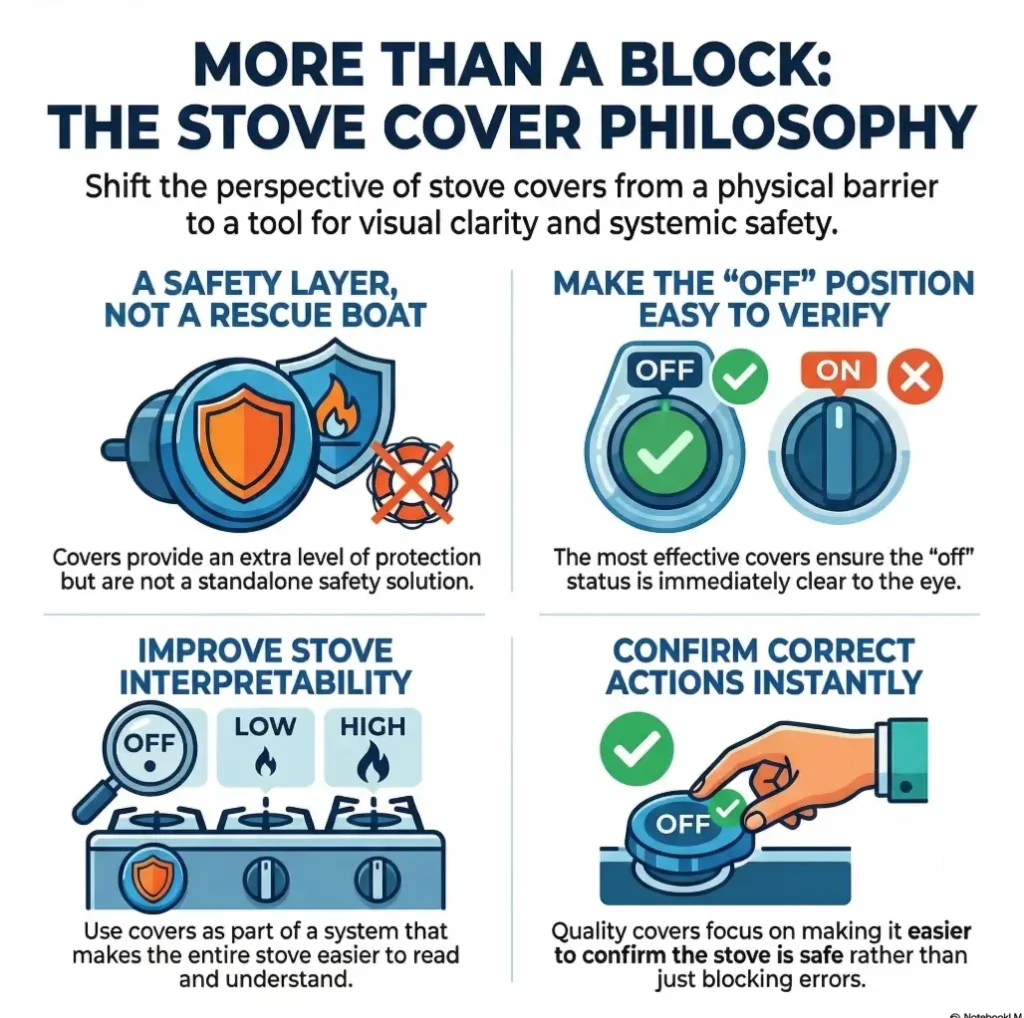
Risk reduction here is about human factors. In product terms, that means interaction force, tactile feedback, contrast, label visibility, and error recovery. A cover that prevents unintended activation but blocks state recognition may reduce one hazard while increasing another. Good design lowers both accidental activation risk and interpretation burden.
Stove Match Matters: Gas, Electric, and Range Design Change Everything
Why front-control stoves create a different risk than back-panel designs
Front-control stoves put the risk exactly where bodies and sleeves travel. Lean to stir a pot, reach for salt, bump the front edge with a hip, and there you are. Back-panel knobs are not magically safe, but they usually reduce accidental contact. If your stove has front knobs, covers may solve a more immediate problem than they do on a rear-control model.
Gas knob covers vs electric knob covers: where the tradeoffs shift
Gas ranges raise the emotional temperature fast because the consequences feel vivid. Flame, ignition, gas flow, visible heat. Electric stoves bring their own hazards, especially when burner surfaces stay hot and the visual feedback is poor. The better question is not “gas or electric?” It is “What does mistaken activation look like on this specific stove, in this specific kitchen, for this specific user?” That is the kind of question that saves money and patience.
Removable knobs, recessed knobs, and oversized dials: check this before you buy
Some stoves have knobs that pull straight off. Some are recessed. Some sit close together like commuters on a delayed train. Some have oversized dials that make universal covers laugh politely and fail anyway. Measure before you buy. If you skip this, you are not shopping. You are freelancing for the return department.
Decision card: When front-control + low vision + frequent bumping = covers may help more. When rear-control + weak grip + poor label visibility = tactile labels and lighting may matter more than covers alone.
Neutral next step: identify the stove layout first, then rank the top two risks instead of buying on fear.
Before You Buy Anything: The 5-Minute Fit Check That Prevents Returns
Measure knob diameter, spacing, and clearance first
Here is the simplest money-saving move in this entire article: spend five minutes with a ruler. Measure the diameter of one knob. Measure the gap between neighboring knobs. Measure how much clearance exists above, below, and around the control panel when the oven door opens or when hands approach from different angles. “Universal fit” often means “universal optimism.”
Check whether the cover blocks labels, flame indicators, or heat markings
If the cover hides the only useful markings, you may trade one danger for another. Low-vision users often rely on any combination of contrast, shape memory, partial sight, and touch. Blocking all visual cues can make operation slower and less certain, especially in early morning or evening light.
Let’s be honest… most “universal fit” claims are doing a lot of emotional labor
Packaging can be very brave. Real kitchens are less forgiving. I have seen covers fit the knob diameter perfectly and still fail because there was not enough finger room to open the lid cleanly. That is why fit is not just about diameter. It is about approach angle, hand size, dexterity, and surrounding clutter.
Eligibility checklist
- Yes / No: The stove knobs are standard size and not unusually crowded
- Yes / No: The user can pinch, lift, or open a sample lid without strain
- Yes / No: Off markings remain visible or can be replaced with tactile markers
- Yes / No: The stove itself works properly and does not need repair
Neutral next step: if you answered “No” twice or more, do not start with covers. Start with lighting, labels, or appliance repair.
Contrast Beats Guesswork: Visibility Features That Matter More Than Marketing
Clear covers vs opaque covers: which helps low-vision users more
There is no universal winner, which is annoying but true. Clear covers can preserve visibility of knob position and printed settings. That can be useful if glare is controlled and the panel markings are already readable. Opaque covers can improve contrast in some kitchens if the original panel is visually muddy and the cover itself provides a stronger edge. The test is practical: does the installed setup make the off position easier or harder to identify in real light?
Why tactile markers may matter as much as the cover itself
For many low-vision seniors, tactile confirmation is the missing half of safety. A small bump dot, raised marker, or consistent tactile cue at “off” can reduce the constant mental tax of guessing. This is where the whole system starts making sense. The cover prevents accidental turning. The tactile marker confirms state. The lighting supports both. Suddenly the kitchen feels less like a puzzle. The same principle is why tactile dots for microwave buttons and other touch-based systems often work so well in everyday routines.
High-contrast surroundings, lighting, and label visibility after installation
Guidance for people with low vision repeatedly emphasizes contrast and adequate lighting because visibility is not just about eyesight. It is about the environment cooperating. Under-cabinet lights, reduced glare, and sharper contrast around controls can do more real work than a more expensive cover. I know, it is rude when the boring answer wins. But in kitchens, boring often ages beautifully. If glossy surfaces are throwing light back into the eyes, this is also where under-cabinet lighting glare on glossy surfaces and truly glare-free under-cabinet lighting become more than side issues.
Visibility upgrades that pair well with covers:
- Bright task lighting aimed at the control area
- High-contrast labels near the off position
- Tactile bump dots placed consistently and tested in use
- Grease-free control panels so markings remain readable
- Clear is better only when glare is low and labels remain readable
- Opaque is better only when it improves contrast without blocking meaning
- Tactile confirmation often matters as much as visual confirmation
Apply in 60 seconds: Turn the kitchen lights to the level used at 7 a.m. or 7 p.m. and ask whether the off position is still obvious.
Grip Without Battle: How to Avoid Covers That Turn Every Meal Into a Wrestle
Arthritis, reduced hand strength, and why opening force matters
If a cover demands a pinch strength that the user does not reliably have, it is a bad match no matter how highly rated it is. Adults with arthritis do not need a heroic kitchen. They need a stable one. A cover that requires awkward finger angles, stiff lifting, or slick pressure points may increase the chance of fumbled openings when a pot is already hot and attention is split.
Easy-open designs that still reduce accidental activation
The sweet spot is a cover that adds just enough friction and intention. Enough to stop a casual bump. Not so much that everyday use feels like opening a medicine bottle with damp fingers and diminishing patience. Some households do well with covers that open with a broad, easy motion rather than a tiny pinch. Larger surface area can help when fine dexterity is the limiting factor.
When a safer kitchen starts to feel less usable
This is the part caregivers sometimes miss because the home visit was short and the installation felt successful. The senior adapts politely in front of everyone, then struggles alone later. I have watched this happen with all kinds of “good” products. The body smiles. The hand does not. If a cover steals too much ease, the user may cook less, rush more, or remove the covers entirely.
Show me the nerdy details
Usability depends on gross motor access, finger pad traction, joint range, hand position relative to the panel, and the force curve of the lid or locking mechanism. Tiny changes in friction coefficient or pinch span can be the difference between “secure” and “impossible on a bad pain day.” Test during an average day, not a best day.
Don’t Buy on Fear Alone: Features That Sound Safe but Backfire in Real Kitchens
Covers that are too stiff, too slick, or too small to handle calmly
Some products sound magnificent on paper and behave like little tyrants in the hand. A lid that is too slick becomes harder after cleaning. One that is too small forces fingertip precision. One that is too stiff becomes a daily test of willpower. Fear-based shopping tends to reward “maximum lock” language, but safer living often prefers “maximum usable restraint.”
Designs that trap grease and become harder to use over time
Kitchens are not showrooms. Grease exists. Fine dust exists. Steam exists. A cover that gets grimy inside its moving parts can go from acceptable to irritating in two weeks. And when people are irritated, they improvise. Improvisation around heat is not where you want creativity to bloom.
Why “maximum lock” can be the wrong answer for independent seniors
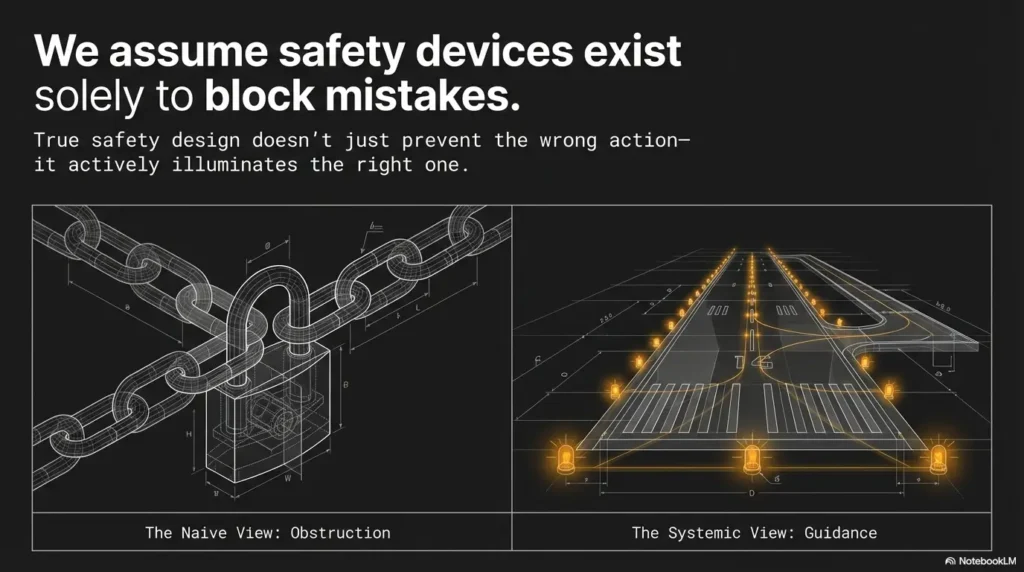
There is a kind of safety theater that looks strong because it is inconvenient. It is the household cousin of a lock so secure that the owner cannot get in. If the person still cooks independently, you want deliberate access, not adversarial access. The kitchen should not feel like it has filed for restraining order paperwork.
Mini calculator: Score each option from 1 to 5 for fit, visibility, and grip ease. Add the numbers.
If the total is under 10, that product is probably a frustration purchase. If it is 12 or higher, it is worth live testing in the real kitchen.
Neutral next step: reject the lowest-scoring option even if it looks the toughest.
Setup Changes the Outcome: Installation Choices That Quietly Decide Whether It Works
Clean surface, correct alignment, and why rushed installation causes false confidence
Installation errors are sneakier than product errors because they can look fine at first. If the surface is greasy, the adhesive may shift. If the cover sits slightly off-center, the lid motion becomes awkward. If labels are not re-established after installation, users start relying on memory alone. That kind of half-finished safety work is not neutral. It produces false confidence, which is one of the more expensive emotions in a kitchen.
Test every burner with the senior user, not just the caregiver
This should be a rule in permanent marker. The person who must live with the setup should be the one to test it. Not once. Several times. Open, turn, return to off, confirm off. Repeat on each burner. I have seen caregivers declare victory after one successful demonstration, while the actual user was silently developing a workaround that bypassed the whole design.
Small kitchen habits that should change the same day the covers go on
A cover works better when the surrounding habits are cleaned up too. Keep the control area uncluttered. Improve the lighting. Wipe the panel so labels stay visible. Decide where oven mitts live. Build a consistent off-check ritual after cooking. The American Burn Association and fire-safety guidance for older adults keep returning to alert, attentive cooking for a reason: products matter, but habits keep the orchestra in tune. If low-light navigation is already an issue in other rooms, the same home-safety thinking from aging vision fall prevention at home belongs in the kitchen too.
Three setup habits worth adding immediately:
- Do a touch-and-look off check after every burner use
- Keep a pan lid nearby during stovetop cooking
- Use the same lighting setup every time, especially in dim hours
Common Mistakes That Make Stove Knob Covers Less Safe
Buying for child safety and assuming senior safety is identical
This is probably the most common mistake, and it is wonderfully understandable. Families search for “stove safety covers,” find childproof products, and assume the mission is the same. It is not. Children need exclusion. Many seniors need accessible intention. Those are related goals, but they are not twins.
Ignoring low-light conditions in early morning or evening cooking
A setup that seems clear at noon may become mushy at dawn or after sunset. Low-vision challenges are often lighting challenges wearing a different coat. Test at the actual times cooking happens. Otherwise you are testing the kitchen’s best mood, not its real personality. Sometimes the problem is not brightness alone but light temperature, which is why choices like 2700K vs 3000K for glare-sensitive eyes can quietly shape how readable the control area feels.
Covering the knobs but leaving no tactile system for confirming “off”
If the user cannot verify off with sight alone, and you remove or obscure the original visual cue, you need a new confirmation system. A tactile marker at off is often the cheapest high-value add in the whole setup. The same logic behind a low-vision key identification system applies here: once touch carries part of the workload, daily friction often drops.
Installing covers without checking emergency access speed
A cover should slow unintended contact, not slow necessary action to a crawl. In a stressful moment, can the user or caregiver turn everything off quickly? Test this calmly before it matters. The middle of a grease flare-up is not a good time for product discovery.
Using covers to compensate for a stove that already needs repair
If the knob shaft is loose, the markings are worn away, or the control has inconsistent resistance, fix the appliance first. Covers are not structural therapy.
Infographic: The safer setup sequence
1. Fix the stove
Repair loose knobs, missing labels, or faulty ignition first.
2. Improve visibility
Add task lighting, reduce glare, and restore readable cues.
3. Add tactile confirmation
Mark the off position so it can be checked without guesswork.
4. Test covers
Choose only covers that reduce bumps without starting a hand battle.
5. Rehearse the routine
Cook once, turn off once, confirm once, repeat until it feels natural.
Don’t Do This: When Stove Knob Covers Become a Substitute for a Real Safety Plan
Why one product cannot solve vision, memory, lighting, and appliance issues at once
This is where many shopping pages quietly mislead people. A single product image creates the feeling of a single-product solution. Real households are more orchestral than that. Vision, cognition, lighting, stove design, hand strength, and routines all play together. If one section is off-tempo, the rest feel it.
The danger of adding friction without adding clarity
Added friction can reduce accidental turning. Good. But if it does not improve clarity, it may also increase hesitation and uncertainty. That is the trade you want to avoid. Safety should not be built entirely out of resistance. It should also be built out of legibility.
Here’s what no one tells you… reassurance can become a blind spot too
Once covers are installed, families often relax. That is understandable and sometimes deserved. But the kitchen still needs watchfulness, routine checks, and honest re-testing. NFPA cooking-safety guidance focuses so heavily on staying alert because many fire risks start with ordinary drift, not dramatic negligence. The point is not anxiety. The point is accurate confidence.
Short Story: A daughter installed knob covers for her father after he bumped a front-control burner while reaching for tea tins. The first week felt like success. No accidental turning, no scary moments. But on the second weekend, he cooked at dusk with the overhead light off and realized the covers had made the original markings harder to see. He could open them, but he had to pause and lean closer to confirm off.
That pause was the clue. The family added under-cabinet lighting, a tactile off marker, and a simple after-cooking routine: touch, glance, confirm. The covers stayed. The system changed. What actually reduced stress was not the product alone. It was the combination of restraint, visibility, and a ritual that did not ask memory to do all the work.
- Friction without clarity is a shaky safety strategy
- Reassurance is useful only when it survives real-world testing
- One product should never replace an honest home-safety review
Apply in 60 seconds: Ask one blunt question: if the power went out and stress went up, would this setup still make turning the stove off obvious?
Smarter Than Covers Alone: Safety Layers That Work Better Together
Task lighting, tactile bump dots, and contrast labels
These are the unsung heroes because they are simple, inexpensive, and not very glamorous. Good. Kitchens do not need glamour. They need repeatable clarity. For low vision, contrast and lighting often change the experience of cooking more than shoppers expect. NCOA’s guidance for blind and low-vision cooking safety emphasizes organization, contrast, and environmental support for good reason. In many kitchens, that practical work also overlaps with choices like the best cutting board color for low vision and better low-vision spice jar labels, because the safest stove setup is easier to maintain when the rest of the prep zone is readable too.
Automatic shut-off devices and stove alert systems
If the household risk is higher, more than one layer may be warranted. Automatic shut-off devices, timers, range monitoring systems, and audible alerts can provide a stronger safety net. These are especially worth considering when the issue extends beyond a simple bump hazard. Some households benefit from a device that notices inactivity or prolonged heat, particularly when routines are inconsistent.
Caregiver checklists for households where several people use the kitchen
Multi-user kitchens are where safety systems go to become abstract art. One person moves the kettle. Another changes the lighting. A grandchild removes the bump dot because it “looked weird.” A caregiver assumes the senior prefers the front burners. No one means harm. Yet the setup drifts. A short checklist can keep the environment stable. For couples or families adjusting together, the communication side can matter as much as the product side, which is why guides on helping a spouse with vision loss or coping with vision loss as a couple often end up touching the kitchen too.
Quote-prep list: Gather these before you compare products or devices.
- Stove brand and control layout
- Knob diameter and spacing
- Main safety issue: bumping, visibility, grip, memory, or all of the above
- Typical cooking time and lighting conditions
- Whether the senior cooks alone, with help, or only occasionally
Neutral next step: compare options only after you can describe the kitchen in one clear paragraph.
Independence Test: How to Know Whether a Cover Supports Confidence or Steals It
The two-question test after installation: “Can I open it?” and “Can I confirm off?”
These two questions look almost too simple, which is precisely why they are powerful. A setup that fails either one should not be called finished. The user should be able to answer yes without a speech, a sigh, or an apology.
Watch one full cooking session before declaring success
Not a demonstration. A real cooking session. Tea, soup, eggs, oatmeal, something ordinary. Watch how the person approaches the stove, opens the cover, turns the knob, checks the heat, returns to off, and confirms the state. That is where the truth lives. Not in packaging. Not in ratings. In movement.
Let’s be honest… the safest setup is the one a senior will actually keep using
This is the final little bell I want ringing in your mind. The best setup is not the one that wins a theoretical debate. It is the one that the senior will keep using on a Tuesday morning before coffee, in ordinary light, with ordinary patience. Safety that cannot survive ordinary life is decorative.
Show me the nerdy details
Usability testing at home should include at least one low-light session and one routine cooking task. Measure success by error-free operation, time to confirm off, and whether the user begins to create workarounds. A workaround is often a hidden design failure in a cardigan.
FAQ
Are stove knob covers safe for seniors with low vision?
They can be, but only if they reduce accidental activation and still allow the senior to operate the stove calmly and confirm the off position. A cover that is too stiff, too small, or too visually confusing may backfire.
Do stove knob covers work on gas stoves and electric stoves?
Sometimes, yes. The main issue is not the fuel source alone but the knob size, spacing, control layout, and whether the final setup keeps burner settings understandable. Gas and electric models can both benefit from covers when accidental turning is the real problem.
Are childproof stove knob covers a good option for older adults?
Sometimes, but not automatically. Childproof products often prioritize exclusion. Older adults may need accessible intention instead. That means easier grip, clearer state confirmation, and less frustration during routine cooking.
What if a senior has arthritis and weak grip strength?
Then opening force matters a lot. Choose a design with broad, easy-to-handle access and test it in person if possible. If the cover turns every meal into a hand-strength contest, it is the wrong product.
Can stove knob covers interfere with seeing burner settings?
Yes. Clear covers may preserve visibility but can create glare. Opaque covers may improve contrast or may hide useful markings. Always test the installed setup in the lighting conditions the senior actually uses.
Do stove knob covers fit all stove brands?
No. “Universal fit” is often oversold. Measure knob diameter, spacing, clearance, and panel layout before buying. Even a diameter match can fail if there is not enough finger room to open the cover comfortably.
Are clear knob covers better for low vision than opaque ones?
Not always. Clear covers help when the original labels remain visible and glare is controlled. Opaque covers help only when they create a more readable contrast environment without removing necessary cues.
What should caregivers add besides knob covers for better kitchen safety?
Good lighting, tactile off markers, high-contrast labels, a consistent after-cooking check, and possibly automatic shut-off technology if the risk profile is higher. The best results usually come from layered safety, not a single product.
Next Step: Do This Before You Compare Brands
Photograph the stove, measure the knobs, and test current pain points in one cooking session
Before you compare products, run one ordinary cooking session and watch what actually goes wrong. Is the problem accidental bumping? Is it poor visibility? Is it weak grip? Is it confusion about off? Photograph the control panel in daylight and evening light. Measure the knob diameter and spacing. Write down the pain points in plain English. This turns vague worry into useful criteria.
Make a simple checklist: fit, visibility, grip, and “off” confirmation
This four-part checklist works because it is grounded in the real kitchen. No marketing fog, no wishful thinking. If a product fails one major category, move on. Time-poor families do not need five returns and a drawer full of plastic optimism.
Choose only products that make the kitchen feel both safer and easier to use
That is the curiosity loop we opened at the beginning, and it is where we should close it. What makes a kitchen safer is rarely the most dramatic option. It is usually the clearest one. The one that lowers accidental activation risk, preserves confidence, and supports a senior’s ordinary rhythm instead of interrupting it. In the next 15 minutes, you can do the whole first pass: inspect the stove, rank the real risks, and decide whether you need covers, lighting, tactile markers, repair, or a stronger safety layer. That is a much better starting point than buying the toughest-looking product and hoping for the best.
- Measure before you buy
- Test in real lighting, not showroom lighting
- Pair covers with tactile and visual confirmation
Apply in 60 seconds: Start a note on your phone with four lines: stove type, knob size, main risk, and whether the off position is easy to confirm today.
Last reviewed: 2026-03.