


The Tiny Courtroom Drama on Your Counter: A Guide to Pill Safety
A white round pill on a bathroom counter can look harmless, almost boring. Then another white round pill rolls beside it, and the whole morning suddenly feels like a tiny courtroom drama. For older adults and caregivers, how to tell similar-looking pills apart is not a trivia question. It is medication safety, vision support, household workflow, and peace of mind squeezed into something smaller than a shirt button.
Aging eyes make labels harder to trust. Glare blurs bottle print. Imprints hide in shadows. Generic refills change color without asking permission, which is rude but common. Guessing can mean a missed dose, a double dose, the wrong strength, or a dangerous mix with another medicine or supplement.
- • Slow the moment down.
- • Use the bottle, imprint, shape, size, pharmacy record, and pharmacist together.
- • Never let color do the job alone.
This guide gives you a calm, practical system for sorting pills at home, checking refill changes, setting up a bright-light pill station, and knowing exactly when to stop and call the pharmacy.
A Safer Pill Check Starts With Five Clues, Not One Guess
Think of each pill like a tiny travel document. Color is the jacket. The imprint, label, bottle, shape, and pharmacy record are the passport stamps.
- Best first move: keep the pill in its original bottle until verified.
- Best visual aid: bright light plus magnification before sorting begins.
- Best safety rule: if the pill is loose, damaged, unlabeled, or uncertain, do not take it.
- Best helper: a pharmacist who can compare your actual prescription record.
Table of Contents
The Tiny Pill Problem: Why Aging Eyes Turn Routine Doses Into Guesswork
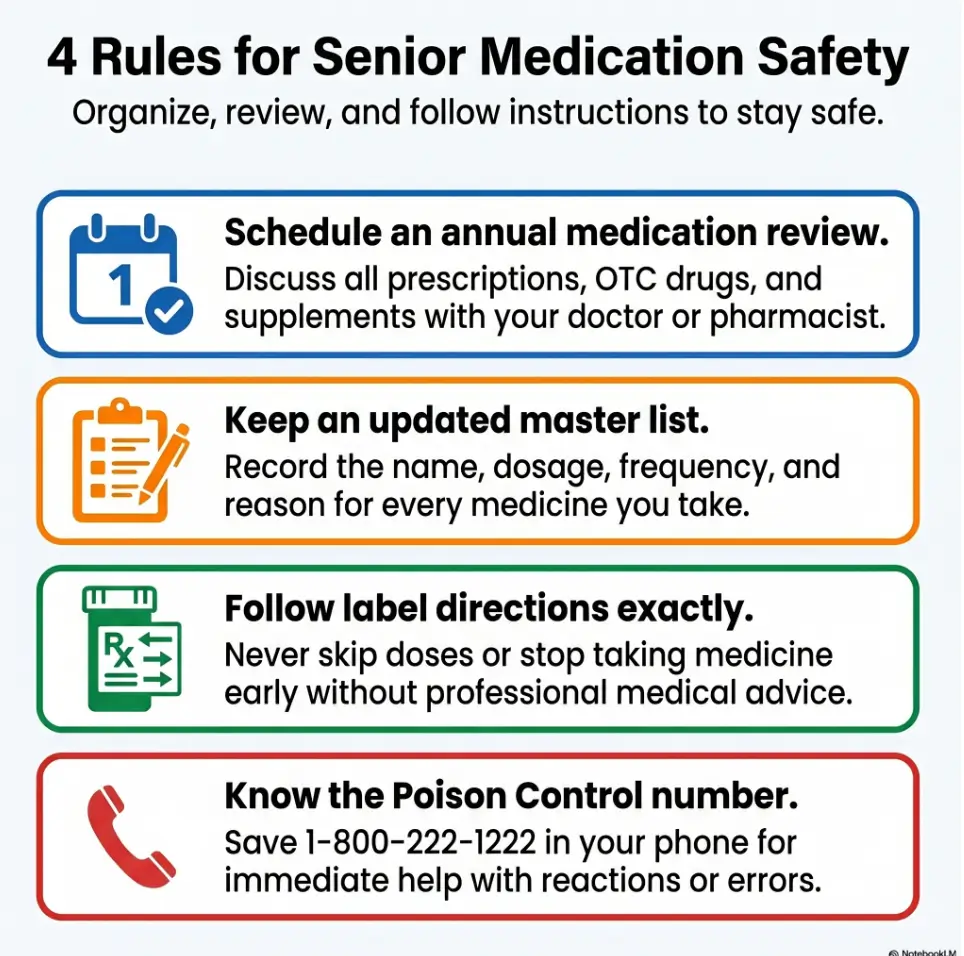
Pills are small because medicine is powerful. Unfortunately, the print on bottles, the imprint on tablets, and the paper handout from the pharmacy often seem designed for an eagle wearing bifocals.
When near vision changes, routine medication tasks become more tiring. A person may still be careful, sharp, and responsible, yet struggle with tiny letters, shiny bottle labels, and low-contrast tablets. That is not carelessness. That is a bad system asking human eyes to perform a miniature inspection job before breakfast.
Similar color is not the same as same medicine
Two white round tablets can be entirely different medicines. They can also be the same medicine in different strengths, or the same active ingredient in different release forms. One may be meant to act quickly. Another may be extended-release and should not be crushed, split, or swapped casually.
Color is useful only as a supporting clue. It is not proof. It is more like a weather report: helpful, but not something you use to land the plane.
The real identifier is often the imprint
Most solid oral prescription tablets and capsules in the United States have identifying marks called imprints. These may include letters, numbers, logos, score lines, or combinations on one or both sides. The imprint helps pharmacists, clinicians, and poison control specialists identify a medication when the label is missing or unclear.
For an older adult with low vision, the imprint may be the most important clue and the hardest one to read. That is why magnification, good lighting, and pharmacy confirmation belong in the same routine. If the imprint cannot be read, the answer is not “squint harder.” The answer is “stop and verify.”
Let’s be honest: bathroom lighting is a terrible pharmacist
Bathroom counters are pill-confusion factories. There is glare from the mirror, steam from the shower, patterned stone, toothpaste clutter, and that one light bulb that makes every tablet look like a moon pebble.
If the pill touches a wet sink edge or rolls near a second bottle, confidence drops. The safest medication routine needs a better stage: clean tray, bright light, quiet surface, one bottle open at a time.
- Check the imprint before trusting appearance.
- Use the original bottle as part of the identification process.
- Stop if the pill is loose, damaged, or unfamiliar.
Apply in 60 seconds: Move pill sorting away from the bathroom counter today.
Who This Is For, And Who Should Not Use This Guide Alone
This guide is for careful home-checkers, not kitchen-table chemists. There is a difference. A careful home-checker confirms what should already be clear from the bottle, pharmacy record, and current medication list. A kitchen-table chemist tries to identify mystery pills by vibes, color, and heroic optimism. We are retiring that second job title.
Good fit: careful home-checkers with labeled prescriptions
This guide can help older adults, spouses, adult children, home aides, and family medication helpers who are dealing with labeled prescription bottles, pharmacy handouts, pill organizers, and routine refills.
It is especially useful when vision changes make bottle labels difficult to read. If reading close print is becoming frustrating, the habits in senior near vision problems can pair well with a safer medication setup.
Not enough: unknown pills, emergency symptoms, or major confusion
This guide is not enough for loose mystery pills, suspected overdose, severe symptoms, or a medication list that no longer makes sense. If a person may have taken the wrong medicine, doubled a dose, mixed medications accidentally, or has serious symptoms, professional help matters immediately.
For pill appearance, call the pharmacist. For symptoms, dose changes, side effects, or conflicting medical directions, call the prescriber or seek urgent care when symptoms are severe.
Caregiver note: your job is confirmation, not detective heroics
Caregivers often feel pressure to “figure it out.” That pressure can make the room feel smaller. The safer role is simpler: slow the process, keep bottles separated, read labels aloud, compare to the current medication list, and call the pharmacy when anything does not match.
You are not failing if you call. You are building a guardrail. Guardrails are not dramatic, but they are undefeated at preventing cliff-related nonsense.
Money Block: Home Pill Check Eligibility
Use this home-check system only when all answers are “yes.”
- Yes / No: The pill is still connected to its original labeled bottle.
- Yes / No: The prescription is current and has not been stopped or replaced.
- Yes / No: The imprint can be read or confirmed by the pharmacy.
- Yes / No: The label directions match the current medication list.
- Yes / No: The person has no new severe symptoms after taking it.
Neutral action line: If any answer is “no,” separate the pill and call the pharmacist before the next dose.
First Rule: Keep the Pill in Its Original Bottle Until You Verify It
The original bottle is not packaging fluff. It is part of the medicine’s safety information. Once pills leave the bottle, they lose context: drug name, strength, directions, refill date, pharmacy phone number, prescriber, warnings, and sometimes the manufacturer description.
The label is part of the medicine
A prescription label tells you more than the name. It tells you how often to take the medicine, whether to take it with food, whether refills remain, and who prescribed it. The side stickers may warn about drowsiness, sunlight, alcohol, or special handling.
For low vision households, large-print labels can make a real difference. A pharmacy may be able to provide larger labels, medication lists, easy-open caps when safe, or clearer dosing instructions. If label reading is a recurring pain point, large-print prescription labels are worth requesting before the next refill.
Why pill organizers can become tiny chaos drawers
Pill organizers are useful, but only after the pills are verified. A weekly organizer filled too quickly can hide errors for days. If one tablet falls into the wrong compartment, the mistake may not be noticed until the week has already marched on in tiny plastic shoes.
The safer habit is to fill organizers from one bottle at a time, checking each pill against the label and current list. Close that bottle before opening the next one. Slow feels inefficient until it prevents a week of confusion.
One bottle open at a time
Open one bottle. Place the bottle in front of you. Confirm the label. Remove only the pills needed. Check the imprint and appearance. Fill the organizer. Close the bottle. Move it to the “done” side of the tray.
This rhythm prevents look-alike pills from crossing paths. It also helps caregivers spot where the process paused if the phone rings, a dog barks, or life throws a sock at the ceiling fan.
Short Story: The Tuesday Morning White Tablet
Marion kept two white round pills on the breakfast table every morning. One was for blood pressure. One was for cholesterol. She knew them by their bottles, not by their faces. Then the pharmacy changed one generic refill, and the new tablet looked almost identical to the other. Her son, trying to help before work, filled the pill box from both bottles at once.
Halfway through, the kettle whistled, the phone rang, and the white tablets became a tiny snowstorm of uncertainty. No one panicked. They stopped. They placed the uncertain pills in a small bag, kept the bottles nearby, and called the pharmacy. The pharmacist confirmed the changed appearance and walked them through the correct refill. The lesson was not “never use pill boxes.” The lesson was quieter and better: one bottle open at a time turns a confusing kitchen scene into a manageable safety routine.
The Five-Clue Check: Imprint, Shape, Color, Size, And Label
The safest home pill check uses five clues together. One clue can mislead. Five clues create a net.
Clue 1: imprint code
Look for letters, numbers, symbols, logos, score lines, or markings on both sides of the pill. Some imprints are shallow. Some are split across two sides. Some look different under bright light than under yellow light.
If the imprint is too small, use a magnifier, phone camera zoom, or a lighted magnifier. The iPhone Magnifier filters for pill bottles can help some readers increase contrast when tiny print disappears into shine.
Clue 2: shape
Shape matters, but it is still not enough by itself. Note whether the pill is round, oval, oblong, capsule-shaped, diamond, shield, rectangular, or scored. A tablet with a line down the middle may look similar to another scored tablet, but the imprint may tell a different story.
Clue 3: color
Color belongs in the support cast, not the lead role. Lighting changes color. Older eyes may have more trouble distinguishing pale blue from white, peach from tan, or green from gray. A refill from a different manufacturer can also change the pill’s color while the medicine remains the same.
Clue 4: size
Compare size carefully, preferably on a clean white sheet or tray. Bigger is not automatically stronger. Smaller is not automatically safer. Size is one more clue, not the verdict.
Clue 5: label and handout
Match the pill to the prescription label and any pharmacy information sheet. The label should match the drug name, strength, directions, and refill timing. If the pharmacy handout describes the pill appearance, compare it carefully. If it does not match, call.
Letters, numbers, symbols, both sides
Round, oval, capsule, scored
Support clue only, never proof
Compare carefully, not alone
Name, strength, directions, refill
- Check both sides of the pill.
- Compare with the current prescription label.
- Call the pharmacy when the physical pill and label disagree.
Apply in 60 seconds: Pick one current bottle and practice reading the imprint under better light.
Don’t Do This: The Color-Matching Mistake That Causes Quiet Trouble
Color matching feels efficient because the brain loves shortcuts. “The white one at night.” “The little yellow one after breakfast.” “The blue capsule from the top shelf.” These phrases sound harmless until two pills share the same color or a refill changes appearance.
“It’s the white one” is not a safe system
Many medicines are white, round, oval, or pale. A person taking blood pressure medication, thyroid medication, allergy medicine, pain medicine, and supplements may have several tablets that look like they came from the same minimalist design studio.
A safer system uses name plus purpose. “Lisinopril, blood pressure.” “Levothyroxine, thyroid.” “Atorvastatin, cholesterol.” Purpose labels help catch odd mismatches, especially when a caregiver reads aloud.
Generic switches can change appearance
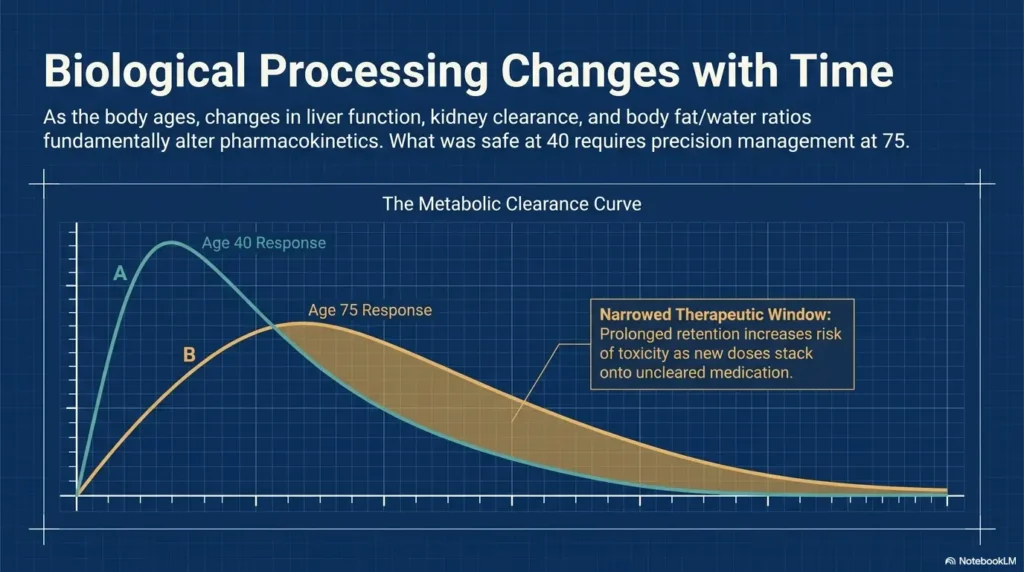
A refill can look different because the pharmacy used a different manufacturer or supplier. The medicine may still be correct, but the appearance change should be confirmed. This is especially important for older adults who rely on pill appearance as part of their routine.
When the refill looks different, do not assume the pharmacy made a mistake, and do not assume everything is fine. The sensible middle path is to call and ask: “My refill looks different this month. Can you confirm the drug, strength, and manufacturer?”
The danger zone: same color, different strength
The same medication may come in different strengths that look similar. A higher dose, lower dose, extended-release version, or different active ingredient can be close enough in color to fool tired eyes.
The risk is quiet because the person may not feel anything immediately. Some medication errors show up as dizziness, sleepiness, confusion, blood pressure changes, missed symptom control, or unusual side effects later.
Show me the nerdy details
Pill appearance is a weak identifier because visual features are not unique enough. Color can shift under warm bulbs, cool LEDs, glare, cataract-related contrast changes, and phone camera filters. Shape and size help narrow possibilities, but multiple products can still share them. Imprint codes are stronger because they are designed to identify solid oral dosage forms, but even imprints require correct reading, both-side inspection, and context from the prescription label. A safe workflow treats the imprint as a high-value clue, then checks it against the pharmacy record before the pill is taken.
Build a Bright-Light Pill Station Before You Sort Anything
A safer pill station does not need to look medical. It needs to be boring, bright, clean, and predictable. Boring is underrated. Boring is where fewer errors happen.
Use a tray, not the countertop
Use a clean tray, white paper, or non-slip mat. A tray creates a boundary. If a pill drops, it stays in the work area. A white background improves contrast for many tablets and makes small capsules easier to spot.
For households with glare-sensitive eyes, avoid shiny trays and glossy stone counters. Matte surfaces are calmer. If bright light causes discomfort, ideas from anti-glare screen protector habits can translate into the home: reduce harsh reflection, change angles, and soften glare while keeping the work area well lit.
Add magnification before you need it
Do not wait until frustration arrives. Keep reading glasses, a handheld magnifier, a stand magnifier, or phone camera zoom at the pill station. A stand magnifier may be easier for people with hand tremor because it does not require holding the lens steady. For that decision, handheld vs stand magnifier for tremor offers a helpful comparison.
Here’s what no one tells you: shadows lie
A shallow imprint can vanish under a shadow. Yellow light can make peach and white tablets seem closer than they are. A patterned countertop can make a small pill disappear. Glare can erase the very letters you are trying to read.
Try a lamp that shines across the pill from the side, not straight into the eyes. Move the pill slightly and watch how the imprint changes. This tiny adjustment can reveal letters that looked missing a second ago.
Money Block: Pill Station Setup Card
| Item | Why it helps | Low-cost alternative |
|---|---|---|
| Clean tray | Keeps pills from rolling away | White dinner plate |
| Bright lamp | Makes imprints easier to see | Desk lamp angled from the side |
| Magnifier | Enlarges tiny imprints and label print | Phone camera zoom |
| Current med list | Confirms name, purpose, and dose | Printed one-page list |
Neutral action line: Set up the tray before the next refill, not after confusion starts.
Pharmacy Tools: When the Bottle, App, And Pharmacist Should Agree
The safest pill identification happens when three things agree: the bottle label, the pharmacy record, and the actual pill. If one of them disagrees, the system is asking for a pause.
Ask for large-print labels
Many pharmacies can help with accessibility. Ask for large-print labels, clearer directions, easy-open caps when appropriate, and a printed medication list. Easy-open caps are not safe for every home, especially where children visit, so choose based on the household.
If reading aloud helps more than magnifying, a family member can use a repeatable script. The habits in how to read labels aloud can reduce embarrassment and increase accuracy, especially when the person wants help without feeling managed.
Use official pharmacy records first
Your own pharmacy has refill history, manufacturer information, strength, prescriber details, and current directions. That makes it safer than a random visual guess from a search box.
If you use a pharmacy app, compare the app record with the bottle label. If the app says one strength and the bottle says another, do not freestyle. Call the pharmacy and ask them to reconcile it.
Pill identifier tools are backup, not permission
Online pill identifier tools can help match imprint, color, and shape. They are useful, but they do not know whether the pill came from your current prescription, whether your dose changed, or whether the medicine was discontinued.
Use pill identifiers as a backup clue, not as permission to take an uncertain pill. The pharmacist remains the safer final check.
- Ask the pharmacy to confirm refill appearance changes.
- Request large-print labels if small print causes errors.
- Use pill identifier tools only as backup.
Apply in 60 seconds: Save your pharmacy phone number in the caregiver’s phone today.
Common Mistakes: Small Habits That Make Similar Pills More Dangerous
Medication errors often come from ordinary habits, not wild behavior. A travel bottle. A tired evening. An old refill beside a new refill. A supplement that seems too friendly to cause trouble. The villain is rarely wearing a cape. It is usually wearing convenience shoes.
Mistake 1: pouring pills into one travel bottle
One travel bottle can erase identity. If several pills are mixed together, the label no longer belongs to each pill. During travel, doctor visits, emergencies, or pharmacy calls, labeled containers are much safer.
If carrying full bottles is difficult, ask the pharmacist about safer travel options. Do not create an unlabeled pill salad and hope future-you enjoys detective work at 7 a.m.
Mistake 2: keeping old refills beside new refills
Old refills can sneak back into the routine, especially after a dose changes. Discontinued medications should be separated. Expired or uncertain medicines should not live beside current medicines.
A one-page current medication list helps. If you need a simple structure, one-page medication list template can support doctor visits, pharmacy calls, and caregiver handoffs.
Mistake 3: sorting pills while tired
Late-night sorting is a fog machine. So is sorting while hungry, rushed, upset, or distracted. Medication setup deserves a quiet time of day, even if that time is only fifteen focused minutes.
Choose a repeatable window: after breakfast, before lunch, or another steady moment. Consistency reduces decision fatigue.
Mistake 4: assuming supplements are harmless
Vitamins, herbals, sleep aids, pain relievers, and cold medicines can interact with prescription medications. Older adults often take multiple products, and the more products in the house, the more important the list becomes.
Put supplements on the medication list too. “Natural” is not a safety spell. Grapefruit is natural and still knows how to complicate a medication routine.
Money Block: Current, Uncertain, Discard/Ask Triage
- Current: Labeled, prescribed now, matches the medication list, and recently verified.
- Uncertain: Loose pill, changed appearance, unclear imprint, conflicting label, or unknown purpose.
- Discard/Ask: Expired, discontinued, damaged, mixed, or no longer recognized.
Neutral action line: Keep the uncertain group away from daily pills until the pharmacy confirms what to do.
Look-Alike, Sound-Alike Risks: The Name Can Trick You Too
Some medication risks are visual. Others are verbal. A pill may look like another pill, while its name sounds like another drug entirely. This is called look-alike, sound-alike medication risk, and it is a known safety issue in pharmacies, clinics, hospitals, and homes.
Pills can look alike and names can sound alike
Medication names may share prefixes, endings, or rhythms. In a noisy kitchen or over a phone call, similar names can blur together. Add hearing loss, tiredness, or a rushed appointment, and the confusion becomes easier.
This is why purpose labels help: “blood pressure,” “thyroid,” “sleep,” “cholesterol,” “pain,” “diabetes,” or “eye pressure.” Purpose gives the name a second anchor.
Similar names deserve extra label-checking
If two medicines sound alike, place them apart. Add a large-print purpose note. Ask the pharmacist whether either medicine has a common confusion risk. Pharmacists are trained to catch these issues, and they would rather answer a careful question than clean up a preventable error.
For households with low vision, tactile systems can also help separate bottles by routine. The ideas in pill bottle tactile label placement can make morning, evening, and special-use bottles easier to distinguish without relying only on print.
Add the purpose beside the name
A purpose note is not a replacement for the prescription label. It is a support tool. For example:
- Metformin: diabetes / blood sugar
- Atorvastatin: cholesterol
- Lisinopril: blood pressure
- Levothyroxine: thyroid
- Latanoprost: eye pressure
Ask the pharmacist or prescriber to confirm purposes before writing them down. Do not guess, especially when a medicine has more than one use.
The Caregiver Double-Check: A Two-Person System Without Drama
A good caregiver system should feel respectful, not theatrical. Nobody needs a courtroom cross-examination over a pill organizer. The goal is to reduce risk while preserving dignity.
Read aloud, then point
One person reads the bottle label aloud: medicine name, strength, dose, timing, and purpose. The other person points to the matching pill and the correct organizer compartment. This simple read-and-point habit catches errors without making anyone feel scolded.
For people with low vision, speech can become part of the safety system. A voice recorder or phone memo can help capture pharmacy instructions, especially after a dose change. The ideas in voice recorder for low vision seniors may help families preserve instructions without relying on memory alone.
Photograph only after verifying
A photo of the correct pill beside the bottle can help, but only after a pharmacist-confirmed setup. Do not photograph an uncertain pill and let the image become household “truth.” That is how one mistake gets laminated into routine.
If you use photos, date them. Recheck them after refill changes. Delete old photos when the appearance changes.
Make changes visible
When a doctor changes a dose, remove the old instructions from the pill station. Separate old refills. Update the medication list. Tell the caregiver, spouse, or adult child who helps with sorting.
Invisible changes are dangerous. A sticky note from six months ago can become a tiny fossil of bad information.
- Read the label aloud.
- Point to the pill and compartment.
- Remove old notes and outdated photos after dose changes.
Apply in 60 seconds: Choose one phrase: “Let’s confirm it together before we fill the box.”
When to Seek Help: Stop Sorting And Call Someone
The safest medication skill is knowing when to stop. Stopping is not overreacting. Stopping is the small hinge that keeps a bad morning from becoming an emergency.
Call the pharmacist if the pill appearance changed
Call the pharmacist when a refill looks different, the imprint does not match what you expected, the bottle description seems wrong, pills are mixed, or a loose pill appears in a purse, drawer, coat pocket, car cup holder, or pill organizer.
Use a simple script:
“My refill looks different this month. The label says [medicine name and strength]. The pill is [shape/color] and the imprint looks like [letters/numbers]. Can you confirm whether this is correct?”
If phone calls feel hard to organize, low vision pharmacy help script can make the conversation calmer and more complete.
Call the prescriber if directions conflict
Call the doctor or prescribing clinician when directions conflict, a medication was stopped but remains in the home, two medicines seem to treat the same issue, or side effects appear after a change.
For complex medication routines, ask whether a medication review is appropriate. Bring every bottle, over-the-counter product, supplement, eye drop, inhaler, cream, and patch. The forgotten items are often the ones that cause the “Wait, you’re taking that too?” moment.
Seek urgent help for serious symptoms
Seek urgent help for confusion, fainting, trouble breathing, swelling of the face or throat, severe allergic symptoms, chest pain, extreme sleepiness, uncontrolled bleeding, severe dizziness, or suspected overdose.
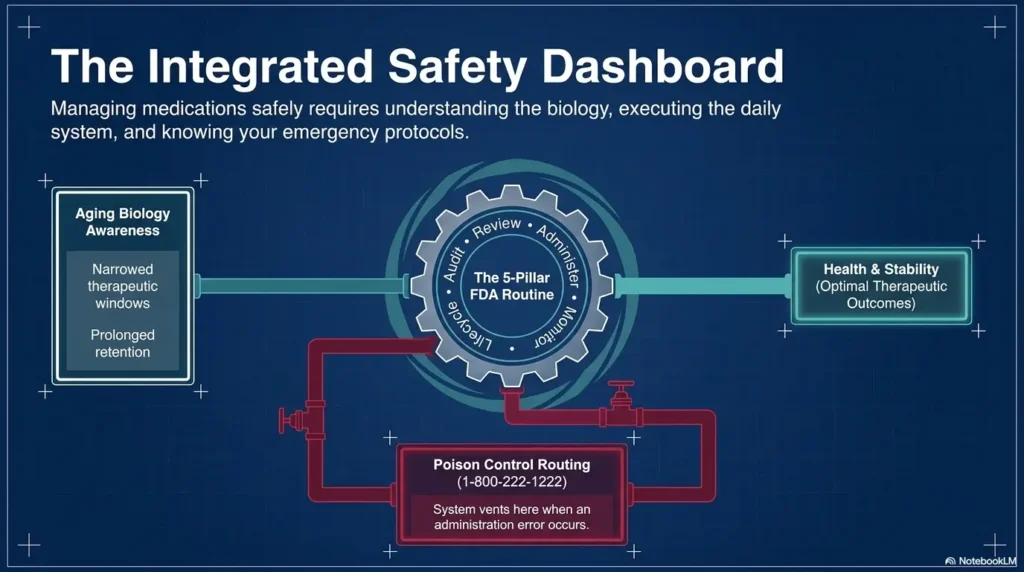
If the person may have taken the wrong medicine, do not wait for symptoms to become dramatic. Call Poison Control, a pharmacist, a clinician, or emergency services based on the situation. Keep the bottle nearby.
Next Step: Make a 15-Minute Pill Safety Reset
A full medication overhaul can feel heavy. A 15-minute reset is lighter. You are not solving every bottle in the house. You are creating order where confusion is most likely to start.
Gather every bottle in one place
Collect prescription medicines, over-the-counter drugs, vitamins, herbals, eye drops, creams, inhalers, patches, and old refills. Place them on a table, not a sink counter. Keep children and pets away from the area.
If low vision makes bedside routines tricky, low vision bedside organization can help keep nighttime medicines, glasses, lights, and emergency items from becoming a bedside jumble.
Separate “current,” “uncertain,” and “discard/ask”
Make three groups. Current medicines go in one area. Uncertain items go in a second area. Expired, discontinued, damaged, or no-longer-recognized items go in a discard/ask area. Do not throw medicine in the trash or flush it unless local disposal guidance says that is safe.
Ask the pharmacy about take-back options or safe disposal. Many communities have medicine take-back events, pharmacy drop boxes, or local disposal instructions.
Call the pharmacy with the uncertain pile
Choose one unclear pill today. Call the pharmacy with the bottle, pill, imprint, and medication list in front of you. One confirmed pill is progress. Progress does not need confetti. It just needs fewer risks by dinner.
Money Block: 15-Minute Pill Safety Reset Timer
- Minutes 0–3: Clear the table, set down a tray, and add bright light.
- Minutes 3–7: Gather all medicine containers from kitchen, bedroom, purse, and bathroom.
- Minutes 7–11: Sort into current, uncertain, and discard/ask groups.
- Minutes 11–15: Pick one uncertain item and prepare a pharmacy call.
Neutral action line: Finish by moving uncertain pills away from daily-use medicine until verified.
- Gather all products, including supplements and eye drops.
- Sort by certainty, not by convenience.
- Verify one unclear item before the next dose.
Apply in 60 seconds: Put a small bag or container near the pill station labeled “Ask pharmacist.”
FAQ
How can seniors identify pills when the imprint is too small to read?
Use bright lighting, a magnifier, phone camera zoom, or a lighted magnifier. Check both sides of the pill. If the imprint still cannot be read clearly, do not take the pill until a pharmacist verifies it.
Is it safe to identify a pill by color and shape only?
No. Color and shape are supporting clues, but they are not reliable enough by themselves. Imprint, label, current medication list, and pharmacy confirmation are safer.
Why did my refill look different this month?
The pharmacy may have used a different manufacturer or generic supplier. The medicine may still be correct, but you should call the pharmacist to confirm the drug, strength, and appearance before relying on it.
What should I do with a loose pill found in a purse or drawer?
Do not take it. Place it in a small bag or container, keep it away from children and pets, and ask a pharmacist whether it can be identified or should be discarded.
Can I put all daily pills into one container for travel?
It is safer to keep medicines in labeled containers, especially during travel, doctor visits, emergencies, or medication changes. If you need a smaller travel system, ask the pharmacist how to keep medicines identifiable.
Should older adults use pill organizers?
Yes, pill organizers can help when filled carefully from original bottles and checked against the current medication list. Use one bottle at a time, close it before opening the next, and recheck after refill or dose changes.
Who should I call first, the doctor or pharmacist?
For pill appearance, refill changes, imprint questions, and label confusion, call the pharmacist first. For symptoms, side effects, dose changes, or conflicting medical instructions, call the prescriber. For severe symptoms or suspected overdose, seek urgent help.
Can a phone camera help identify pills?
A phone camera can help enlarge an imprint, improve contrast, or document a pharmacist-confirmed setup. It should not replace professional confirmation for unknown, loose, damaged, or mismatched pills.
Conclusion: Make the Pill Smaller Than the System
The tiny pill problem feels scary because the object is small and the stakes are large. But the answer is not sharper guessing. It is a better system.
Keep pills in original bottles until verified. Use bright light and magnification. Check imprint, shape, color, size, and label together. Treat refill appearance changes as a reason to call, not a reason to panic. Separate uncertain pills from current medicines. Let the pharmacist be part of the routine before trouble has a chance to grow teeth.
Within the next 15 minutes, choose one medication area and create three groups: current, uncertain, and discard/ask. Then pick one uncertain item and call the pharmacy before the next dose. That one quiet action can turn a drawer of doubt into a safer household habit.
Last reviewed: 2026-05.