
Navigating the Sugar Maze: A 30-Second Guide for Seniors and Caregivers
A grocery aisle can turn strangely loud when the print is tiny, the cart is leaning left, and three yogurt tubs all claim to be “light,” “natural,” and “better for you.” For many older adults and caregivers, how seniors can check sugar content on food labels more easily is not a trivia question. It is a daily safety skill tied to blood sugar, diabetes risk, heart health, energy crashes, medication timing, and simple peace of mind.
Guessing can cost more than money. It can lead to buying foods that look sensible on the front but deliver a sugar surprise on the back. The good news: you do not need a nutrition degree, a magnifying glass the size of a frying pan, or a spreadsheet at breakfast.
- ✓ Use one small method.
- ✓ Read three numbers.
- ✓ Compare only similar foods.
Then move on with your day. This guide turns the Nutrition Facts label into a calm 30-second routine, using practical label-reading habits supported by FDA label rules and diabetes education basics.
The Easy Sugar Label Map
When the label feels crowded, read it in this order:
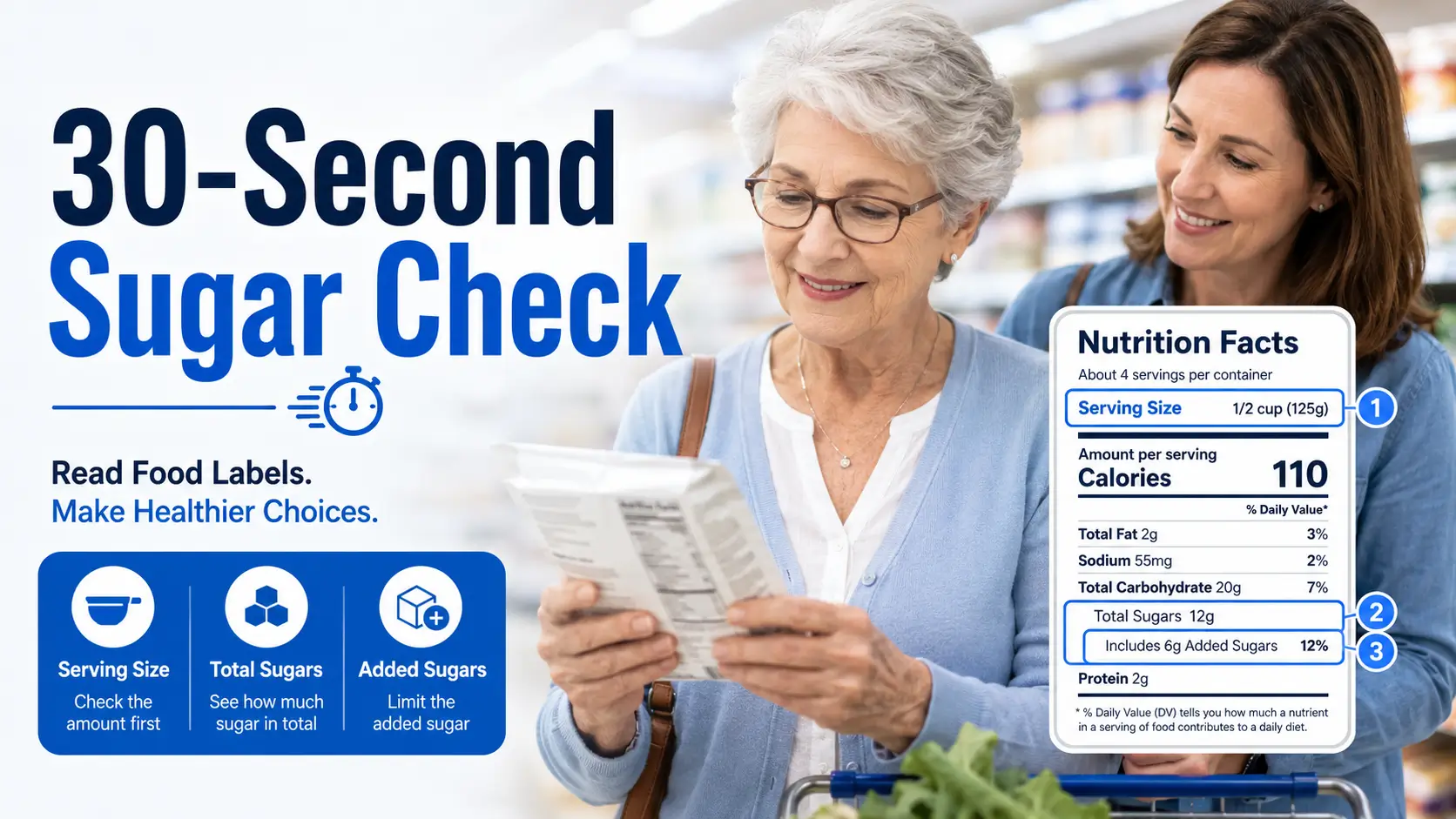
- Serving Size: This tells you what all the numbers are based on.
- Total Sugars: This includes natural and added sugar together.
- Added Sugars: This shows sugar added during processing, including syrup, honey, table sugar, and similar sweeteners.
Fast rule: For most packaged foods, compare added sugar first after you confirm the serving size.
Table of Contents
Safety Disclaimer
This guide is for general food label education, not personal medical advice. Seniors with diabetes, prediabetes, kidney disease, heart disease, swallowing problems, unplanned weight loss, appetite changes, or medication-related blood sugar concerns should ask a doctor, pharmacist, or registered dietitian what sugar and carbohydrate targets fit their health situation.
Food labels can help you choose more wisely, but they do not replace a diabetes meal plan, renal diet, cardiac nutrition plan, or medication instructions. If a food swap changes blood sugar readings, energy, dizziness, appetite, or medication timing, bring the label or a clear photo of it to a clinician.
- Use labels to compare foods, not to diagnose symptoms.
- Ask for personal targets if you take diabetes medicine or insulin.
- Bring packages, photos, or written notes to appointments.
Apply in 60 seconds: Put one confusing label photo in a phone folder named “Ask doctor or dietitian.”
The 3-Number Sugar Check Seniors Can Use in 30 Seconds
The Nutrition Facts label looks busy because it is trying to serve many jobs at once. It tracks calories, fats, sodium, fiber, vitamins, and more. For a quick sugar check, do not read the whole thing first. That is how a simple grocery stop becomes a tiny paper blizzard.
Start with three numbers: Serving Size, Total Sugars, and Added Sugars. This order matters. Serving Size tells you the “unit” behind the numbers. Total Sugars tells you the whole sugar amount. Added Sugars tells you how much sugar was put in during processing or packaging.
Step 1: Find the serving size before trusting any sugar number
Serving Size is usually near the top of the Nutrition Facts label. It might say “2/3 cup,” “1 container,” “1 bar,” “8 fl oz,” or “about 15 crackers.” Every number below it depends on that serving size.
If the serving size says half the bottle and you drink the whole bottle, double the sugar. If the serving size says one small cookie and you normally eat three, multiply by three. No shame, just arithmetic wearing grocery shoes.
For seniors with low vision, glare sensitivity, or hand tremor, the tiny serving-size line can be the hardest part. If reading labels is physically difficult, a phone magnifier, a high-contrast note, or a label-reading routine can help. For related practical tips, see how to read labels aloud when small print gets in the way.
Step 2: Check “Total Sugars” without panicking
Total Sugars includes all sugars in the food. That means natural sugar from milk or fruit plus any sugar added by the manufacturer. Plain milk, unsweetened yogurt, fruit cups packed in juice, and some tomato products may show Total Sugars even when the food is not dessert pretending to be breakfast.
Total Sugars is useful, but it needs context. A plain yogurt and a frosted breakfast pastry may both show sugar, but they are not nutritional twins. One may bring protein and calcium. The other may bring a tiny carnival of sweetness and not much staying power.
Step 3: Circle “Added Sugars” in your mind
Added Sugars is the line that helps many shoppers decide faster. It shows sugar added during processing, including sucrose, dextrose, syrups, honey, and concentrated fruit or vegetable juices used for sweetness.
The FDA’s Daily Value for added sugars is 50 grams per day based on a 2,000-calorie diet. That does not mean every older adult should aim for exactly 50 grams. Personal needs vary. But it gives you a reference point when one breakfast drink quietly uses a large chunk of the day’s limit.
Tiny rule, big relief: compare similar foods side by side
Do not compare orange juice to tomato sauce, cereal to salad dressing, or a protein shake to ice cream. That way lies confusion and possibly a dramatic sigh near aisle seven.
Compare two similar foods: cereal to cereal, yogurt to yogurt, oatmeal packet to oatmeal packet, sauce to sauce. Match the serving size first. Then choose the one with less added sugar when taste, cost, protein, fiber, sodium, and personal medical needs still make sense.
Money Block: 30-Second Sugar Label Checklist
Use this yes/no check before a repeat purchase.
- Yes/No: Did I find the serving size?
- Yes/No: Is the serving size close to what I actually eat or drink?
- Yes/No: Did I check Added Sugars, not only Total Sugars?
- Yes/No: Did I compare it with a similar product?
- Yes/No: Does this food still fit my doctor’s or dietitian’s advice?
Neutral action line: If two or more answers are “No,” pause before making it a regular buy.
Added Sugar vs. Total Sugar: The Label Trap That Confuses Smart Shoppers
Many smart shoppers get stuck because “sugar” sounds like one thing. On labels, it is more like a small family reunion where not everyone has the same job.
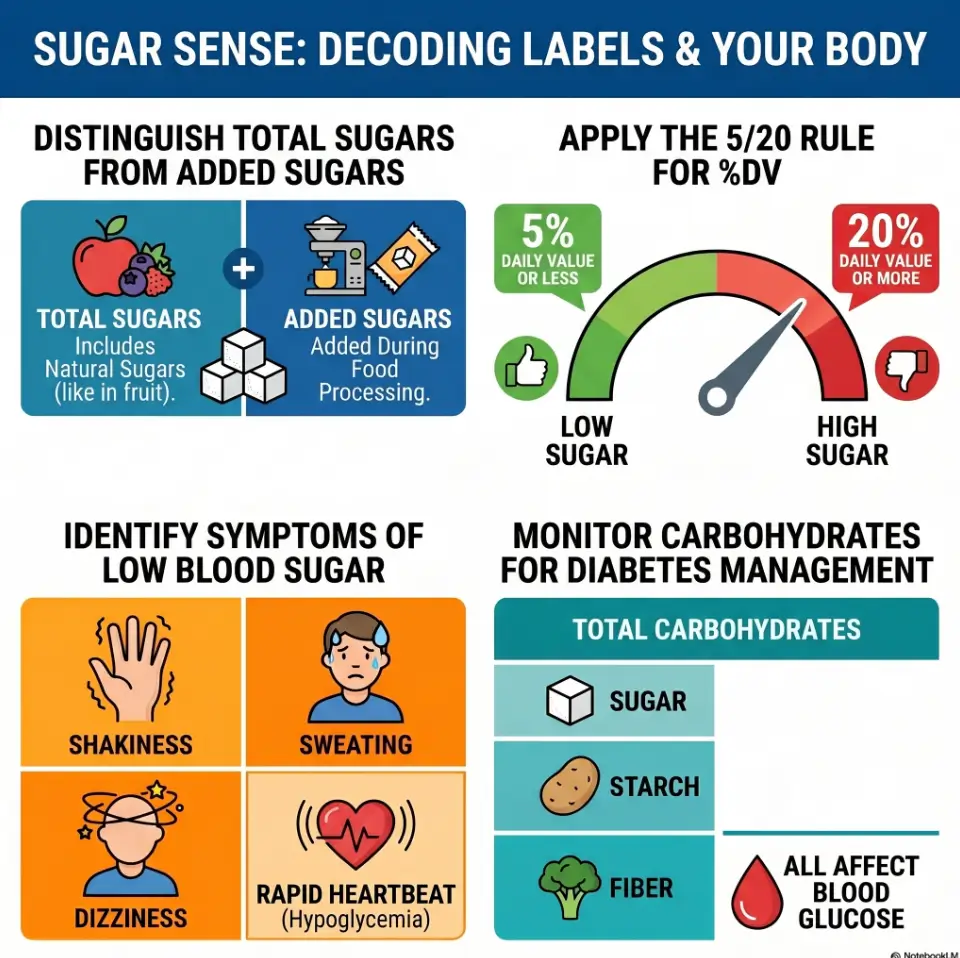
Total Sugars includes sugar naturally present in foods plus added sugar. Added Sugars is a separate line showing what was added during processing. This difference helps seniors avoid two mistakes: fearing naturally sweet foods automatically, and missing processed foods that look innocent but carry added sweeteners.
Why milk, fruit, and yogurt can show sugar without being “candy in disguise”
Milk contains lactose. Fruit contains fructose. Plain yogurt can show sugar because it begins as milk. These naturally occurring sugars come packaged with nutrients such as protein, calcium, potassium, fiber, or water, depending on the food.
That does not mean every fruit product is automatically ideal. Fruit snacks, fruit drinks, flavored yogurts, and fruit cups in syrup can add sugar beyond what naturally occurs. The label tells the story, even when the front of the package is wearing a farmer’s-market costume.
Why added sugar deserves the sharper flashlight
Added sugar matters because it can raise sweetness and calories without adding much nutritional value. Diets high in calories from added sugars can make it harder to meet nutrient needs while staying within calorie needs, which is one reason the FDA requires Added Sugars on the label.
For older adults, this is especially practical. Appetite may be smaller. Dental issues, swallowing trouble, medication side effects, or fatigue may already make balanced eating harder. A food that uses up a large amount of added sugar without providing enough protein, fiber, or minerals may crowd out better choices.
The “includes” line seniors should not skip
On many labels, the sugar section reads something like: “Total Sugars 12g” and below that “Includes 8g Added Sugars.” That “includes” line is not a footnote decoration. It is the part that tells you how much of the sugar was added.
When shopping, say it out loud if helpful: “Total sugar is twelve. Added sugar is eight.” A spoken rhythm helps some seniors remember the difference, especially if the label is crowded or the lighting is cranky.
Here’s what no one tells you: zero added sugar does not always mean low carb
Zero added sugar can be useful, but it is not the same as low carbohydrate. A bowl of unsweetened cereal, plain oatmeal, milk, or fruit may have no added sugar but still contain carbohydrates that affect blood glucose.
People with diabetes often need to look beyond added sugar and check total carbohydrate, fiber, portion size, and meal timing. Added sugar is an important clue, not the entire map.
Show me the nerdy details
On U.S. Nutrition Facts labels, Total Sugars sits under Total Carbohydrate. Added Sugars is nested beneath Total Sugars because added sugar is part of the total sugar amount, not an extra number to add again. For example, if Total Sugars is 10 grams and Added Sugars is 6 grams, the total is still 10 grams. Do not add 10 plus 6. The 6 grams are already included inside the 10 grams. For diabetes meal planning, many clinicians teach people to review Total Carbohydrate because starches, sugars, and some fibers are grouped under carbohydrate. Added Sugars helps judge food quality and sweetness load, while Total Carbohydrate helps estimate glucose impact.
Serving Size Is the Sneaky Door Before the Sugar Room
Serving size is the label’s quiet trapdoor. Everything can look reasonable until you realize the numbers are based on less than you normally eat.
This is not about guilt. It is about matching the label to real life. If a senior drinks a whole “single-looking” bottle, eats a whole muffin, or pours cereal by memory, the printed serving may not match the actual portion.
Why one bottle, bowl, or snack pack may contain more than one serving
Some packages look personal but contain more than one serving. A bottle may list sugars for 8 ounces while the bottle holds 16 ounces. A bag may list a serving as 28 grams while the bag looks suspiciously ready to disappear during television.
The practical move is simple: look for “servings per container.” If it says two servings and you eat the whole thing, double the sugar, calories, sodium, and carbohydrate. The label is not judging you. It is just counting quietly in the corner.
The “I eat the whole thing” math shortcut
Use this shortcut:
- If you eat half the package, use half the label numbers.
- If you eat one serving, use the label numbers as printed.
- If you eat two servings, double the label numbers.
- If you eat three servings, triple them.
For seniors who prefer not to calculate in the aisle, choose packages that list “1 container” as the serving size when available. Single-serve labeling can reduce mental fog, especially when shopping after an appointment or during a low-energy day.
When small print becomes a big blood sugar surprise
Small print can create real problems. A caregiver may buy a “lower sugar” product, only to discover the serving is half the usual portion. A senior may choose a drink with “only 12 grams” of sugar but drink two servings without noticing.
If vision makes labels difficult, build a repeat-buy list at home under better lighting. A simple grocery system can reduce aisle decisions; the guide to a low vision grocery list system offers useful ideas for organizing familiar staples before shopping fatigue begins.
Ask: “Is this the amount I actually eat?”
Ask: “How much sugar was added?”
Ask: “Which similar item has less added sugar?”
The Percent Daily Value Shortcut: Low, High, or Walk Away?
Percent Daily Value, often written as %DV, helps you judge whether one serving is low or high in a nutrient. For added sugar, it turns grams into a faster signal.
A label with 5% Daily Value for added sugar is a very different breakfast companion than one with 40%. One whispers. The other brings cymbals.
How %DV helps seniors judge added sugar faster
The FDA explains that % Daily Value shows how much a nutrient in one serving contributes to the daily diet. For added sugar, the Daily Value is 50 grams per day based on a 2,000-calorie diet.
In everyday shopping, %DV can be easier than grams. If a food has 20% Daily Value for added sugar, that one serving uses about one-fifth of the reference daily limit. If a drink has 60%, that is a large amount for one item.
Why 5% feels different from 40% at breakfast
Imagine two yogurts. One has 5% Daily Value for added sugar. The other has 40%. If both taste fine, have similar protein, fit your budget, and work with your health needs, the 5% choice is usually the easier repeat buy.
This is especially helpful for foods people eat often: cereal, yogurt, oatmeal packets, bottled coffee, protein drinks, sauces, and snack bars. A high-added-sugar food once in a while is different from a high-added-sugar food every morning.
The “daily budget” idea without turning lunch into a spreadsheet
Think of added sugar like a daily budget, not a moral score. If one item uses a large share, you have less room for other sweetened foods that day. This can help seniors make flexible choices without turning every meal into a courtroom drama.
For older adults with diabetes or medication-related low blood sugar risk, ask a clinician whether this budget idea fits your care plan. Some people need specific carbohydrate timing, not just lower added sugar.
Money Block: Added Sugar Mini Calculator
Use this quick calculator to estimate how much added sugar you get from one food when you eat more than one serving.
Estimated added sugar: 8.0 grams
Approximate FDA Daily Value used: 16% based on 50 grams.
Neutral action line: Use the result to compare two similar foods, not to replace medical nutrition advice.
Common Mistakes Seniors Make When Reading Sugar Labels
Sugar label mistakes are usually not about laziness. They come from packaging design, tiny print, health claims, and the ordinary exhaustion of making too many decisions before lunch.
The fix is to notice the pattern. Once you know the traps, they lose some of their theatrical fog.
Mistake 1: Buying the front-of-package promise instead of reading the label
Words like “natural,” “wholesome,” “light,” “made with fruit,” and “heart smart” can be useful, meaningless, or somewhere in between. The front of the package is marketing. The Nutrition Facts label is where the numbers live.
Use the front as a clue, not proof. Flip the package. Check serving size and added sugar. The back label may be less charming, but it is often more honest.
Mistake 2: Checking sugar but ignoring serving size
A snack with 6 grams of added sugar per serving may be reasonable. But if the package contains three servings and you eat the whole thing, that is 18 grams. The serving size is the hinge.
This is why reading the serving size first is not optional. It is the doorway into the rest of the label.
Mistake 3: Assuming “natural,” “organic,” or “honey-sweetened” means low sugar
Honey, maple syrup, agave, and organic cane sugar may sound gentler than plain sugar, but they still count as added sugars when used to sweeten packaged foods. The body does not treat a poetic ingredient list as a free pass.
If a food is sweetened, check the Added Sugars line. Do not let a prettier word do the thinking for you.
Mistake 4: Forgetting sauces, cereals, drinks, and “healthy” snacks
Some of the biggest sugar surprises are not dessert. They are sauces, flavored oatmeal, granola, bottled tea, coffee drinks, breakfast bars, smoothies, and cereals with sensible-looking boxes.
Build a short list of repeat foods that are worth checking once. For seniors managing both nutrition and vision challenges, organizing staples at home can pair nicely with a low vision freezer organization routine so meals are easier to identify and repeat safely.
- Marketing words do not replace label numbers.
- Sweeteners with elegant names still count.
- Everyday foods can matter more than occasional treats.
Apply in 60 seconds: Check the added sugar on one food you buy every week.
Don’t Do This: The Sweetener Name Game on Ingredient Lists
The Nutrition Facts label gives you the added sugar number. The ingredient list tells you where sweetness may be coming from. Both are useful, especially when a package sounds healthier than it is.
Ingredient lists are written in descending order by weight. If sugar or a sweetener appears near the beginning, the food may rely heavily on sweetness.
Why sugar hides under many polite little aliases
Sugar can appear as cane sugar, brown sugar, raw sugar, invert sugar, malt sugar, coconut sugar, turbinado sugar, or confectioners’ sugar. It may also show up as syrup, nectar, or fruit juice concentrate.
These words are not forbidden. They are signals. A senior does not need to memorize every sweetener name. The goal is to recognize enough of them to slow down when the label starts sounding like a dessert menu wearing a cardigan.
Words ending in “-ose” and syrups that deserve a second look
Many sugars end in “-ose,” such as sucrose, dextrose, fructose, glucose, maltose, and lactose. Syrups can include corn syrup, high fructose corn syrup, rice syrup, barley malt syrup, and maple syrup.
Again, do not panic. Use the ingredient list as a backup check. If Added Sugars is high and several sweeteners appear early, you have your answer.
When ingredients matter more than marketing claims
A package can say “made with whole grains” and still contain plenty of added sugar. It can say “fruit flavored” and contain little fruit. It can say “energy” and mostly mean “sweet.”
Ingredients help you see past the costume. For seniors managing medication routines, small label habits matter because food timing and medicine timing can interact. For practical safety habits around bottles and routines, the guide to low vision medication safety may be helpful.
Let’s be honest: the jar is not trying to make this easy
Labels are better than they used to be, but they are still small, dense, and sometimes printed on curved jars in shiny ink. This is where a home routine helps.
Check new foods at the kitchen table when you have better light. Write down winners. Save label photos. Ask a family member to compare two items, not lecture you about nutrition from the moral high ground of aisle five.
Who This Is For / Not For
This method is for people who want food label reading to become easier, not perfect. It helps with common packaged foods, repeat grocery choices, and caregiver conversations.
It is not a substitute for medical nutrition therapy. That distinction matters, especially when blood sugar, kidney function, heart disease, medications, or unplanned weight loss are part of the picture.
For seniors who want easier grocery decisions without nutrition homework
If you want a simple way to compare cereals, yogurts, drinks, sauces, and snack bars, the 3-number method is a good fit. It reduces the label to a sequence: serving size, total sugars, added sugars.
You can use it without memorizing every ingredient or tracking every gram all day.
For caregivers shopping for a parent, spouse, or neighbor
Caregivers can use this method to make shopping less tense. Instead of saying, “You can’t have that,” try, “Let’s compare these two and pick the one that works better.”
This keeps the focus on choice, not control. Dignity is not a side dish. It is part of the meal.
For people watching diabetes risk, heart health, weight, or energy crashes
Lowering added sugar may support better overall food choices, especially when it helps replace sweetened drinks, high-sugar cereals, or dessert-like snacks with foods that contain more protein, fiber, or nutrients.
Still, personal health goals vary. A person with diabetes may need carbohydrate counting. A person losing weight unintentionally may need more calories, not fewer. A person with kidney disease may need to watch potassium, phosphorus, sodium, fluid, or protein.
Not for replacing a diabetes meal plan, renal diet, or medical nutrition therapy
If you have a prescribed meal plan, follow that plan first. If you are unsure how label sugar fits into it, ask the clinician who manages your care.
This is especially important for insulin, sulfonylureas, or other medicines that may raise the risk of low blood sugar. Food changes can be good, but sudden changes without guidance can make readings harder to predict.
Money Block: Decision Card for Sugar Label Choices
| Situation | Better move | Why it helps |
|---|---|---|
| Two similar cereals | Choose lower added sugar if fiber and taste still work | Improves a repeat breakfast without drama |
| Sweetened drink vs. water or unsweetened tea | Save sweet drinks for planned moments | Drinks can add sugar quickly and quietly |
| Diabetes medication involved | Ask clinician before major food changes | Food timing may affect readings and symptoms |
Neutral action line: Use this card to decide when to switch, when to compare, and when to ask for help.
The Grocery Aisle Method: How to Compare Two Products Without Squinting Forever
The best label method is the one you can use while standing, tired, and mildly annoyed by freezer-door glare. The grocery aisle method is simple: compare two similar products, match serving size, check added sugar, then choose the better repeat option.
Do not try to solve all nutrition at once. That is how a person enters the store for oatmeal and leaves with existential dread and a cabbage.
Pick two similar items, not two food universes
Compare vanilla yogurt with vanilla yogurt. Compare one oatmeal packet with another. Compare pasta sauce with pasta sauce. This keeps the decision fair.
If one product has a much smaller serving size, adjust mentally. A lower sugar number may simply reflect a smaller serving.
Match serving size first, then compare added sugar
When serving sizes match, the comparison becomes easier. If both yogurts list one container, compare Added Sugars directly. If one cereal uses 1 cup and another uses 1 1/3 cups, the comparison is not perfect, but it is still useful.
For seniors who cook at home and want more precise portions, a talking scale or larger measuring tools may help. You may find practical ideas in talking kitchen scale accuracy for seniors and low vision measuring cups.
Choose the lower added sugar when taste, price, and nutrition still make sense
Do not choose a lower-added-sugar food that you dislike so much it sits untouched until it becomes a museum artifact. The best choice is one you will actually eat and can afford.
Check protein, fiber, sodium, and personal restrictions too. A lower-sugar food can still be too salty, too low in protein, too hard to chew, or wrong for a medical diet.
The “good enough” shelf rule for tired shoppers
When tired, use this rule: if a product has a reasonable serving size, lower added sugar than the nearby alternative, and fits your medical instructions, it is good enough to test at home.
You can refine later. Grocery shopping is not a final exam. It is a recurring household negotiation with fluorescent lighting.
Short Story: The Yogurt Shelf Truce
Martin, 78, used to buy the same peach yogurt every week because the cup had a soft orange label and looked gentle. His daughter, Elena, tried once to explain added sugar in the store. It went badly. He felt corrected. She felt worried. The yogurt sat between them like a tiny dairy argument.
The next week, Elena changed tactics. She picked up two peach yogurts and said, “Let’s find the one that tastes good and makes breakfast easier.” They checked serving size first. Both were one container. Then they compared Added Sugars. One had 17 grams. The other had 5 grams and more protein. Martin shrugged, bought one of each, and tried them over two mornings. He chose the lower-sugar one himself. The lesson was not that yogurt changed everything. It was that dignity changed the conversation.
- Compare two similar foods.
- Let taste and budget stay part of the decision.
- Choose a repeatable improvement, not a perfect shelf trophy.
Apply in 60 seconds: Pick one food you buy weekly and compare it with one lower-added-sugar neighbor.
Caregiver Script: How to Talk About Sugar Without Sounding Like the Food Police
Caregiver language can either open the door or lock it with three bolts. Sugar conversations are sensitive because food is personal. It carries habit, comfort, memory, budget, appetite, and sometimes the last small pleasure in a hard day.
The goal is not to win an argument. The goal is to make the next choice easier and safer.
Use curiosity, not correction
Try curiosity-based language:
- “Want to compare these two labels with me?”
- “Which one would you actually enjoy eating?”
- “Would it help if we found a lower-sugar version of the same thing?”
- “Can we take a photo of this label for your appointment?”
These phrases keep the senior in the driver’s seat. That matters, especially when aging already brings too many unwanted handoffs of control.
Try “Which one feels easier to use?” instead of “You shouldn’t eat that”
“You shouldn’t eat that” usually lands like a dropped pan. It may be true in some medical contexts, but it rarely improves cooperation.
Better: “Which one feels easier for breakfast?” or “Which one would you be willing to switch to most days?” This turns the conversation from prohibition to problem solving.
Build a shared shopping list of lower-sugar staples
A repeat-buy list lowers decision fatigue. Keep it simple: two cereals, two yogurts, one oatmeal, one sauce, one drink, one snack. Write the brand, flavor, serving size, and added sugar.
If vision or memory makes shopping harder, a voice recorder can help capture quick notes after a successful trip. The guide to a voice recorder for low vision seniors may help families set up an easier note-taking habit.
Protect dignity first, then improve the cart
A caregiver may see nutrition risk. The older adult may feel watched. Both realities can be true.
Start with respect. Ask permission before reading labels together. Offer choices. Keep corrections private. Celebrate small wins without making them sound like a kindergarten sticker chart.
Money Block: Caregiver Label-Prep List
Before a doctor, dietitian, or pharmacist visit, gather:
- Photos of 3 to 5 regular breakfast, snack, and drink labels.
- A list of diabetes, blood pressure, heart, kidney, or steroid medicines.
- Typical meal times and snack times.
- Any recent dizziness, shaking, confusion, falls, weakness, or unusual hunger.
- Blood sugar readings if the person checks at home.
Neutral action line: Bring the list to the appointment and ask which label number matters most for this person.
When to Seek Help: Sugar Labels Are Useful, But Symptoms Matter More
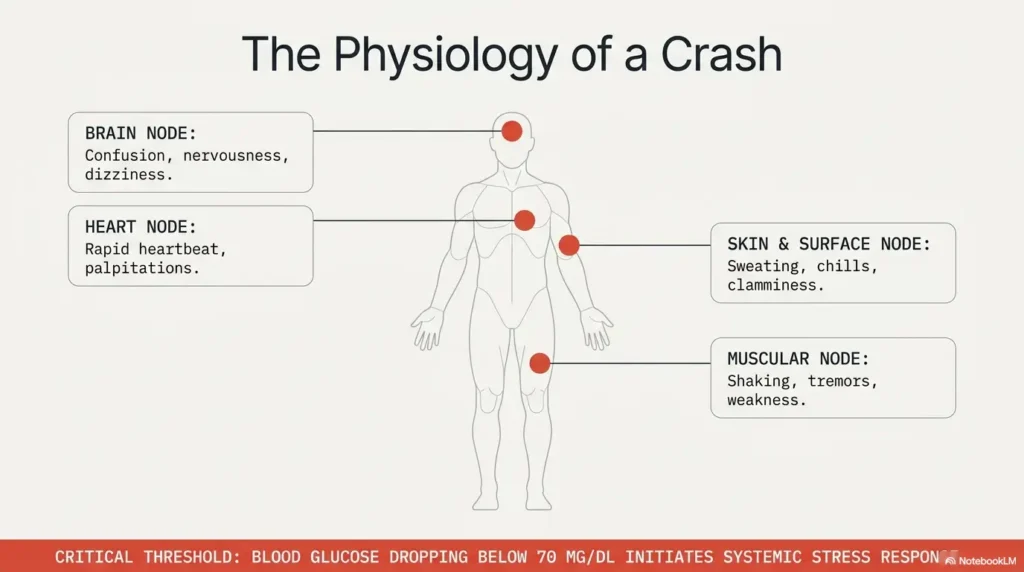
Food labels are helpful, but symptoms outrank packaging. If a senior has new confusion, fainting, chest pain, severe weakness, trouble breathing, seizure, or sudden trouble walking or seeing clearly, do not stand in the kitchen debating yogurt grams. Get urgent help.
For people with diabetes, the CDC notes that severe low blood sugar can cause confusion, weakness, trouble walking or seeing clearly, seizures, or passing out. Some medications can increase the risk of low blood sugar, especially when meals change.
Call a clinician if blood sugar readings change after food swaps
If readings rise, fall, or become unpredictable after changing breakfast, drinks, snacks, or portion sizes, contact the clinician who manages diabetes care. Bring labels or photos.
Do not adjust insulin or diabetes medication on your own unless your care team has already taught you exactly how to do that.
Ask a pharmacist if medications raise low-blood-sugar risk
Pharmacists are often easier to reach than a doctor’s office and can explain whether a medicine may contribute to low blood sugar, dizziness, dry mouth, appetite change, or vision changes.
If you need a calm way to ask medication questions, use a written script. The low vision pharmacy help script can be adapted for nutrition and label questions too.
Get urgent help for confusion, fainting, chest pain, severe weakness, or trouble breathing
Urgent symptoms need urgent action. Call emergency services for chest pain, trouble breathing, fainting, severe weakness, seizure, signs of stroke, or severe confusion. If the person has diabetes and cannot safely swallow, do not force food or drink.
When in doubt, seek medical help. Labels can wait. People cannot always wait.
Bring the food label or a photo to the appointment
A label photo can make a short appointment more useful. It shows serving size, carbohydrate, added sugar, fiber, sodium, and ingredients. It also prevents the classic appointment moment where everyone tries to remember the exact cereal name and accidentally invents a new brand.
If appointments are hard to track, use a simple note system. See doctor appointment note-taking system for seniors for a practical way to capture questions before they vanish into the waiting-room air.
- Track changes after major food swaps.
- Ask a pharmacist about medication-related blood sugar risk.
- Get urgent help for severe or sudden symptoms.
Apply in 60 seconds: Save one emergency contact and one pharmacy number where the senior can easily find them.
Next Step: Do the “One Breakfast Label” Practice Today
The easiest way to learn labels is not to study every product in the pantry. Start with one breakfast item. Breakfast is useful because many people repeat it, and small daily changes can matter over time.
Choose cereal, yogurt, oatmeal, juice, a coffee drink, a nutrition shake, or a breakfast bar. Then use the same three-number check.
Choose one cereal, yogurt, oatmeal, juice, or coffee drink
Pick something you already use. This keeps the exercise practical. No need to start with an exotic grain bowl that nobody in the house requested.
Put it on the table under good light. If glare is a problem, move away from shiny counters or windows. For label and package visibility issues, tips from reading glossy mail without glare can also apply to shiny food packages.
Read serving size, total sugars, and added sugars
Say the numbers out loud or write them down:
- Serving Size: ______
- Total Sugars: ______ grams
- Added Sugars: ______ grams
If the serving size does not match what you eat, adjust. If you eat twice the serving, double the added sugar.
Compare it with one lower-added-sugar option
Next grocery trip, compare it with one similar option. Not seven. One. The brain appreciates mercy.
If the lower-added-sugar option tastes acceptable, costs reasonably, and fits medical advice, test it for a week. If it fails the taste test, try another. Sustainable beats heroic.
Write the winner on a simple repeat-buy list
Once you find a good option, write it down. Include the brand, flavor, package size, and added sugar. If the product changes or disappears, you still know what kind of label you are trying to match.
For seniors with low vision, tactile labels can help identify pantry staples at home. The guide to bump dots vs tactile tape may help make repeat foods easier to find without re-reading every package.

FAQ
What is the easiest way for seniors to find sugar on a food label?
The easiest way is to read three lines in order: Serving Size, Total Sugars, and Added Sugars. Serving Size tells you what amount the label refers to. Total Sugars shows all sugar in the food. Added Sugars shows sugar added during processing or packaging.
Should seniors look at total sugar or added sugar first?
After checking serving size, many seniors should look at Added Sugars first for packaged foods. It helps separate naturally occurring sugar from sugar added for sweetness. People with diabetes may also need to check Total Carbohydrate, fiber, and portion size according to their care plan.
How many grams of added sugar is too much for older adults?
The FDA Daily Value for added sugars is 50 grams per day based on a 2,000-calorie diet. That is a reference amount, not a personal prescription. Older adults with diabetes, kidney disease, heart disease, appetite changes, or medication concerns should ask a clinician or dietitian for personal targets.
Is fruit sugar bad for seniors?
Whole fruit contains natural sugar along with water, fiber, vitamins, and other nutrients. That is different from added sugar in sweetened drinks, candy, pastries, or flavored snacks. Seniors with diabetes or kidney disease may still need guidance on fruit portions and types.
Are sugar-free foods always better for diabetes?
No. Sugar-free foods may still contain carbohydrates, calories, saturated fat, sodium, or sugar alcohols that can affect digestion. For diabetes, the Total Carbohydrate line and serving size often matter. Ask a clinician which label numbers to prioritize.
Why do some “healthy” foods have so much sugar?
Some foods use sweeteners to improve flavor, texture, shelf life, or consumer appeal. Granola, flavored yogurt, protein bars, bottled tea, smoothies, sauces, and cereals can all contain added sugar even when the package looks health-focused.
How can caregivers help seniors read labels without embarrassing them?
Ask permission, compare two similar products, and use neutral language. Try, “Want to compare these two?” instead of “You should not eat that.” Keep the older adult’s preferences, budget, taste, and independence central to the decision.
What should seniors bring to a dietitian or doctor visit?
Bring photos of common food labels, a medication list, typical meal times, blood sugar readings if available, and notes about dizziness, weakness, confusion, appetite changes, or falls. A one-page medication list can also help; see one-page medication list template for a simple format.
Conclusion
The yogurt aisle, cereal shelf, and coffee drink cooler do not need to feel like a nutrition exam printed in ant-sized type. The practical path is smaller: check Serving Size, read Total Sugars, focus on Added Sugars, and compare similar foods side by side.
That one routine helps seniors and caregivers make calmer choices without turning food into a scolding session. It also creates better questions for doctors, pharmacists, and dietitians when medical needs are more specific.
Your next step within 15 minutes: pick one breakfast item in your kitchen, read the serving size, total sugars, and added sugars, then write down one lower-added-sugar option to compare on your next grocery trip.
Small label. Small habit. Better cart.
Last reviewed: 2026-05.