
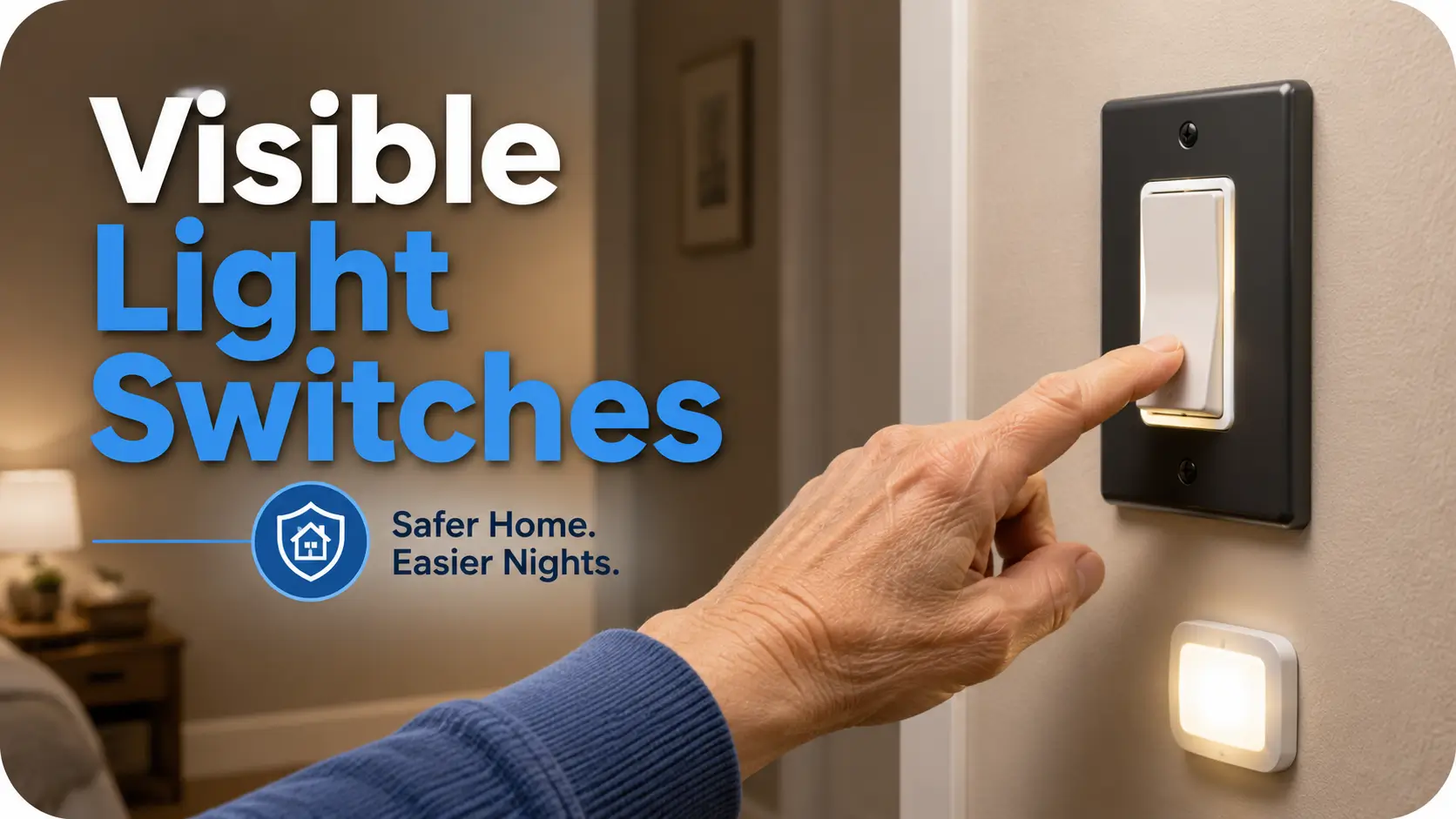
Making Light Switches Visible When It Matters Most
A light switch should not feel like a small white ghost hiding on a white wall at 2 a.m. Yet that is exactly what happens in many homes. The switch is technically “right there,” but older eyes, dim hallways, glossy paint, cluttered switch plates, and half-awake nighttime movement can turn a simple reach into a guessing game.
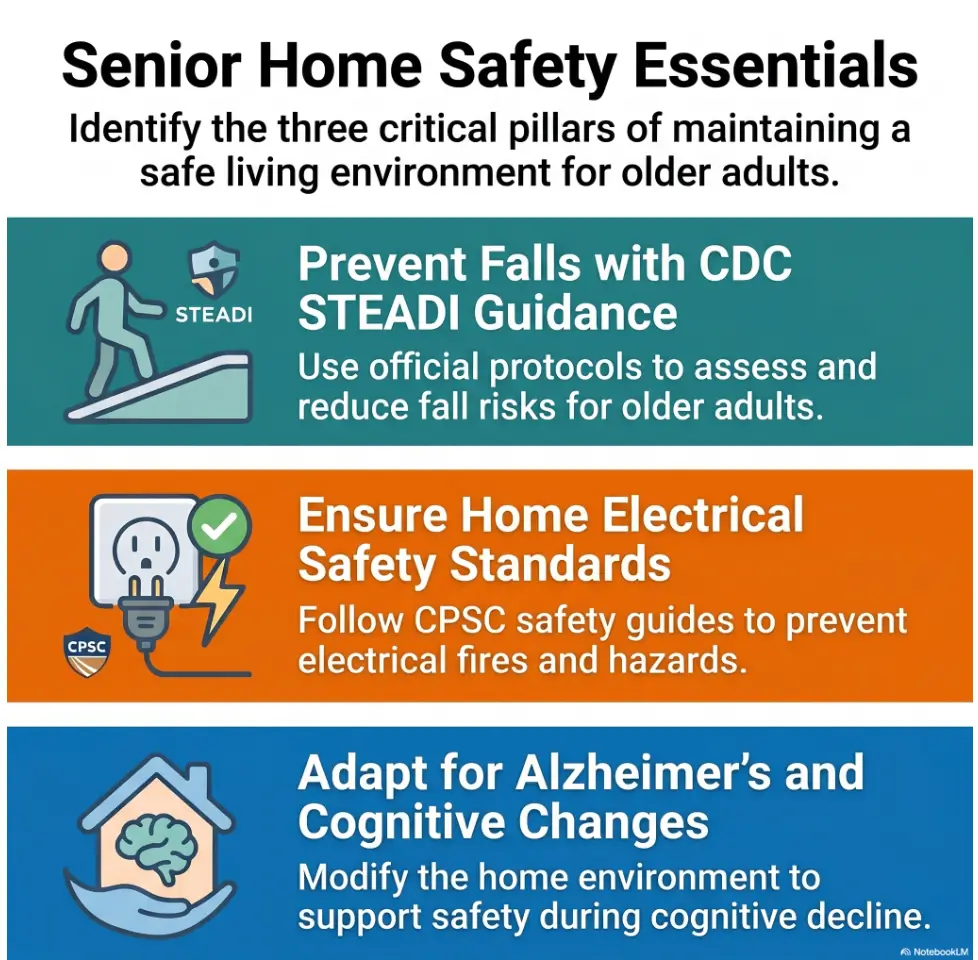
How to make light switches easier to see for older adults starts with a quieter truth: visibility is not only about brighter bulbs. It is about contrast, location cues, touch targets, glare control, and reducing the tiny decisions that pile up when someone is tired. That matters because poor visibility can contribute to missteps, bumps, and fall risk. The CDC has long emphasized home safety and fall prevention for older adults, and small environmental fixes often do more good than dramatic renovations.
Good news.
You do not need to remodel the house. You need to make the switch announce itself.
- • Use contrast so the switch stands out before the hand searches.
- • Add soft nighttime cues where the person actually enters the room.
- • Choose larger, simpler controls when hands or vision are less precise.
- • Know when a cosmetic fix is enough, and when an electrician should step in.
The Simple Switch Visibility Plan
Think of every light switch as a tiny landmark. The goal is not to decorate it. The goal is to make it easier to locate, understand, and use without hesitation.
Use contrast between wall, plate, and switch.
Add soft night lighting before the person reaches the wall.
Label multi-switch panels only when labels are large and simple.
Use easy upgrades first. Call a pro for wiring, buzzing, heat, or flicker.
Table of Contents
Start With Contrast, Not More Brightness
The first instinct is often to add a brighter bulb. Sometimes that helps. Sometimes it creates a shiny white blast across the wall and makes the switch even harder to pick out. A small home-safety gremlin wearing tap shoes.
Contrast is usually the better first move. Older adults may need more light than younger adults, but the brain still needs a clear edge to recognize an object quickly. A white toggle on a white plate on a white wall gives the eye almost nothing to grab.
Why a white switch on a white wall disappears first
A switch plate that matches the wall can look tidy in a real estate photo. In daily life, especially at night, it can vanish. The problem is not that the older adult “is not paying attention.” The visual target is simply too weak.
This is especially true in hallways, bathrooms, guest rooms, laundry rooms, and bedrooms where people may move while sleepy. Add bifocals, cataracts, glaucoma field loss, macular degeneration, dry eye, glare sensitivity, or general age-related contrast loss, and a neat white switch becomes a blank little cloud.
If someone in the home already has visual field changes, the switch may be present but outside the area they naturally scan. For broader room safety, see home safety ideas for glaucoma field loss and aging vision fall prevention at home.
The easiest upgrade: high-contrast switch plates
The simplest upgrade is often a switch plate that contrasts strongly with the wall. On a light wall, try a dark matte plate. On a dark wall, try a light matte plate. Matte matters. Glossy plates can catch light and create glare, which is the visual equivalent of someone waving a tiny mirror at your eyeball.
For renters or cautious homeowners, replacing the decorative outer plate is usually easier than changing the switch mechanism. It can take a screwdriver and a few minutes, not an electrical personality transplant. Still, the plate should sit flush, screws should be snug, and nothing should feel loose.
- Use dark plates on light walls.
- Use light plates on dark walls.
- Choose matte finishes when glare is a concern.
Apply in 60 seconds: Stand six feet away and squint; if the switch disappears, contrast is too weak.
Best color pairings for aging eyes and low-light rooms
There is no one magic color. The best pairing depends on the wall, lighting, and the person’s vision. In most homes, these combinations work better than low-contrast matching:
| Wall or surface | Better switch plate choice | Why it helps |
|---|---|---|
| White or cream wall | Charcoal, dark bronze, navy, or deep brown matte plate | Creates a strong outline without needing harsh light. |
| Gray wall | White, black, or warm wood-tone plate | Avoids gray-on-gray visual mud. |
| Dark painted wall | White or ivory matte plate | Makes the switch location obvious from the doorway. |
| Patterned wallpaper | Plain high-contrast plate with a quiet border | Gives the eye one calm target in visual noise. |
If glare is part of the problem, the same principle appears in other rooms too. A wall, tile, or countertop can bounce light in surprising ways. The practical ideas in matte vs glossy paint for low-vision homes and white tile floor glare can help you think beyond the switch plate itself.
Decision Card: Contrast Plate vs Brighter Bulb
| Choose a contrast plate when… | The switch blends into the wall, the room already has enough light, or glare gets worse with brighter bulbs. |
| Choose better lighting when… | The approach to the switch is dark, shadowy, or blocked by furniture. |
| Cost/time trade-off | A plate swap is usually faster and cheaper; lighting may solve more of the walking-path problem. |
Neutral action line: Try the contrast plate first if the switch disappears in daylight and at night.
The Nighttime Problem: Finding the Switch Before the Room Exists
Daytime switch visibility is only half the story. The harder test happens at night, when the room is still dark, the person is half awake, and the switch has to be found before the room becomes visible.
This is why a beautiful switch upgrade can still fail. It might look great at noon and be useless at 2 a.m. The switch needs a cue that works before full lighting is available.
Glow markers vs illuminated switches: what actually helps at 2 a.m.
Glow-in-the-dark markers can help if they are large enough, placed consistently, and recharged by normal light during the day. They are best as a gentle “there it is” cue, not as the only safety feature.
Illuminated switches can also help, especially in bedrooms, hallways, and bathrooms. Some switches have a tiny locator light built in. Others are smart switches or motion-aware devices. These can be useful, but they may require wiring work or compatibility checks.
For many homes, the most practical solution is a combination: a high-contrast plate plus a soft motion-sensor night light near the room entry. That way the wall is not a mystery cave with a switch somewhere inside it.
Where to place tiny visual cues so they guide, not distract
Place the cue where the person expects the switch to be, not randomly around the plate. A small glow dot above the switch or on the switch plate edge can guide the hand. But four stickers, a decorative border, and a novelty label can turn the area into a tiny bulletin board. The eye does not need confetti. It needs direction.
Tactile cues can also help when vision is inconsistent. If you are comparing raised dots and tactile tape, bump dots vs tactile tape explains when each one makes sense. For switches, one raised cue is usually better than a patchwork of textures.
Here’s what no one tells you: the wall matters too
A switch on a flat painted wall is easier to locate than one surrounded by framed photos, patterned wallpaper, hanging keys, or a calendar. The switch area needs visual breathing room.
Try leaving a clean zone of several inches around important switches. In hallways and bathrooms, avoid hanging décor directly beside the switch plate. Yes, the tiny farmhouse sign may be charming. No, it should not be competing with the thing that prevents someone from walking into a laundry basket.
Show me the nerdy details
Switch visibility depends on luminance contrast, edge detection, expected location, and task timing. Older adults may experience reduced contrast sensitivity, slower dark adaptation, narrower useful visual fields, or increased glare sensitivity. A bright room does not automatically solve the problem because the person must locate the control before the room light turns on. That is why a layered approach works better: contrast for daytime recognition, low-level guide lighting for nighttime approach, and a larger touch target for hand accuracy. The most reliable setup gives the brain one clear visual target and the hand one predictable place to land.
Rocker Switches Are Often Easier Than Toggle Switches
Toggle switches are small, familiar, and everywhere. Rocker switches are larger, flatter, and easier to press with a palm, knuckle, or less precise finger movement. For many older adults, that larger target is the quiet upgrade that nobody brags about but everybody uses.
Why larger touch targets reduce fumbling
A toggle switch asks the finger to find a small lever and move it in a specific direction. A rocker switch asks for a broader press. That can help when someone has arthritis, tremor, neuropathy, low vision, or simply cold hands in winter.
The same logic appears in other daily tools. A large-button TV remote can be easier because it reduces precision demands. A switch works the same way. Bigger is not childish. Bigger is efficient.
When a rocker switch is worth replacing the old toggle
Consider a rocker switch when the current switch is used often, located in a safety-sensitive path, or difficult to operate by touch. Bedrooms, bathrooms, hallways, stair areas, kitchens, laundry rooms, and entryways are the top candidates.
Start with one or two problem areas rather than replacing every switch in the house. A home can become a laboratory surprisingly fast. The cat will not file the paperwork, and the electrician will not bring muffins.
Don’t assume “bigger” means safer
A rocker switch can still be confusing if it is part of a four-switch panel with no labels. It can still be hard to see if the plate and wall match. It can still be unsafe if the switch is loose, hot, buzzing, or installed incorrectly.
Bigger helps the hand. Contrast helps the eyes. Labels help the brain. Night lights help the feet. The win is the system, not one heroic gadget wearing a cape.
Eligibility Checklist: Is a Rocker Switch Worth It?
- Yes/No: Does the person fumble for the small toggle more than once a week?
- Yes/No: Is the switch in a bathroom, bedroom, hallway, stair path, or entryway?
- Yes/No: Does arthritis, tremor, or low vision make small controls harder?
- Yes/No: Is the existing switch old, loose, or confusing?
- Yes/No: Can the change be done safely by a qualified person?
Neutral action line: If you answered yes to three or more, price one rocker switch upgrade for the highest-use area first.
Who This Is For, And Who Needs a Different Fix
Small switch upgrades are useful, but they are not magic dust. They are best for homes where the main problem is mild-to-moderate visibility, nighttime orientation, or confusing controls. They are not enough when someone has repeated falls, severe vision loss, sudden confusion, or a home layout that creates bigger hazards.
Best for older adults with mild vision changes or nighttime disorientation
These fixes are a good fit when someone says things like:
- “I know the switch is there, but I can’t see it until I’m right on top of it.”
- “The bathroom switch is hard to find at night.”
- “The hallway is too dark before the light is on.”
- “I keep hitting the wrong switch.”
They may also help people with glare sensitivity, low contrast sensitivity, or mild central vision changes. If reading and close work are also becoming difficult, articles like scotoma reading contrast and reading lamp position for central vision loss may help connect the dots.
Best for caregivers making small aging-in-place upgrades
Adult children and caregivers often want to help without making the home feel institutional. That is the right instinct. The best changes feel ordinary. A darker switch plate. A soft night light. A clearer label. A less slippery bathroom path. Nothing that screams “clinic corridor at midnight.”
For broader support, offering help to someone with low vision can help caregivers make changes with dignity rather than taking over the home like a well-meaning tornado.
Not enough for serious vision loss, repeated falls, or confusion at night
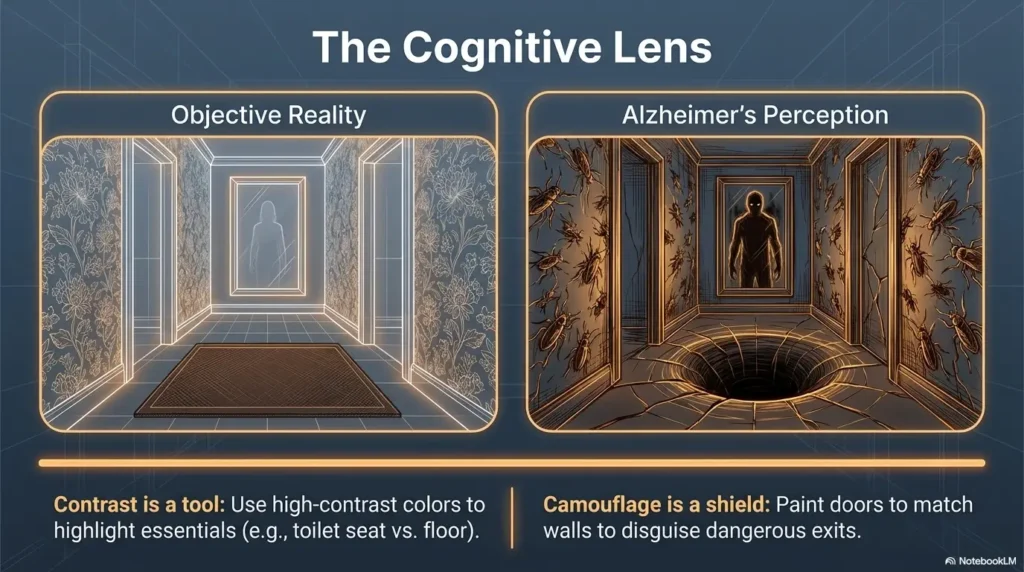
If an older adult still cannot find switches after contrast and guide lighting, step back. The issue may be more than switch visibility. It may involve visual field loss, depth perception, cognition, medication side effects, dizziness, or general fall risk.
Repeated falls, new confusion, wandering, severe night disorientation, sudden vision changes, or new weakness deserve professional input. A primary care clinician, eye doctor, low-vision specialist, occupational therapist, or licensed electrician may each have a role depending on the problem.
For eye-related home adaptation, questions to ask a low-vision occupational therapist can be especially helpful.
- Use simple upgrades for visibility and orientation problems.
- Look deeper if falls or confusion continue.
- Respect the older adult’s preferences before changing familiar rooms.
Apply in 60 seconds: Ask, “Is the switch hard to see, hard to reach, hard to understand, or all three?”
Add Light Where the Hand Goes
The safest switch is often the one that is not the first thing a person has to find in the dark. Add light to the approach, and the switch becomes easier before the hand starts patting the wall like it is searching for a secret door.
Motion-sensor night lights near doorways and hall entries
Motion-sensor night lights can turn a dark approach into a visible path. Place them near bedroom doors, bathroom entrances, hallway turns, and stair approaches. The goal is soft guidance, not airport runway energy.
Too-bright motion lights can cause glare, wake people fully, or create harsh shadows. If that has happened in your home, what to do when a motion-sensor light is too bright offers a practical way to soften the effect.
Plug-in lights vs battery lights vs hardwired options
| Option | Best for | Watch out for |
|---|---|---|
| Plug-in night light | Hallways, bathrooms, bedrooms with available outlets | Outlet placement, brightness, and trip hazards from furniture rearranging |
| Battery motion light | Closets, odd corners, rentals, no nearby outlet | Battery replacement and secure mounting |
| Hardwired light | Permanent upgrades, stairs, dark entries | Requires a licensed electrician in many cases |
For nighttime bathrooms, light temperature and color can matter too. A soft red or amber guide light may be less jarring for some people than a harsh white blast. Compare the trade-offs in red vs amber night light and low-vision nighttime bathroom safety.
The quiet win: lighting the path before the switch
When you light the path, you reduce the need to hunt. This is especially important near bathrooms, where people may be barefoot, sleepy, and moving quickly. Nobody wants a midnight obstacle course with bath mats as surprise contestants.
A good setup might look like this:
- A low-glare motion night light near the bedroom doorway.
- A high-contrast switch plate at the bathroom entry.
- A rocker switch for easier touch.
- A clear floor path with no loose rugs or laundry baskets.
Common Mistakes That Make Switches Harder to See
Some “helpful” fixes accidentally make the switch harder to find. The intention is kind. The result is a wall that looks like it was decorated by a committee of raccoons with label makers.
Mistake 1: using decorative plates with busy patterns
Patterned switch plates can be charming in a powder room. But for someone who struggles with contrast, patterns can hide the switch edge. Florals, faux marble, tiny script, metallic swirls, and novelty designs all compete with the main task.
Use plain plates in high-use areas. Save the decorative plate for a room where safety does not depend on fast recognition.
Mistake 2: adding labels that are too small to read
Small labels can create false confidence. The caregiver feels organized. The older adult still cannot read them. Labels should be large, plain, high-contrast, and limited to words that matter: “HALL,” “FAN,” “BATH,” “PORCH.”
If labels are used across the home, stay consistent. A different label style in every room makes the home feel less intuitive.
Mistake 3: creating glare with shiny plates or harsh bulbs
Glare can make a switch more visible in one angle and less visible from another. Shiny switch plates, glossy wall paint, mirror-adjacent switches, and exposed bulbs can create hot spots that bother glare-sensitive eyes.
This is especially common in kitchens and bathrooms. For related fixes, see bathroom mirror glare, under-cabinet lighting glare on glossy surfaces, and window film for glare.
Mistake 4: placing furniture where the switch should be obvious
A switch behind a tall plant, coat rack, bookshelf, or stacked laundry hamper is not a switch. It is a rumor.
Keep important switches visible from the normal entry point. If the switch is blocked, move the object first before buying anything. The best home modification is sometimes a chair sliding six inches left with the solemn dignity of common sense.
The 4-Part Switch Visibility Framework
Can the switch be seen against the wall?
Is there a glow or guide light before full room light?
Is the control large and easy to press?
Is the route to the switch clear and softly lit?
Use this order: make it visible, make it findable, make it usable, then clear the route.
Don’t Do This: The “Helpful” Fixes That Backfire
There is a special category of home fixes that look useful for four days and then become tiny household fossils. They peel, fade, curl, collect dust, or confuse the person they were meant to help.
Tiny stickers that vanish in shadow
Small stickers often fail because they are too delicate. They look visible up close and disappear from the doorway. If you use glow or color markers, choose fewer, larger, simpler cues.
Tape that peels, curls, or collects dust
Tape can be tempting because it is cheap and immediate. But curling edges can look messy, collect dust, and sometimes leave residue. In bathrooms or kitchens, moisture makes this worse.
If you need a tactile cue, choose a product intended for durable household use. For other tactile marking ideas, tactile faucet marking and tactile thermostat labeling show how simple markers can work when they are placed thoughtfully.
Let’s be honest: a cute switch cover is not a safety plan
A cute cover can make a room feel warm. It cannot compensate for poor lighting, blocked access, confusing switch banks, or repeated nighttime falls. Decoration is allowed. Decoration should not be asked to carry the entire safety orchestra.
Short Story: The Hallway Switch That Stopped Hiding
Margaret’s daughter first tried a floral switch plate because it looked cheerful. The hallway was narrow, the wall was cream, and the old white toggle sat beside a framed family photo. At night, Margaret still swept her hand across the wall, annoyed and half awake. The daughter felt defeated until she tried the switch test from the doorway. The problem became obvious.
The pretty plate blended into the photo, the white toggle vanished, and the nearest night light was behind a dresser. They replaced the plate with a matte charcoal one, moved the photo six inches away, added a soft plug-in motion light near the bedroom door, and later had an electrician install a rocker switch. No grand renovation. No dramatic reveal. Just a hallway that finally told the truth: the switch is right here. The lesson was simple. Beauty helps a room feel loved, but contrast helps a tired hand find its way.
- Avoid tiny labels and busy patterns.
- Use durable tactile cues sparingly.
- Test every fix from the doorway, not only up close.
Apply in 60 seconds: Remove one visual distraction beside the most-used nighttime switch.
Make the Switch Easier to Understand, Not Just Easier to See
Some switch problems are not visual. They are cognitive. A person can see the switch panel perfectly and still wonder which of the three controls turns on the bathroom light, which starts the fan, and which summons the porch light like a tiny lighthouse nobody asked for.
Use simple labels for confusing multi-switch panels
Multi-switch panels need plain language. Use large, high-contrast labels above or below the switch, not tiny labels tucked along the edge. Keep words short.
- Use “BATH,” not “main lavatory overhead fixture.”
- Use “FAN,” not “ventilation.”
- Use “HALL,” not “north corridor.”
- Use “PORCH,” not “exterior front illumination.”
Clear labels are especially useful when someone has memory changes, low vision, or anxiety about “messing up” household controls.
Group related switches with visual spacing
If a panel has multiple switches, visual spacing can reduce mistakes. A wider plate, clear labels, or a different style for the most important switch can help. Avoid making every switch look equally urgent.
For people who rely on tactile systems elsewhere in the home, consistency matters. If raised dots mark the microwave, thermostat, and faucet, use the same logic for switches. A home becomes easier when it speaks one visual and tactile language.
Reduce decision fatigue in bathrooms, bedrooms, and hallways
Decision fatigue sounds like an office problem until you are standing barefoot outside a bathroom at night, choosing between three mystery switches while your bladder runs a hostile negotiation.
Reduce the number of choices where possible. Put the main light on the easiest switch. Use a motion night light for the approach. Label only what is confusing. Too many labels can be as tiring as none.
Quote-Prep List: Before You Ask an Electrician About Switch Changes
- Take a clear photo of the switch panel in daylight.
- Write which switch controls which light, fan, or outlet.
- List any issues: flickering, buzzing, heat, loose fit, or confusing placement.
- Decide whether you want rocker switches, illuminated switches, or relocation advice.
- Ask whether the current box, wiring, and code requirements support the change.
Neutral action line: Gather photos and symptoms before calling so the estimate starts with facts, not guesswork.
Room-by-Room Switch Visibility Upgrades
Switch visibility is local. A bedroom switch has a different job than a kitchen switch. A bathroom switch has different risks than an entryway switch. Treat each room like its own small weather system.
Bedroom: the late-night reach test
Stand where the older adult gets out of bed. Can they see the switch location? Can they reach a lamp instead? Is there a motion light that turns on gently before their feet meet the floor?
Bedside organization also matters. If a lamp switch is hidden behind books, tissues, chargers, and a heroic stack of mystery receipts, the wall switch may not be the only problem. See low-vision bedside organization for a calmer setup.
Bathroom: contrast plus soft guide lighting
Bathrooms need special care because water, tile, mirrors, and glossy surfaces can increase glare. A high-contrast switch plate helps, but soft guide lighting may be even more important.
Consider a motion night light outside the bathroom, a matte plate, a rocker switch, and a clear path free of loose rugs. If the bathroom has a shower or tub, pair switch visibility with floor safety. anti-slip shower strip placement and toilet seat contrast color can support the same room-wide safety goal.
Hallway: motion lights before the switch
Hallways are transition zones. People move through them before they are fully oriented. Put soft motion lights near turns, doorways, and stair approaches. The switch should be visible, but the path should not depend entirely on finding it first.
Kitchen: avoid glare near glossy walls and backsplashes
Kitchens are full of reflective surfaces: glossy tile, stainless appliances, glass cabinet doors, polished counters. A shiny switch plate near a glossy backsplash can become a glare trap.
Use matte plates and indirect lighting where possible. If kitchen tasks are also hard to see, articles such as best cutting board color for low vision, low-vision kettle safety, and safe stove knob covers for seniors can help build a safer work area.
Entryway: make the first switch impossible to miss
The entryway switch should be obvious from the door. This is where packages, coats, shoes, umbrellas, and bags tend to gather. Keep the switch area clear and use a strong visual cue.
If keys are part of the same entry routine, a low-vision key identification system can reduce another small daily hunt. A good entryway helps someone come home without juggling darkness, keys, and a bag of oranges with one heroic tomato rolling loose at the bottom.
- Bedrooms need reach and gentle wake-up lighting.
- Bathrooms need glare control and clear paths.
- Entryways need fast recognition from the door.
Apply in 60 seconds: Pick the one switch used most often after dark and improve that room first.
Safety Check Before You Replace Anything Electrical
There is a bright line between changing how a switch looks and changing how a switch is wired. Cross that line carefully. Electricity is useful, invisible, and not impressed by confidence.
What homeowners can usually do safely
Many people can safely replace a switch plate cover with basic care: turn off nearby lamps if needed, use the right screwdriver, keep screws secure, and avoid touching wires or removing the switch mechanism. If anything looks damaged, loose, cracked, scorched, or odd, stop.
Renters should check lease rules before changing fixtures. Caregivers should also ask the older adult before changing familiar controls. A visible switch that the person dislikes may not stay visible for long if they quietly remove the marker the next day. Home safety works better with consent.
When replacing a switch plate is enough
A plate replacement may be enough when:
- The switch works normally.
- The switch is not loose, hot, buzzing, or flickering.
- The problem is mainly low contrast.
- The person can use the switch once they see it.
- No wiring changes are needed.
This is the sweet spot: low cost, low disruption, and often immediate improvement.
When to call a licensed electrician
Call a licensed electrician if you want to replace a toggle with a rocker switch and do not have the skill, if you want illuminated switches, if the switch controls multiple fixtures in a complex way, or if the switch is in an older home with uncertain wiring.
Also call if there is buzzing, warmth, flickering, scorch marks, sparks, loose movement, frequent breaker trips, or a switch that feels unreliable. These are not decorative problems. These are “put down the screwdriver and phone a grown-up with a license” problems.
Watch for loose switches, buzzing, heat, or flickering
A visibility upgrade should never hide an electrical warning sign. If the switch plate is cracked, the switch wiggles, the light flickers, or the wall plate feels warm, do not cover it with a bigger label or a glow sticker. Fix the underlying issue.
If the older adult has low vision and cannot easily notice these warning signs, make the check part of a caregiver routine. It takes less than a minute to touch near the plate, listen for buzz, and watch for flicker. Do not press hard or remove anything. Just observe.
Coverage Tier Map: From Tiny Fix to Professional Upgrade
| Tier | Upgrade | Best use |
|---|---|---|
| Tier 1 | Clear the area around the switch | Blocked or visually crowded switches |
| Tier 2 | High-contrast matte plate | White-on-white or low-contrast walls |
| Tier 3 | Glow cue or tactile marker | Nighttime locating support |
| Tier 4 | Motion-sensor guide lighting | Dark paths before the switch |
| Tier 5 | Licensed electrical upgrade | Rocker switches, illuminated controls, unsafe or outdated wiring |
Neutral action line: Start at the lowest tier that solves the real problem, then upgrade only if the switch still fails the nighttime test.
FAQ
What is the easiest way to make a light switch more visible for an older adult?
The easiest fix is usually a high-contrast matte switch plate. If the wall is light, use a darker plate. If the wall is dark, use a light plate. Then test it from the doorway in daytime and at night. If the switch is still hard to find after dark, add a soft guide light near the approach.
Are glow-in-the-dark light switch stickers a good idea?
They can help, but only when they are large enough, durable, and placed consistently. Tiny glow stickers often disappear in shadow or become visual clutter. Use one simple cue near the switch, not a swarm of little dots. For many homes, a motion-sensor night light works better than glow stickers alone.
Are rocker switches better for seniors than toggle switches?
Rocker switches are often easier because they give the hand a larger target. They may help older adults with low vision, arthritis, tremor, or reduced finger precision. However, replacing the switch mechanism involves electrical work. If you are not comfortable or qualified, hire a licensed electrician.
What color light switch plate is easiest to see?
The easiest color is the one that contrasts strongly with the wall. Dark matte plates often work well on white or cream walls. White or ivory plates can work well on dark walls. Avoid glossy finishes if glare is a problem. The goal is a clear edge, not a trendy color.
Should I use motion-sensor lights instead of changing switches?
Use motion-sensor lights when the approach to the switch is dark. Use contrast plates when the switch blends into the wall. Many homes benefit from both. A guide light helps the person reach the switch safely, while contrast helps the switch stand out once they are near it.
Can I replace a light switch myself?
Many people can replace a switch plate cover, but replacing the actual switch is electrical work. Rules and comfort levels vary by home, wiring, and location. If the switch is loose, buzzing, warm, flickering, cracked, or unfamiliar, call a licensed electrician rather than guessing.
How can I make bathroom light switches safer at night?
Use a high-contrast matte plate, keep the area around the switch clear, and add a soft motion-sensor night light near the bathroom entrance. Avoid harsh glare from mirrors, glossy tile, or bright exposed bulbs. Also check the walking path, rugs, shower area, and toilet contrast because bathroom safety is a whole-room issue.
What should I do if an older adult still cannot find the switch?
If contrast, guide lighting, and simpler controls do not help, look beyond the switch. The issue may involve severe low vision, visual field loss, confusion, medication effects, dizziness, or a broader fall risk. Consider an eye exam, primary care visit, low-vision occupational therapy assessment, or home safety review.
Next Step: Do the 30-Second Switch Test Tonight
The opening problem was simple: a switch that should be obvious becomes invisible when the room is dark and the person is tired. The solution is also simple, but it needs to be practical. Do not start with a shopping cart full of gadgets. Start with one doorway, one switch, and one honest test.
Turn off the lights and stand at the doorway
Tonight, turn off the room light and stand where the older adult normally enters. Do not walk right up to the switch. Look from the doorway. If the plate disappears, you need contrast. If the path disappears, you need guide lighting. If the switch bank looks confusing, you need labeling or simplification.
Ask: can the switch be found without guessing?
A safe switch should not require memory, perfect eyesight, or wall-patting. It should be visible enough, predictable enough, and easy enough to use. If someone has to guess, the home is asking too much.
Make one small fix first: contrast, glow cue, or guide light
Choose the smallest fix that matches the problem. Replace a white plate on a white wall. Add one soft motion light near a dark hallway. Put one clear label on a confusing bathroom switch. Move the coat rack away from the entry switch.
Within 15 minutes, you can test the most-used nighttime switch, remove one obstruction, and decide whether the first upgrade should be contrast, a guide light, or a professional electrical change. That is not a remodel. It is a little mercy built into the wall.
Last reviewed: 2026-05.